The mobile office tours all 21 neighborhoods from Wednesday through Nov. 3, gathering residents' opinions to shape local policy
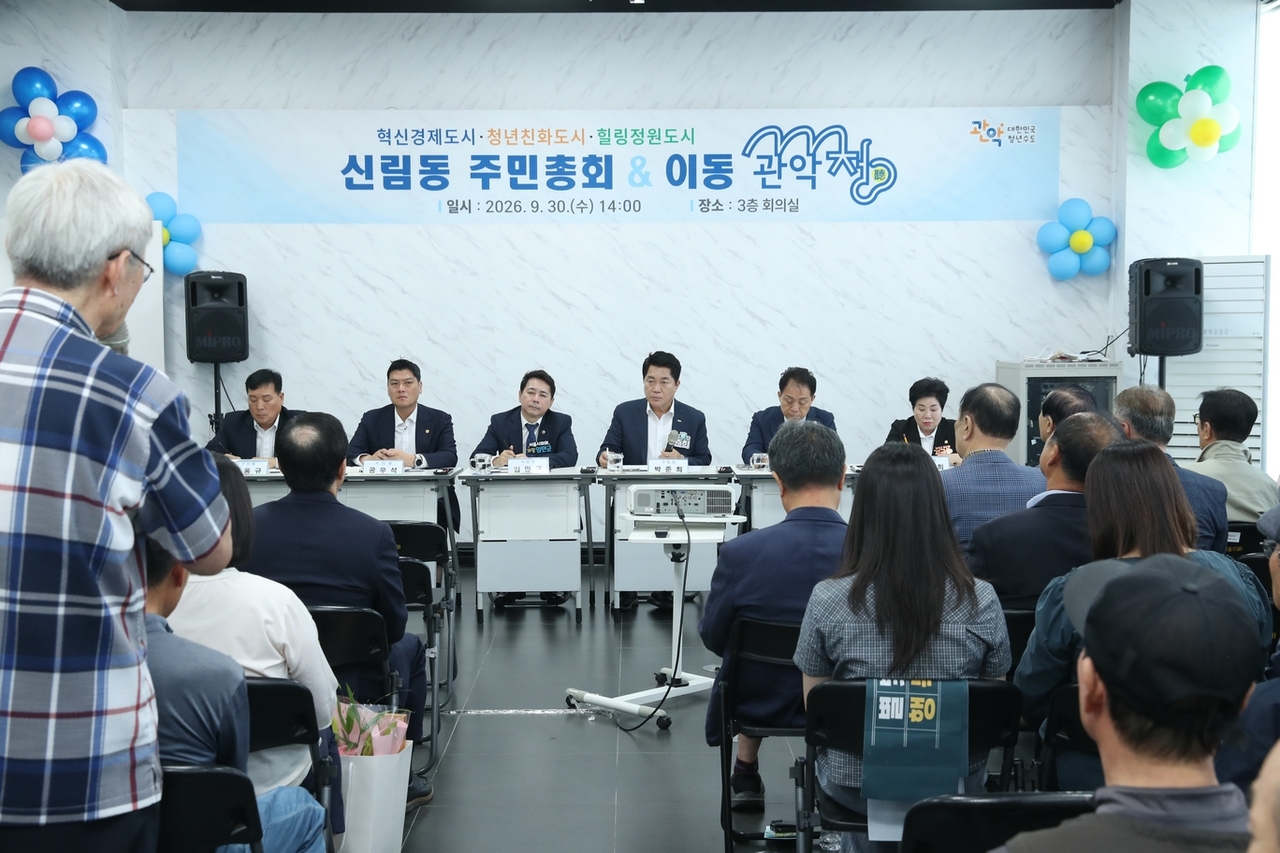
Gwanak-gu has launched its mobile district office program for the ninth elected-term administration, continuing its long-standing commitment to meeting residents face-to-face and addressing local issues through direct dialogue.
The initiative traces its roots to 2018, when the district opened "Gwanak-cheong" — a café-style open mayor's office on the first floor of the district building, the first of its kind in the country — where the district mayor has met with residents weekly. Starting in 2019, the program expanded into a mobile format to reach residents who find it difficult to visit the district office in person.
This year, the mobile district office kicked off Wednesday in Sillim-dong and will visit one or two neighborhoods each day, completing a full circuit of all 21 neighborhoods by Nov. 3. Residents are invited to speak freely about local policy needs and everyday concerns.
At the opening session in Sillim-dong, residents raised a range of issues including parking, redevelopment, subway noise, bus stop placement and road safety. District Mayor Park Jun-hee explained the current status and future plans for each proposal and worked with residents to explore solutions.
On calls to expand public parking and redevelop areas dense with aging housing, Park said the district would incorporate parking garage expansion into its medium- and long-term plans and would "actively support the swift advancement of redevelopment and reconstruction projects through the district mayor's directly supervised rapid support team for improvement projects."
One resident expressed thanks, saying, "Walking along the Byeolbit Naerin Stream and watching the fountain puts me in a good mood — it makes me glad I live in Sillim-dong." Park responded by pledging to build "a healing garden city filled with flowers, trees and flowing water so residents can feel the change in their everyday lives."
Opinions collected that day will be forwarded to the relevant departments for on-site review and detailed examination, with results communicated back to the residents who submitted them. A management card will be created for each proposal and tracked until it is fully resolved.
Over the past eight years, the district has toured every neighborhood under a philosophy of listening with sincerity to earn trust, collecting 1,055 proposals from 11,804 residents. The program has drawn strong public response, as residents can speak directly with the district mayor near their homes without making a separate trip to the district office.
Proposals gathered through the program have already translated into tangible policy outcomes, including the launch of the Gwanak Ganggam-chan Bus service and the creation of the No. 12 Gwanak village bus route. In the ninth elected term, the district plans to broaden the mobile office's reach further and operate a dedicated support center that proactively visits single-person households and vulnerable residents to resolve housing inconveniences, turning residents' voices into real change.
"Receiving the special prize at the OIDP Participatory Democracy Best Practice Awards — the first time a Korean district has won the honor — is itself a testament to the collaborative governance we have built together with our residents," Park said. "I will continue to listen directly to residents in the field, find answers to local problems, and build a better Gwanak where every valuable opinion leads to change in daily life."
seouldream01@heraldcorp.com