FTC chair dismisses US claims of discrimination against Coupang; calls delivery app fees excessive; pledges rigorous review of Uber's Baemin acquisition bid
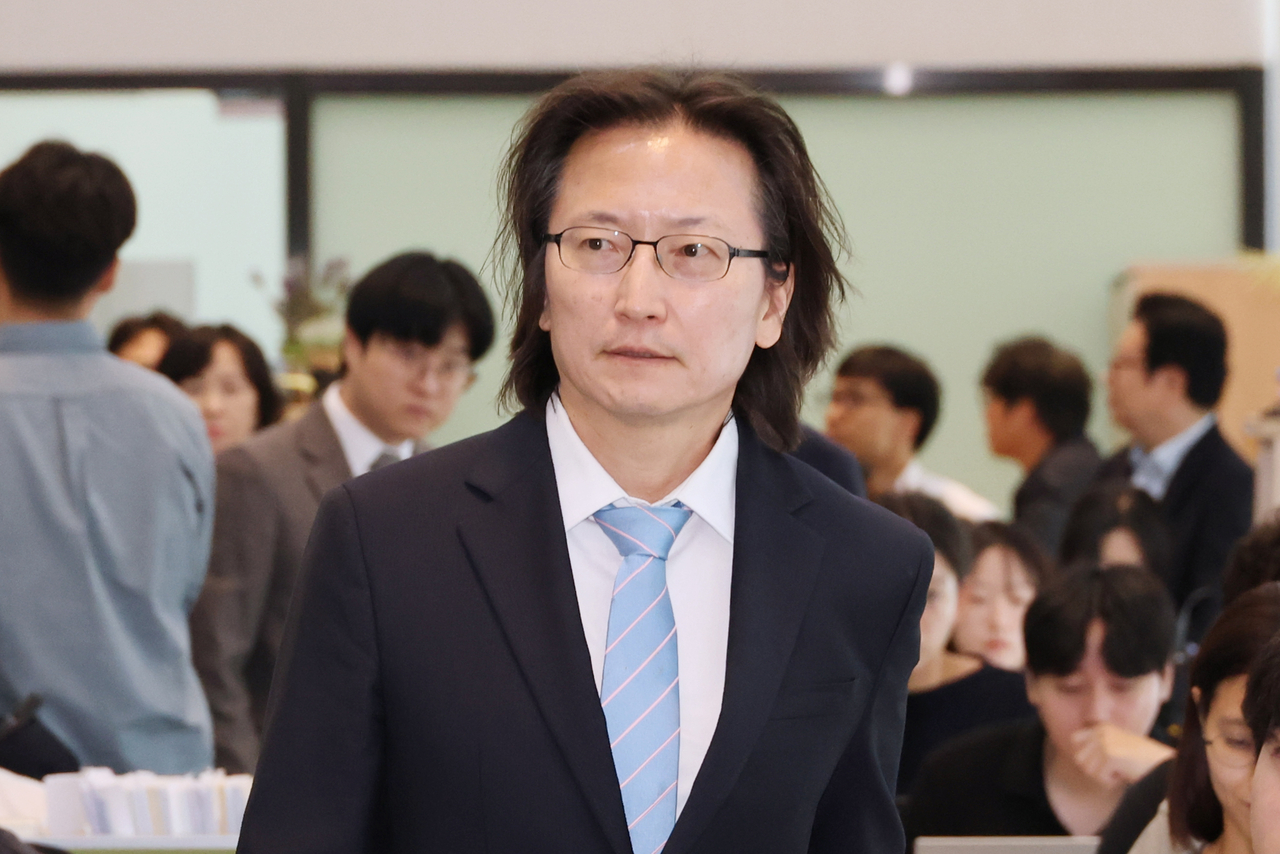
Fair Trade Commission Chairman Ju Byung-ki said Tuesday that the agency would press on with its investigation of Coupang Inc despite a court-ordered suspension, vowing to "rebuild the justice that has collapsed because of the suspended probe."
Speaking on CBS Radio's "Park Sung-tae's News Show" that morning, Ju was asked whether the FTC would resume its on-site inspection after Seoul High Court rejected Coupang's injunction application on Wednesday. "The probe was suspended for 30 days — it is late, but we will do our best," he said.
The FTC had been investigating Coupang on charges of violating the Large-Scale Distribution Business Act, including alleged coercion of partner merchants into unfavorable trading terms. Coupang refused to cooperate with the on-site inspection and filed both a lawsuit to cancel the inspection order and an injunction application. Seoul High Court rejected the injunction application on Wednesday, restoring the legal force of the inspection order.
When the radio host asked whether the alleged conduct toward partner merchants amounted to gapjil — the Korean term for the abuse of power by a dominant party — Ju said, "Simply put, yes."
He also said the FTC would use the episode as an opportunity to tighten the rules governing obstruction of its investigations.
"We need to review procedures more carefully," Ju said. "We need to close any loopholes, spell out more clearly what constitutes obstruction, and refine existing rules so there is no way to cleverly evade an FTC investigation."
He also stressed that, unlike a search and seizure, an FTC on-site inspection requires the company's consent. "If they do not consent, we cannot conduct the investigation," he said. "The FTC must monitor whether companies are violating the law or causing harm to others."
"To monitor, we must be able to see the documents that reflect a company's activities," he added. "The enforcement of this minimum investigative authority must not be blocked."
On claims from some US lawmakers that the South Korean government is discriminating against Coupang as an American company, Ju was dismissive. "Those voices are coming mainly from the US House of Representatives, and no major American media outlet is reporting this," he said.
Asked whether the Coupang issue came up during his recent trip to the United States, he said discussions there focused on general matters such as current issues between competition authorities and trends in law enforcement. "The main substance was discussing the need for cooperation between the two competition authorities," he said.
He added that US competition authorities and experts held a different view from those political claims. "US competition authorities and experts in this field are well aware of our agency's capabilities," Ju said. "South Korea's competition authority has been known for decades as an institution that enforces the law more rigorously than competition agencies in other advanced economies."
He cited ratings by Global Competition Review, a specialist publication, saying the FTC has consistently ranked among the top five agencies worldwide. "We are always rated excellent or elite," he said.
Asked whether US competition authorities also did not view South Korea's actions as discriminatory against Coupang, Ju said, "There is no need to say so explicitly, but that trust exists."
Turning to the FTC's new priority investigation planning unit set to launch next month, Ju stressed the need to respond swiftly to complex cases in platform markets where multiple legal violations are intertwined.
"Once a platform gains dominance, it can become a market-dominant player very quickly," he said. "The way competition law is enforced must be flexible enough to respond to that."
Citing combinations of abuses — including the misuse of market dominance, misleading advertising and tying arrangements — he said, "To handle complex cases involving multiple violations, we need a specialized unit and a fast, agile response."
On delivery app fees, Ju said he considered them "excessive," adding that the sector has "a very favorable structure for generating high profits at low cost."
He said South Korea's online food delivery market generates sales five times larger than Japan's and more than Germany and the United Kingdom combined, reaching roughly one-third the size of the US market. Given the domestic market's scale and high usage density, delivery app operators can earn relatively high profits at comparatively low cost, he said.
He also called for legislation to address monopolistic and oligopolistic structures in platform markets. "Monopolization in the platform market has progressed very severely," Ju said. "Regulators must create pathways to maximize competition — only then can fees come down."
Explaining the network effect, in which users flock to whichever platform already has the most users, he said most advanced economies have already enacted platform-specific legislation. "South Korea has not managed to pass that legislation," he said.
"A special law tailored to delivery apps, or an online platform fairness act that protects merchants and economically vulnerable parties on online platforms, must be enacted as soon as possible so we can respond in a way that fits the characteristics of the platform industry," he said.
Ju also signaled a rigorous review of Uber's bid to acquire Baemin, which could reshape competition in the domestic delivery app market. "This is an important matter," he said. "We plan to conduct a strict review of the impact on the competitive order, take measures to minimize that impact, and ensure the competitive order is preserved."
y2k@heraldcorp.com