Kim Jong-pil of LIG Defense & Aerospace speaks at Herald Business Forum 2026
Private capital and AI reshaping the space industry landscape
Reusable launch vehicles cut costs and accelerate commercialization
'Secure core assets directly, but leverage private and allied resources'
'Military should become early customer to help create the market'
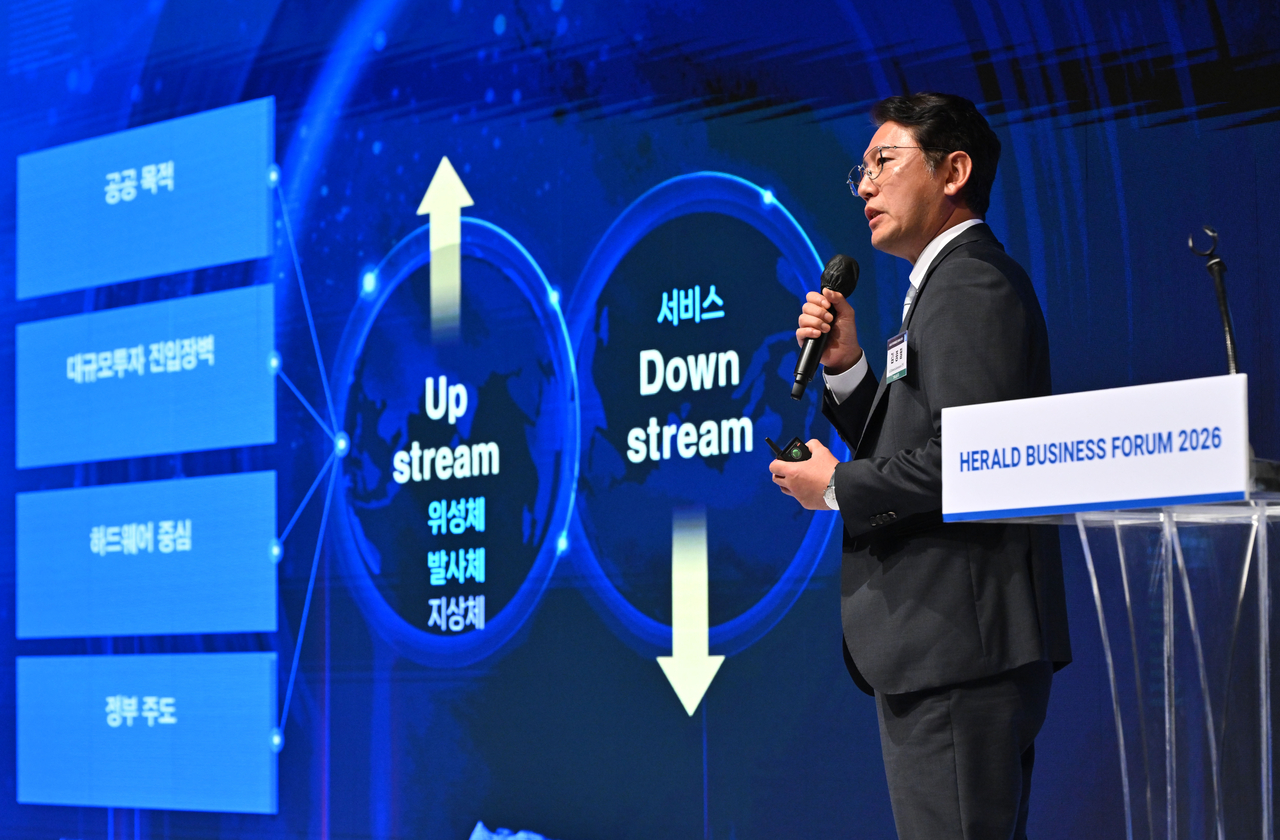
As the space industry enters the New Space era — marked by fundamental shifts in how space is developed and used — experts are calling on the defense sector to make greater use of private and commercial services alongside the space assets of allied nations.
Kim Jong-pil, executive vice president of LIG Defense & Aerospace, made the case at the Herald Business Forum 2026, held Tuesday at Shilla Hotel in Jung-gu, Seoul. Speaking on the theme of national space development in the K-New Space era, Kim said the emergence of New Space has set the industry on a path toward commercialization. "The government, the military, academia and the private sector each need to play their own role," he said.
Kim divided the space industry into two segments: "upstream," which covers the manufacturing and launch of satellites and launch vehicles, and "downstream," which involves using data gathered from satellites to deliver services. "Upstream faces steep barriers to entry because satellite operations and launch vehicle development are largely driven by public-sector objectives," he said. "It remains a hardware-centered market where the government pours in enormous budgets to push the technology forward."
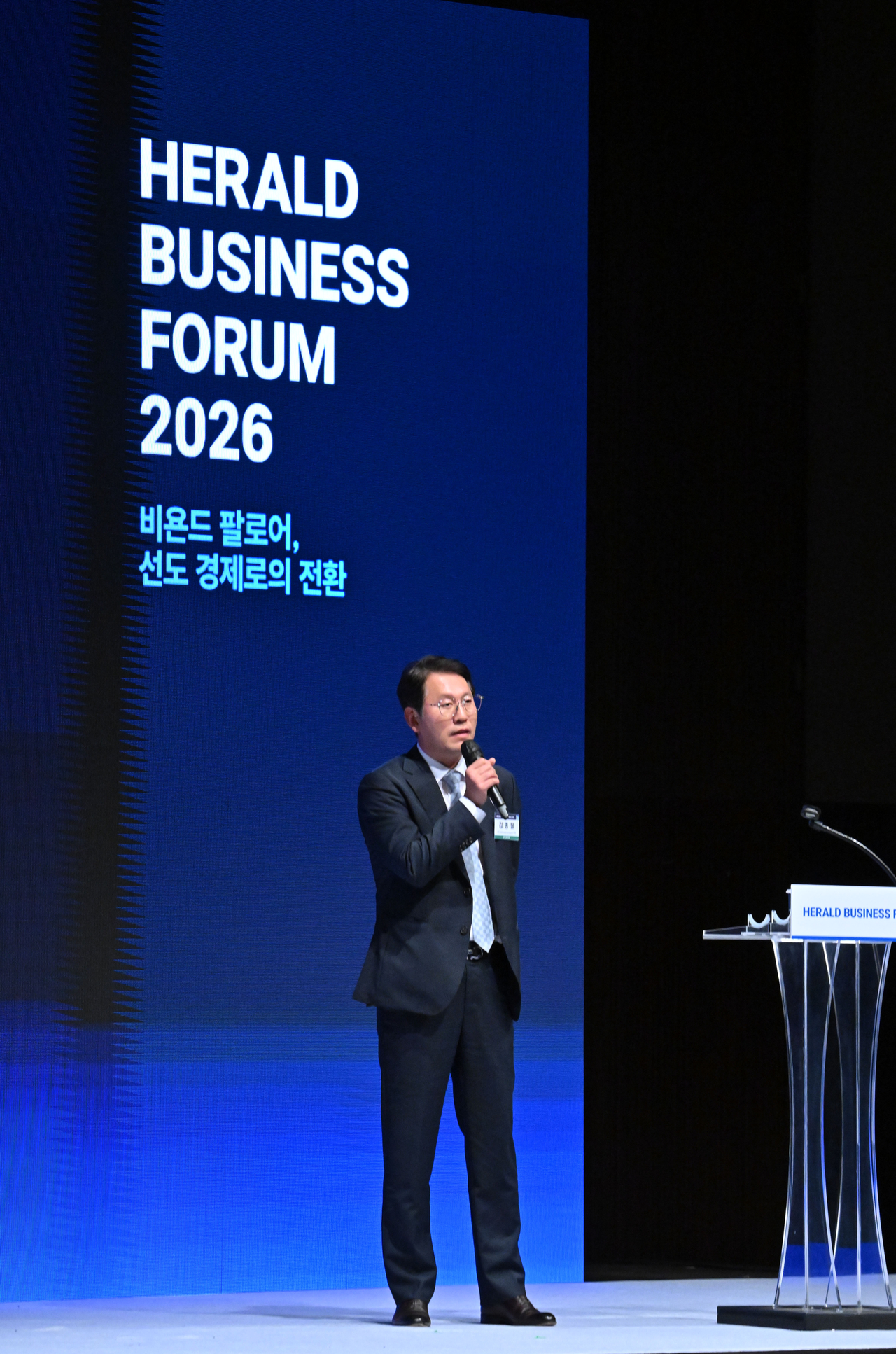
However, Kim said the influx of private capital is already reshaping the industry's structure. "A new business segment has emerged around collecting, selling and reprocessing data," he said. "AI analysis applied to satellite imagery can identify what is in a frame — whether it is a tank or an armored vehicle — and turn that into actionable intelligence."
Kim also pointed to falling launch costs as another driver of the New Space boom, citing SpaceX's reusable launch vehicles as the defining example. In the past, the high cost of a single launch made it essential to keep satellites in service as long as possible. Reusable rockets changed that equation: by bringing costs down, they made it economically viable to build satellites more cheaply and launch them more frequently — a virtuous cycle that has driven up satellite numbers and expanded the range of services on offer.
Kim said these shifts are also changing how the defense sector acquires weapons systems. Citing companies such as Anduril and Palantir, he said the defense industry is in the midst of transformation — moving away from the traditional, lengthy cycle from planning and research to fielding, and toward faster development and deployment, or the use of needed capabilities as a service.
Kim said the same logic applies to how the military acquires space assets. He noted that SpaceX's Starlink and commercial Earth-observation satellites are being used in the war in Ukraine, and that the US military is also using Starshield, Starlink's military-grade service.
That does not mean the military should rely entirely on the private sector for all its space assets, however. "Information needed for military decision-making requires high-performance intelligence, and that must be owned directly," Kim said.
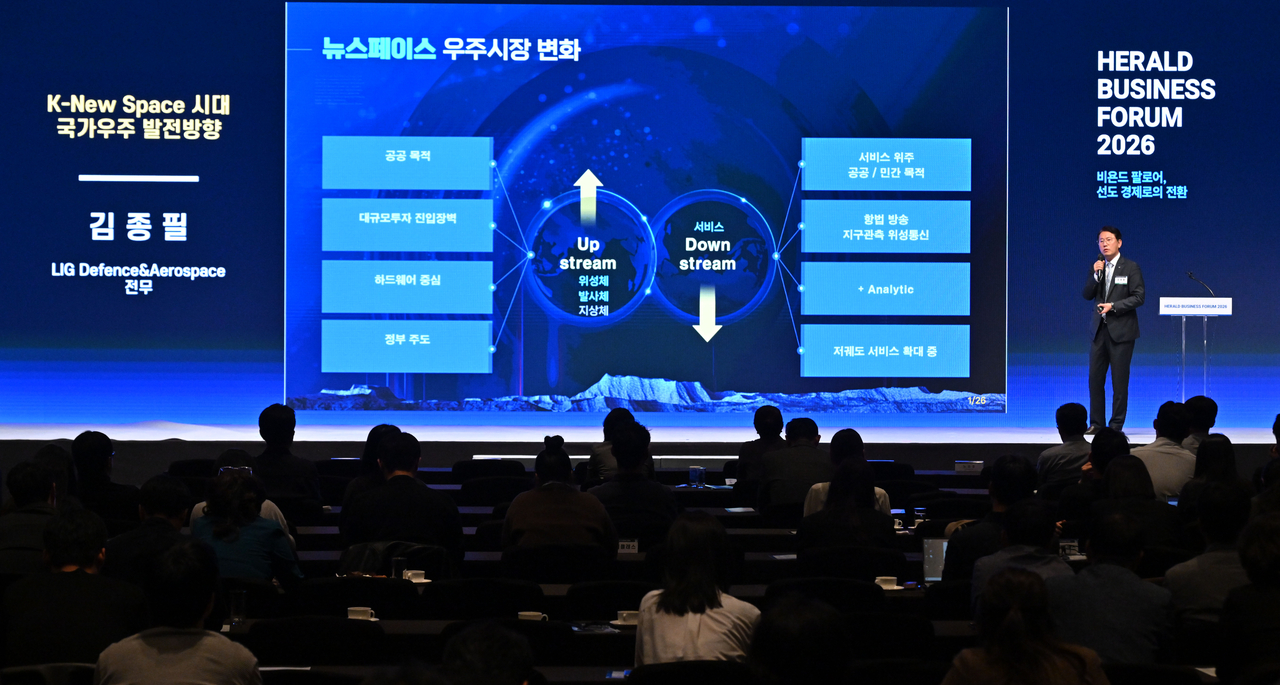
At the same time, Kim said a large number of commercial satellites — even lower-performance ones — could be used alongside military assets when available. He also argued that South Korea should look beyond building all its space capabilities independently and instead link up with assets held by allied nations. "South Korea does not stand alone," he said. "There will be times when this kind of comprehensive, integrated approach is exactly what is needed."
Kim said growing South Korea's New Space industry will also require the government and military to rethink their roles — particularly by reforming regulations and generating reliable demand so that private companies are willing to invest in the sector.
Just as NASA helped companies like SpaceX grow by entrusting them with space services, Kim proposed that the military should serve as an early source of demand for commercial space services. "It would be ideal if the military expanded its readiness to use commercial space services by also leveraging private assets, so that an early customer is in place when the private sector is ready," he said.
keg@heraldcorp.com