More than 20 companies have filed objections over conditions requiring a technology-support agreement with a specific vendor; the inclusion of an RFID system in the tender is also disputed as unfair.
More than 20 companies have raised allegations of an unfair bidding process in a 730 million won ($537,000) contract to build an ICT system for a new children's library in Yeosu, South Jeolla Province, after the city announced a preferred negotiating partner for the project.
Industry players allege that the city's restricted competitive tender effectively forced bidders to sign a prior supply and technology-support agreement with the winning company — referred to as Company A — covering five ICT product categories. They also contend that bundling an RFID automated self-checkout and return system into the tender was designed to steer the contract to a specific vendor.
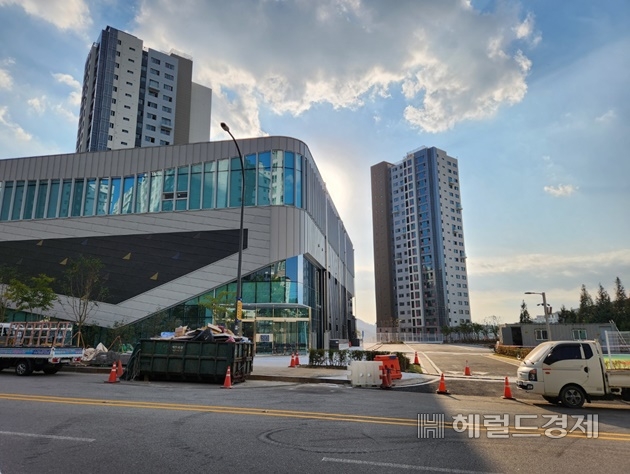
According to the city, Yeosu recently completed the Kkumbada Children's Library in the Jungnim district of Sora-myeon at a construction cost of about 13 billion won. The building has one below-ground floor and three above-ground floors with a total floor area of 2,495 square meters. The official opening is scheduled for July next year, pending the acquisition of a book collection and additional digital equipment.
The library — the first children's library in the Yeosu area — is designed to include a toddler reading room, a shared childcare space, an experiential zone, a performance hall and a learning center. The city's vision is to build the finest children's library facility in the eastern South Jeolla region, encompassing Suncheon and Gwangyang, through dedicated children's ICT spaces and an RFID system.
The controversy centers on the city's requirement that bidders for the 730 million won ICT contract first sign a supply and technology-support agreement with Company A covering five product categories worth 300 million won — equal to 41 percent of the total project budget.
Companies that had prepared bids complained that committing 41 percent of the contract value to a pre-arranged agreement with Company A amounted to an unfair tender that effectively forced them to forgo any profit margin.
The agreement went beyond a simple MOU. The city included language in the tender notice pre-committing to a specific vendor for specific amounts, stating that Company A "may supply the necessary goods and provide technical support in the future prior to the conclusion of the main contract." Industry participants said this constituted a binding prior commitment to use that vendor's products and services throughout the project.
One industry official who withdrew from the bidding said, "To participate in the public procurement tender, you have to sign a 300 million won technology agreement with a specific company on a 700 million won contract — that is an excessive restriction, and almost no company can meet that condition." The official added that as many as 21 companies filed objections during the pre-announcement phase, yet the city posted the tender as an "emergency bid" and closed it within 10 days. "It is infuriating," the official said.
The same official said that while some wording was changed after widespread industry objections — covering conditions such as bans on joint supply and subcontracting, direct-production certificates, three-year integrated performance records, patent-holding scoring and the technology-support agreement — the fundamentally unfair competitive conditions remained in the final notice. "It should be disclosed in a comparison table who reviewed this, on what basis, and what was or was not reflected," the official said.
Pre-announcement notices typically draw two or three inquiries, making the roughly 20 objections over the technology-support agreement condition highly unusual. As protests mounted, Yeosu revised some language, attributing the original wording to "typos or errors," but maintained the emergency-bid format.
Another industry official said the emergency-bid designation was baffling given that the library's official opening is still a year away, scheduled for July 2027. "The building is done, but there is still a year to go before opening — time needed to acquire books and set up systems. It is incomprehensible administration to post an emergency bid on the public procurement portal," the official said. "There must never be another procurement process this suspicious."
When bidding opened, only two of the roughly 20 companies in the sector submitted bids. Besides Company A, only Company B — which had not even attended the pre-bid briefing — participated. After a proposal presentation involving both companies, Company A, which had been rumored as the predetermined winner, was selected as the preferred negotiating partner.
The two companies have also been found to have bid side by side on other public library and information and communications projects, winning contracts together, raising suspicions that one served as a token participant to give the appearance of competition.
The scale of the ICT tender for the Yeosu children's library also stands out as unusually large compared with similar projects elsewhere.
The ICT tender for the children's English library in Hanam, Gyeonggi Province came to 136 million won, and the ICT construction project for Goesan-gun public library was 171 million won — making the Yeosu children's library's roughly 700 million won contract value comparatively high.
The scoring criteria for the library ICT tender have also drawn criticism. The original notice awarded three points to companies holding five or more relevant patents; after revisions, the threshold was lowered to two patents, but the three-point score was kept. Some systems were also designed to require the application of patented technology, and the "system patent holdings" category — set at two patents — was assigned three points, a conspicuous advantage over other evaluation items worth only one point each.
Industry officials have also questioned why the book RFID project was bundled into the ICT system tender rather than procured separately through the Public Procurement Service's online shopping mall — a move they say was intended to avoid a competitive bidding requirement that applies to contracts exceeding 100 million won.
The library's decision not to require accessibility-certified products for its RFID self-checkout and return kiosks has also drawn criticism, given that public libraries nationwide have adopted such certified equipment to serve people with disabilities and elderly users.
The current Digital Inclusion Act requires that unmanned information terminals be usable by people with disabilities and the elderly, and that accessibility-verified or certified products be given purchasing priority. Yet the tender notice and request for proposals contained no mention of prioritizing such certified products.
Despite the controversy, Yeosu proceeded with the bid opening, selected Company A as the preferred bidder and plans to finalize the contract through two weeks of negotiations, with a decision expected by Sunday.
The city's website has published the scores assigned by the eight proposal evaluators, but only the qualitative assessment component — worth 70 points — has been disclosed. The quantitative evaluation score of 20 points and the bid price evaluation score of 10 points remain undisclosed.
A Yeosu city library operations official said that under the negotiated-contract evaluation process, only the qualitative assessment conducted by the proposal evaluation committee — accounting for 70 percent of the total score — is subject to public disclosure. The official added that the city's accounting division had indicated that the quantitative evaluation score of 20 percent "may or may not be posted" in the case of a direct bid.
The official also defended the supply-agreement requirement, saying it was intended "to prevent companies from distorting the market and to ensure that content is secured," and that companies believing the conditions were unreasonable could raise objections through a feedback process. The official said the supply-commitment letter was not a mandatory condition and that other companies could compete on the strength of better content. On the emergency-bid designation, the official said the city had no choice but to proceed urgently because the supplementary budget funds had to be fully spent within the fiscal year.
Despite the city's explanation, industry participants said they found it difficult to accept an approach in which a local government withholds key details of a bid result and simply asks the public to accept the outcome.
Industry officials are urging the city to conduct a full review and overhaul of the bidding process — both to avoid the appearance of unfairness and to prevent the waste of public funds. They pointed to a precedent from April, when Yeosu canceled and re-evaluated the selection of a contractor for its "Island Day" event after the initial evaluation process drew allegations of irregularities.
parkds@heraldcorp.com