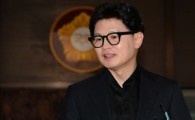
![Korea Zinc Chairman Choi Yun-beom. [Provided by Korea Zinc]](https://wimg.heraldcorp.com/news/cms/2026/09/28/news-p.v1.20260814.f8fdd49a16484ac3b9e3a552ef6bfa89_P1.jpg)
Korea Zinc Chairman Choi Yun-beom said the company will expand its product portfolio to more than 30 types over the next five years to strengthen its competitiveness in critical minerals.
In his 11th letter to shareholders, sent recently, Choi laid out the growth strategy.
"Over the past 20 years, the number of metals, materials and byproducts produced at Korea Zinc's Onsan smelter has grown from 12 to more than 20 types," Choi said. "We found recovery and refining potential in waste that many smelting companies had ignored, turned that into products, and designed a business that captures value across the periodic table."
"In the process of engaging with customers, their needs, and a rapidly changing market, Korea Zinc is exploring new products that can secure additional competitiveness," he added. "We aim to expand the product portfolio from the current 20-plus types to more than 30 types over the next five years."
Choi described the diversification strategy as a "periodic table roulette strategy." Because the metals commanding strength in the market — antimony, gold and silver among them — keep shifting, he said the company plans to broaden its portfolio to reduce dependence on any single metal and generate profit across a wider range of products.
Choi also presented Project Crucible, a plan to build an integrated smelter in the United States, as another pillar of growth. "Project Crucible combines the proprietary technology and operational capabilities Korea Zinc has built over more than 50 years with strategic partnerships and policy and fiscal support from the US government," he said. "It will enhance the stability of the global critical minerals supply chain and position Korea Zinc as a long-term supply partner that strategic industries can rely on."
On the outcome of the extraordinary shareholders' meeting held Sept. 9, Choi said he believed the result "reflects the trust and expectations of our shareholders," adding that the company would "make Korea Zinc stronger through principled execution, improved governance and sustainable value creation." At that meeting, Baek In-gyu — the candidate recommended by Korea Zinc's board — was elected as audit committee member, defeating the candidate put forward by Youngpoong and MBK Partners, which had been locked in a management control dispute with the company. Market observers said the result gave Korea Zinc a significantly stronger footing in defending its management control.
kimstar@heraldcorp.com