Ministry of Economy and Finance revises tax estimate upward; annual national tax revenue seen hitting record 465.4 trillion won
Future fund total seen exceeding 212 trillion won; full allocation of surplus revenue not yet decided
Local subsidy funds to be usable over three years; fiscal-year exception extended
South Korea's surplus tax revenue this year is expected to exceed 50 trillion won ($36.8 billion), driven by a boom in the semiconductor sector. The total pool available for the government's Future Response Fund next year is projected to comfortably surpass 200 trillion won.
According to relevant government ministries, the Ministry of Economy and Finance has determined that surplus tax revenue will exceed 50 trillion won in its revised 2026 national tax revenue estimate, set to be released at the end of this month.
That figure represents revenue collected above and beyond the upwardly revised tax intake already incorporated into the supplementary budget passed by the National Assembly in April.
It means annual tax revenue this year will reach 465.4 trillion won, surpassing the supplementary budget's national tax revenue baseline of 415.4 trillion won by that margin.
This year's tax haul is now virtually certain to surpass the previous all-time record of 395.9 trillion won set in 2022, breaking that mark for the first time in four years. Compared with last year's national tax revenue of 373.9 trillion won, the increase amounts to more than 91.5 trillion won.
The upward trend is already visible in published revenue data. Cumulative national tax revenue for January through July, released by the Ministry of Economy and Finance on Aug. 31, stood at 274 trillion won — up 41.4 trillion won from the same period last year.
The collection pace against the supplementary budget stood at 66.0 percent, 2.5 percentage points above the five-year average of 63.5 percent.
Corporate tax revenue rose 4.4 trillion won to 51.8 trillion won as corporate earnings improved. Income tax climbed 12.2 trillion won to 89.3 trillion won, boosted by higher performance bonuses and increased real estate transaction volumes.
Value-added tax collections grew 8.1 trillion won to 69.4 trillion won as private consumption and imports increased. Securities transaction tax revenue surged 348.5 percent from a year earlier to 8.2 trillion won, while the special rural development tax — linked to Kospi trading volume — jumped 182.5 percent to 13.1 trillion won.
For surplus tax revenue to exceed 50 trillion won, more than 191.4 trillion won must be collected over the five months from August through December. The government believes this is achievable largely because of interim corporate tax prepayments from chipmakers, which are reflected in August and September figures.
Corporate tax collections through July totaled 51.8 trillion won, up 4.4 trillion won, but interim prepayments from companies with December fiscal year-ends have yet to be counted for August and September.
Companies in publicly disclosed conglomerates with December fiscal year-ends file a provisional first-half earnings settlement by the end of August, and those with tax liabilities exceeding 10 million won pay in two installments through September.
Samsung Electronics posted cumulative operating profit of 146.7 trillion won through the first half of this year, while SK hynix recorded 98.2 trillion won, bringing the combined total to nearly 245 trillion won — making these interim prepayments a decisive factor in overall tax revenue performance.
The favorable tax environment feeds directly into the funding base for the Future Response Fund, a new vehicle the government is pursuing.
The government describes the Future Response Fund as a "fiscal reservoir" designed to overcome the limitations of single-year budgeting. The plan is to invest in youth, growth engines, regional development, and education and talent to raise the potential growth rate, while using the fund to shore up fiscal capacity when revenue shortfalls arise.
The government's draft spending plan for the Future Response Fund next year incorporates 45.4 trillion won in investment and a 12.5 trillion won reduction in new government bond issuance.
The fund's foundational "additional tax revenue" component stands at 162.3 trillion won — the portion of the 2027 domestic tax revenue budget that exceeds the trend line of the past decade. This is separate from the surplus tax revenue figure that will emerge from this month's revised estimate.
Adding only the minimum 50 trillion won in this year's surplus revenue to that base already yields 212.3 trillion won. Whether all of the surplus revenue will be channeled into the fund has not been decided, but the total is widely expected to comfortably exceed 200 trillion won, as residual fiscal surplus funds and returns from cash management operations can also be tapped as funding sources.
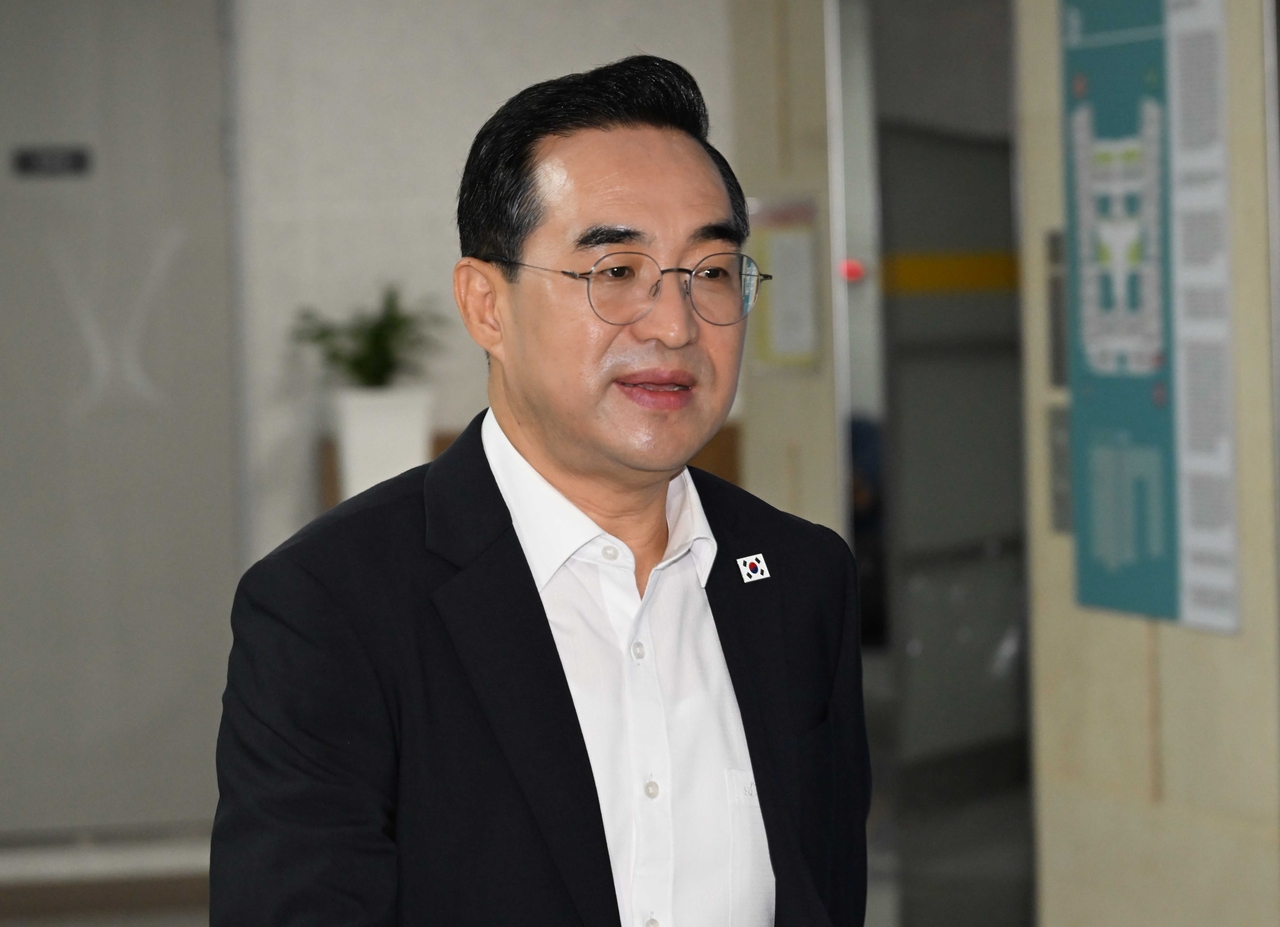
Minister of Planning and Budget Park Hong-keun said Wednesday that once the revised tax estimate is released, the ministry will hold internal discussions and consult with Cheong Wa Dae and the Ministry of Economy and Finance before deciding how to deploy the surplus revenue in accordance with the law.
Meanwhile, the government has submitted legislation to the National Assembly that would allow national subsidy project funds allocated to the regional account of the Future Response Fund to be spent over up to three fiscal years — through the fiscal year after next. If enacted as drafted, subsidy projects under the 2027 Future Response Fund regional account that meet certain conditions could be executed over three years through 2029.
In addition, 125 of the 131 pure expenditure projects in next year's Future Response Fund — about 95 percent by count — were reflected in the budget proposal as originally requested by the relevant ministries, or were added or increased. Only six projects were cut below ministerial requests.
oskymoon@heraldcorp.com