Overseas wild bird AI cases up 106.5% from last year, reaching 2,957
13 foot-and-mouth cases reported in September; minister urges vaccination, farm disinfection
Homebound travelers asked to avoid migratory bird habitats and livestock farms
![This photo is unrelated to the article. [Getty Images Bank]](https://wimg.heraldcorp.com/news/cms/2026/09/24/news-p.v1.20260903.44244daec0944cb0b01b527cb8055e05_P1.jpg)
As the Chuseok holiday got underway, the government launched an inspection of its livestock disease prevention systems amid a string of domestic foot-and-mouth disease cases and a sharp rise in highly pathogenic avian influenza outbreaks abroad. Authorities are focusing on on-site biosecurity management — including disinfection of livestock vehicles and personnel — to prevent the spread of animal diseases through farms during the holiday period, when travel by people and vehicles surges.
The Ministry of Agriculture, Food and Rural Affairs said Minister Song Mi-ryeong visited the South Chungcheong Province disaster operations center and a hub disinfection facility in Dangjin on Thursday to inspect the state of livestock disease prevention and the holiday response system.
The number of overseas wild bird AI cases recorded from January through August this year reached 2,957, up 106.5 percent from 1,432 cases during the same period last year. Domestically, 13 foot-and-mouth disease cases have been confirmed in September — three in Ganghwa, Incheon; two in Goyang, Gyeonggi Province; and eight in Yecheon, North Gyeongsang Province.
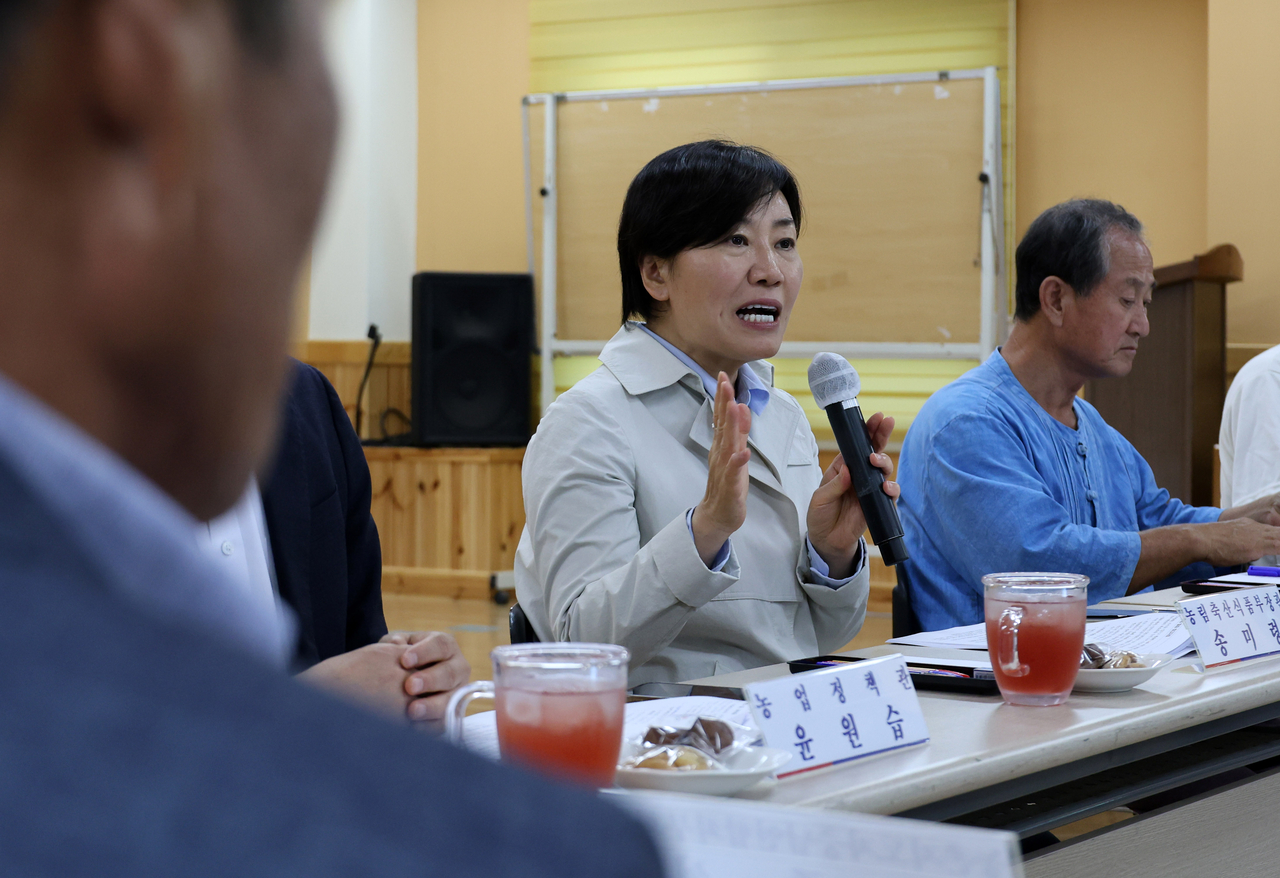
South Chungcheong Province briefed the minister on its key prevention plans for the 2026–2027 season, including on-site inspections of poultry and pig farms, farmer education sessions, deployment of dedicated specialist managers, and management of densely concentrated laying-hen complexes. Dangjin outlined its disinfection management approach centered on hub disinfection facilities to block disease transmission.
Song said managing high-risk areas — such as densely concentrated laying-hen zones that suffered heavy losses last winter — is critical at a time when the risk of AI outbreaks has risen, and called for prevention measures tailored to conditions on the ground.
She also ordered stepped-up vaccination and farm-level biosecurity measures to prevent further spread of the recent foot-and-mouth cases. Song urged thorough compliance with basic biosecurity protocols, including ensuring no animals are missed in vaccination drives, restricting outside access to farms, and carrying out disinfection both inside and outside farm premises.
Song then visited the Dangjin hub disinfection facility to check on the pilot operation of its unmanned automated system. She asked officials to manage the disinfection of livestock vehicles and personnel closely to prevent transmission through vehicles and people visiting farms.
She also called on livestock farmers and homebound travelers to observe biosecurity rules during the Chuseok holiday. Song urged farmers to make basic precautions — such as changing into boots before entering farm areas — part of daily routine, and asked people traveling to their hometowns to refrain from visiting migratory bird habitats and livestock farms.
adastra@heraldcorp.com