Hi-pass unpaid tolls up 76% in four years
95% of notification costs go to postal mail
Korea Expressway Corporation eyes mobile alerts
![A truck passes through a Hi-pass lane at the Seoul tollgate on the Gyeongbu Expressway in Gungnaedong, Bundang-gu, Seongnam, Gyeonggi Province. [Yonhap]](https://wimg.heraldcorp.com/news/cms/2026/09/23/news-p.v1.20260923.f05f3007809843ba91f95f6c467d5502_P1.jpg)
As highways fill with holiday travelers heading home for Chuseok, it has emerged that nearly 6.5 billion won ($4.78 million) a year is spent simply notifying drivers of unpaid Hi-pass tolls. More than 95 percent of last year's notification costs went to ordinary and registered postal mail, and the bill keeps growing as both the number of unpaid tolls and repeat offenders rise.
According to data submitted Wednesday by the Korea Expressway Corporation to the office of Rep. Bu Seung-chan of the Democratic Party of Korea, a member of the National Assembly's Land and Infrastructure Committee, the total cost of notifying drivers of unpaid Hi-pass tolls last year came to 6.46 billion won. Of that, 6.18 billion won — 95.6 percent — went to ordinary and registered mail. Electronic notifications via Kakao and Naver authentication services cost 257 million won, while text messages and KakaoTalk notifications accounted for 28 million won.
The Korea Expressway Corporation is reviewing ways to expand the use of electronic documents to reduce its heavy reliance on registered mail. Registered mail costs 2,930 won per item and ordinary mail 530 won, compared with 99 won for electronic documents and just 4.5 won for KakaoTalk. Although the share of electronic notifications climbed to 55.8 percent last year, postal mail still accounts for the bulk of costs.
"Postal mail has such a high unit cost that even a relatively small volume of letters accounts for a large share of total expenses," a Korea Expressway Corporation official said. "We are looking into ways to replace postal notifications with electronic documents this year or next year."
The official added that mobile notifications require user consent because phone numbers cannot be used without permission. "Currently, mobile notifications are sent only to users who signed up for unpaid toll alerts when registering their device," the official said.
![The southbound lanes of the Gyeongbu Expressway at Jamwon IC in Seocho-gu, Seoul, are packed with vehicles heading home during last year's Chuseok holiday. [Yonhap]](https://wimg.heraldcorp.com/news/cms/2026/09/23/news-p.v1.20260923.e46d33e441614f7dadf1f82a06cf0903_P1.jpg)
370,000 vehicles with 20-plus unpaid tolls — more than double in four years
The rising notification costs reflect a broader surge in unpaid Hi-pass tolls. The number of unpaid toll incidents grew about 76 percent, from about 21.94 million cases in 2021 to about 38.53 million last year. Over the same period, the total unpaid amount rose from 58 billion won to 99.4 billion won, and postal notification costs alone climbed from 4.02 billion won to 6.18 billion won.
The Korea Expressway Corporation believes most unpaid tolls stem from mistakes or equipment errors rather than deliberate evasion. Common causes include driving through a Hi-pass lane without a device installed, failing to insert a card, having insufficient card balance, or using a card whose automatic top-up has been suspended.
"Communication failures involving the device or the lane itself account for less than 1 percent of unpaid cases," a corporation official said. "Most are caused by drivers having no device, no card inserted, insufficient balance, or a suspended card. The overall increase in traffic volume has also contributed to the continued rise in unpaid tolls."
Repeat offenders are also on the rise. The number of vehicles with 20 or more unpaid toll incidents more than doubled, from 170,000 in 2021 to 374,000 last year. The unpaid amount attributable to this group reached 42.9 billion won last year — nearly half of the total unpaid figure of 99.4 billion won.
However, accumulating 20 or more unpaid tolls does not automatically trigger a tenfold surcharge. Under the Toll Road Act, a surcharge of up to 10 times the unpaid amount can be imposed on drivers who evade tolls through fraudulent or improper means — specifically those who fail to pay even after receiving a notification, or who have accumulated 20 or more unpaid incidents within the past year. Last year, the total surcharges levied came to 29.6 billion won.
"Unpaid tolls can result from simple mistakes such as insufficient balance or a device malfunction, so reaching 20 incidents does not automatically mean a tenfold surcharge is imposed," a Korea Expressway Corporation official said. "Even in cases of repeated use of Hi-pass lanes without a device, we first inform drivers about the rules and urge caution before taking further action."
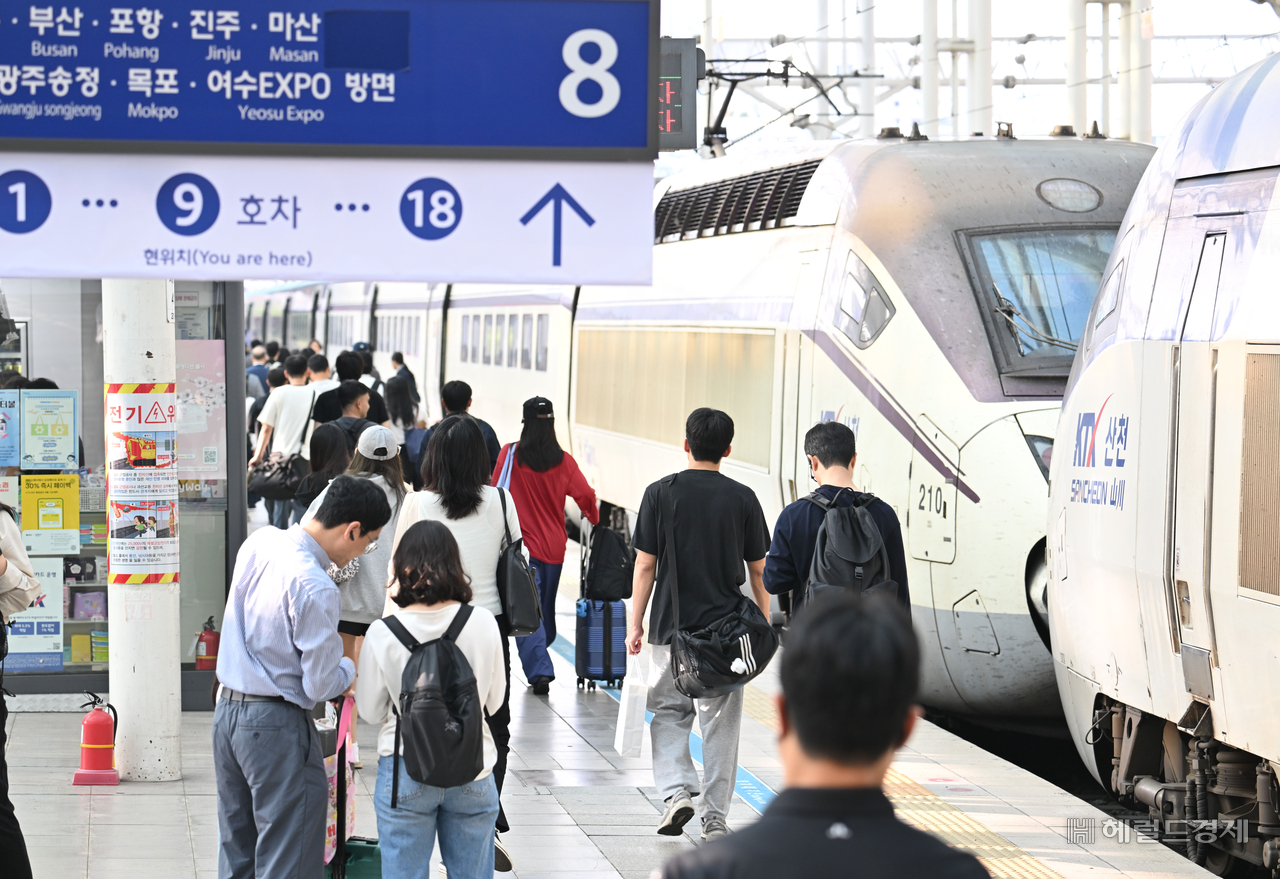
Expressway tolls will be waived for three days over the Chuseok holiday period, including the holiday itself. Still, many drivers travel before or after the toll-free window. "A lot of people head home early or return late, so traffic is heavy in the days around the holiday as well," a Korea Expressway Corporation official said, urging drivers to check that their Hi-pass device and card are working properly before setting out.
jookapooka@heraldcorp.com