Interview with Kim In-man of Kim In-man Real Estate Economic Research Institute and Kim Je-gyeong of Tumi Real Estate Consulting
Experts offer outlook on home-buying timing and price-range forecasts
Herald Money Festa to be held Oct. 2–3
[Video = Kim Yul, Yoo Jong-woo PD]
"Should you hold out without buying?" — an answer from Kim In-man
"Supply measures with no real supply" — why home prices won't come down, with Kim Je-gyeong
"The sub-2-billion-won segment, where the tax burden is lighter, will become a market fiercer than the World Cup — homeowners pushed down from higher-priced areas, tenants and newlyweds will all be competing against each other." — Kim In-man, Kim In-man Real Estate Economic Research Institute
"The Aug. 3 tax reform will usher in an era close to the total collapse of the jeonse and monthly-rent market. Even Seoul's so-called mid-tier areas have now entered the 2-billion-won era." — Kim Je-gyeong, Tumi Real Estate Consulting
As the jeonse and monthly-rent crunch deepens alongside a sustained rise in Seoul home prices, more people are weighing whether to buy. With demand fleeing high-priced properties burdened by tax and lending regulations, prices are surging even in Seoul's outer neighborhoods. Real estate experts forecast that competition for homes priced below 2 billion won ($1.47 million) — where the tax burden is lighter — will intensify further as end-users and buyers relocating from pricier areas converge on the same segment.
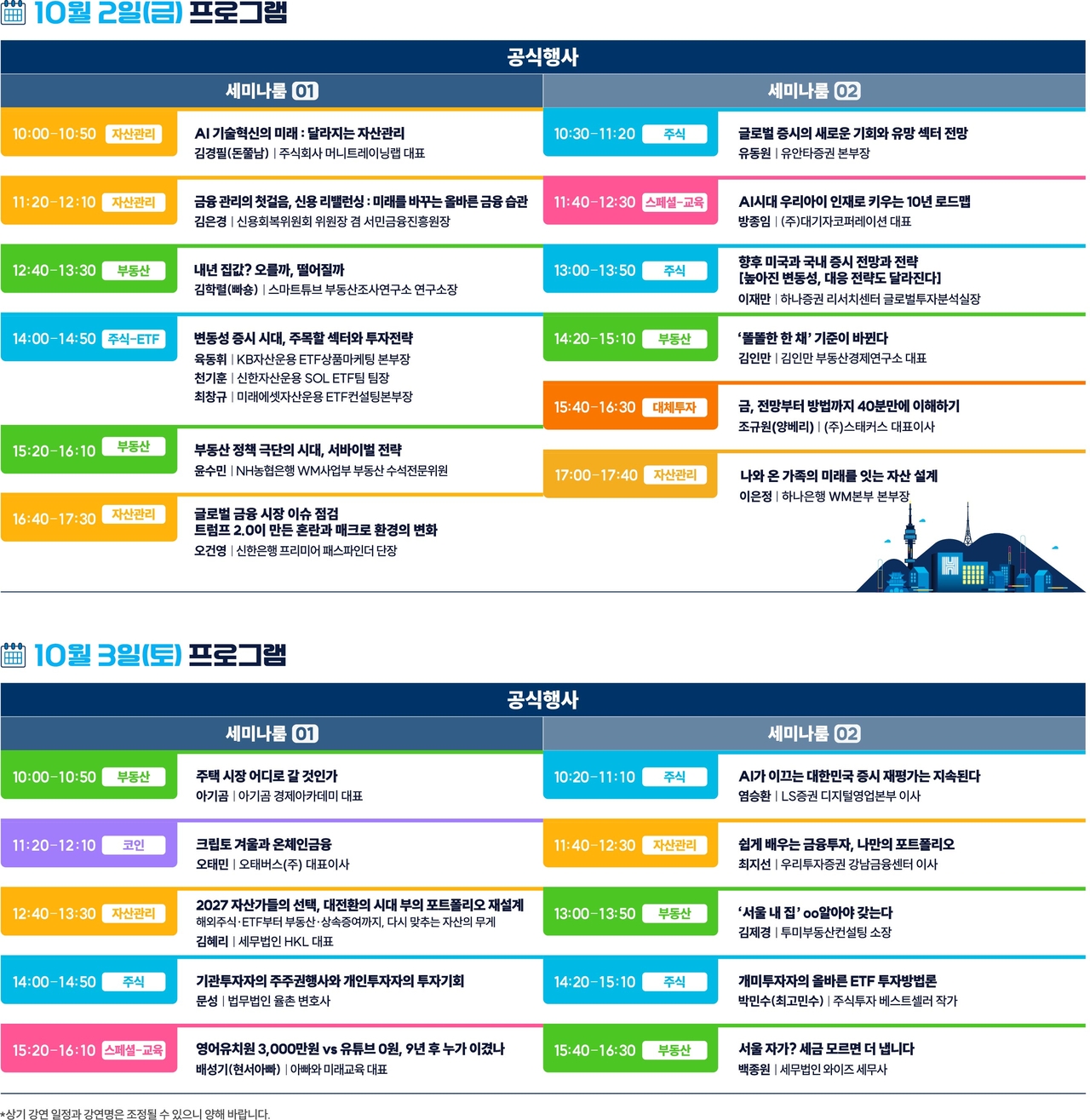
Kim In-man, director of Kim In-man Real Estate Economic Research Institute, and Kim Je-gyeong, director of Tumi Real Estate Consulting, will each give a lecture at Herald Money Festa 2026, running Oct. 2–3, on the themes "The standard for a smart single property is changing" and "What you need to know to own a home in Seoul."
Both experts expect demand to keep shifting toward lower-tax properties following the Aug. 3 tax reform package, which tightens property holding taxes and capital gains taxes.
"Under the government's tax reform plan, homes priced at 3.5 billion won or more will face a heavier tax burden regardless of whether the owner lives there," Kim In-man said. "If owners of high-priced homes sell because of that burden, they will ultimately move into the nearby Han River belt — areas like Gangdong, Dongjak and Gwangjin-gu — making competition for homes in those areas even fiercer."
Kim Je-gyeong also forecast that instability in the jeonse and monthly-rent market after the tax reform could stoke demand for mid- to low-priced homes in Seoul. "It has become hard to find a home in Seoul priced below 1.5 billion won," she said. "The problem is that even those properties are seeing prices rise as demand piles in."
Experts expect the same chain-migration dynamic to play out in the jeonse market. Kim In-man said jeonse demand from Gangnam would shift to the Han River belt, and demand from the Han River belt would in turn move to areas such as Seodaemun and Dongdaemun, prolonging competition for available jeonse listings. He warned that a lag between the shortage of move-in units and the point at which government supply measures produce visible results would trigger what he called a "triple ultra-tight jeonse and monthly-rent war."
Demand is expected to concentrate in the sub-2-billion-won price range as homeowners relocating from higher-priced areas, tenants worn out by the rental crunch who have decided to buy, and newlyweds all compete for the same properties. "The most explosive competition will be below 2 billion won," Kim In-man said, adding that the convergence of all these buyers would make it "quite a difficult market."
Asked when people without homes should buy, both experts advised moving ahead with a purchase by making maximum use of available loans.
"As the tax burden on homeowners grows and owner-occupancy requirements tighten, tenants will keep suffering from housing insecurity," Kim In-man said. "It will take seven to eight years for the government's supply measures to produce real results, and move-in supply will remain short throughout — can you really hold out on jeonse or monthly rent until then?"
Apartment subscriptions can be a good option, but both experts agreed that the odds of winning one are low.
"Realistically, a Seoul apartment subscription is not easy unless your points score is above 70," Kim Je-gyeong said. "That is also why young people are flocking to redevelopment and reconstruction investments." She added that the complexity of such investments — factoring in pre-sale eligibility, rising construction costs and cost-sharing burdens, and project viability — must also be taken into account.
Kim In-man similarly advised that "receiving a gift from parents and using it to buy a high-priced apartment coming onto the market as a distressed sale through next year is one option," adding: "Unless you have strong subscription points or something to inherit from your parents, there is no need to wait to buy a home."
The full analysis from both experts is available in the video above. More details can be heard in person at the Herald Money Festa, to be held at Dongdaemun Design Plaza in Seoul on Oct. 2 and 3.

lucky@heraldcorp.com