Interview with freeze-dried snack creator Anunu
Output reaches 30,000 units a day as traditional yeot candy finds new fans
'My goal is to make it Korea's signature souvenir'
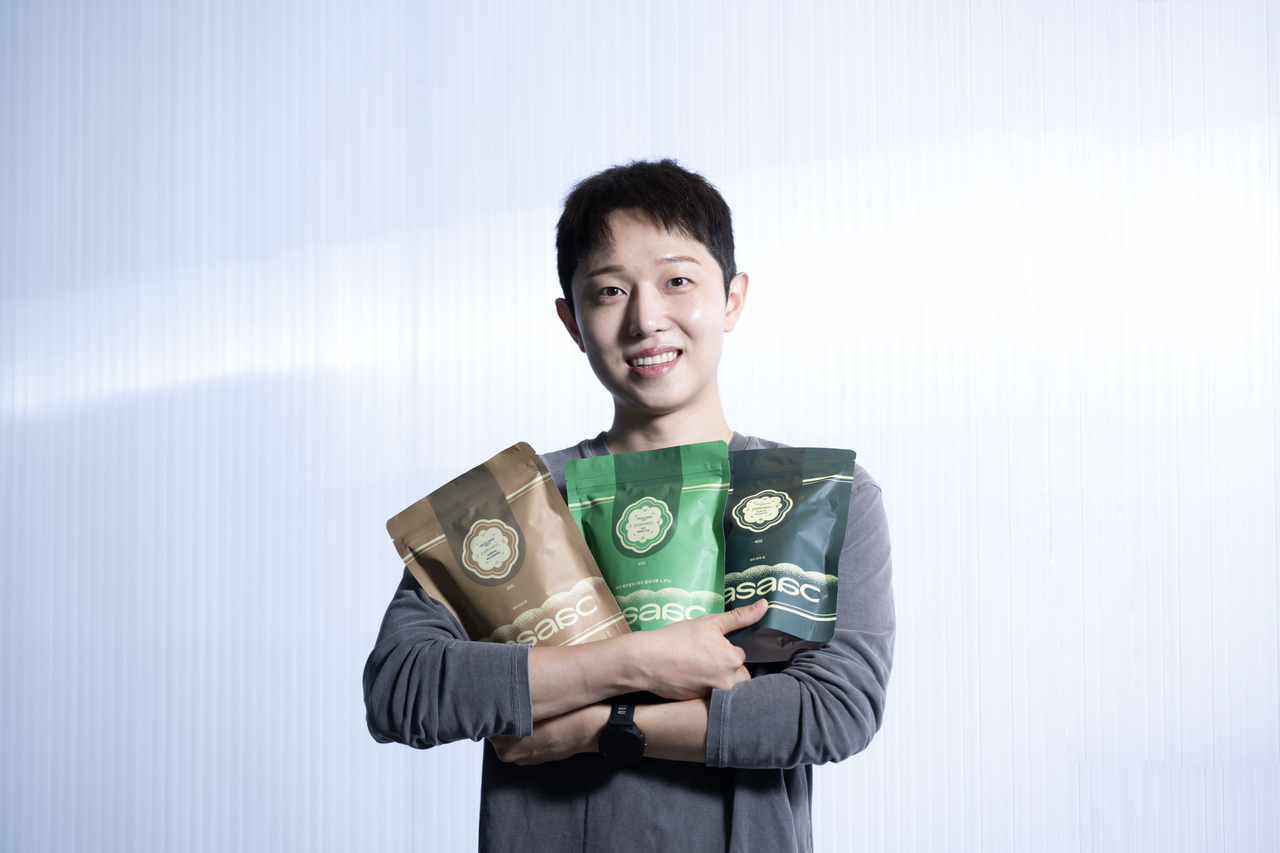
"We want to be Korea's Tokyo Banana — a souvenir that every foreign visitor feels they have to take home."
Snack creator Anunu spoke with quiet confidence when met Tuesday at the Sandbox Network headquarters in Yongsan-gu, Seoul. Her goal is to turn Pasak — a dessert that reimagines the traditional Korean candy yeot through freeze-drying, giving it a light, crispy texture — into the kind of must-buy treat that Tokyo Banana has become for travelers to Japan.
Yeot was not where she started. After noticing that home freeze-dryers were becoming popular in the United States, she bought one herself and began freeze-drying jellies, fruit and other snacks. She built a following of 500,000 by capturing the dramatic textural transformation and the satisfying crunch on camera — a deliberate choice born from the realization that short-form video cannot convey taste directly, but it can show a visual change and let viewers hear a sound.
"Nobody was doing freeze-dried content at the time, and I wanted to try it first," she said. "It was a financially difficult period, but I told myself I had to get there before anyone else did — so I bought the machine."
Anunu began creating content in 2017 and experimented with a wide range of formats before joining Sandbox in 2019. She started with short-form video on TikTok, then expanded to YouTube Shorts. "Some of the content felt like wearing clothes that didn't fit," she said. "But all of those experiences became the know-how behind the snack content I make today."
Her parents played a role as well. Watching them run a café and develop new menu items gave her an early, hands-on education in combining ingredients and flavors. "Seeing new dishes come together naturally taught me how to think about taste," she said.
As her audience grew, so did her ambition to build a brand. Her benchmark was simple: do something nobody else had done. Drawing on years of experimenting with different ingredients, she landed on yeot. The road was not easy — particularly the production process itself. Getting the candy to hold its crispy texture and flavor after freeze-drying was the central challenge, and perfecting the recipe alone took nearly a year.

"I was running the freeze-dryer around the clock, so I was working about 20 hours a day," Anunu recalled. "There was no machine to stretch the yeot, so I did it by hand — and ended up gaining two to three kilograms of muscle."
The response exceeded her expectations. Pasak sold out immediately after launch, and pop-up stores struggled to keep it in stock. She expanded the factory to keep up with demand, and daily output climbed from roughly 2,000 to 3,000 units to between 20,000 and 30,000.
The core buyers are women in their 20s and 30s, though the product's roots in traditional yeot mean many customers also purchase it as a gift for parents or grandparents. Unlike conventional yeot, which is sticky and can cling to teeth, freeze-dried Pasak melts smoothly in the mouth — making it accessible to older consumers as well.
Anunu's vision for Pasak goes beyond a trendy product. She wants it to become a signature Korean souvenir — the kind of thing a foreign visitor picks up at the airport, the way travelers to Japan reach for Tokyo Banana. "I thought it would be wonderful if foreigners could take home traditional yeot and enjoy it," she said. "Duty-free stores have started approaching us about carrying it, so I feel like we're getting a little closer to that goal."
The product's flavors and packaging both draw on Korean heritage — mugwort, matcha and misugaru (a roasted-grain powder) feature among the varieties, and the box design is modeled on traditional roof tiles. A black sesame flavor is set to launch next month. Anunu has also been blurring the line between content and commerce, using real-time comment sections on her videos to gauge consumer reactions and feed them directly into the next product's development.
What she most wants to avoid is becoming a passing fad. Short-form video drives dessert trends fast, and products that go viral can disappear just as quickly. "Rather than a brand that has one big moment and fades," she said, "I want to build something people keep coming back to, no matter how much time passes."

siuu@heraldcorp.com