Government plan for night-shift worker protections still unfinalized, with no labor-management talks yet
Social dialogue on extending labor law to small workplaces also yet to materialize
At least six key tasks now crowding December calendar
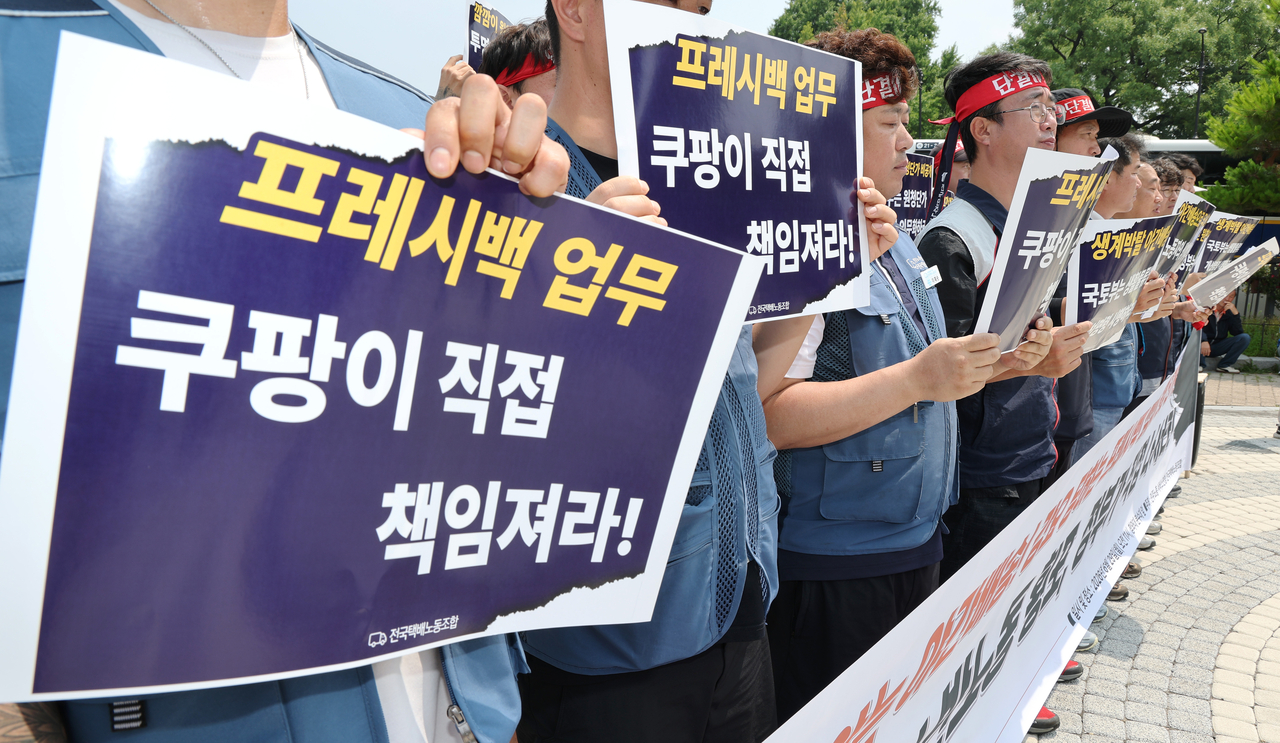
The Lee Jae Myung government's labor policy timeline — built around pledges to close gaps in the labor market — is showing signs of slipping.
A plan to protect night-shift workers, promised for September, has yet to be finalized even as a government proposal, and social dialogue on extending the Labor Standards Act to workplaces with fewer than five employees, also set to begin this month, has yet to take shape. With major measures and legislative tasks now bunching up in December, concerns are growing that further delays are inevitable.
According to the Ministry of Employment and Labor on Wednesday, the government has decided to push back the release of its "night-shift worker health protection plan," which had been due this month. The ministry is still reviewing overseas cases and assessing on-the-ground needs, and has not yet begun consultations with labor and management based on a concrete government proposal.
"We are researching various options and looking at overseas cases and workplace needs, but nothing has been finalized as a government proposal yet," a ministry official said. "With September nearly over, it looks like it will take more time." On a new release date, the official added, "We would like to have something ready before the end of the year, but it is difficult to pin down an exact date."
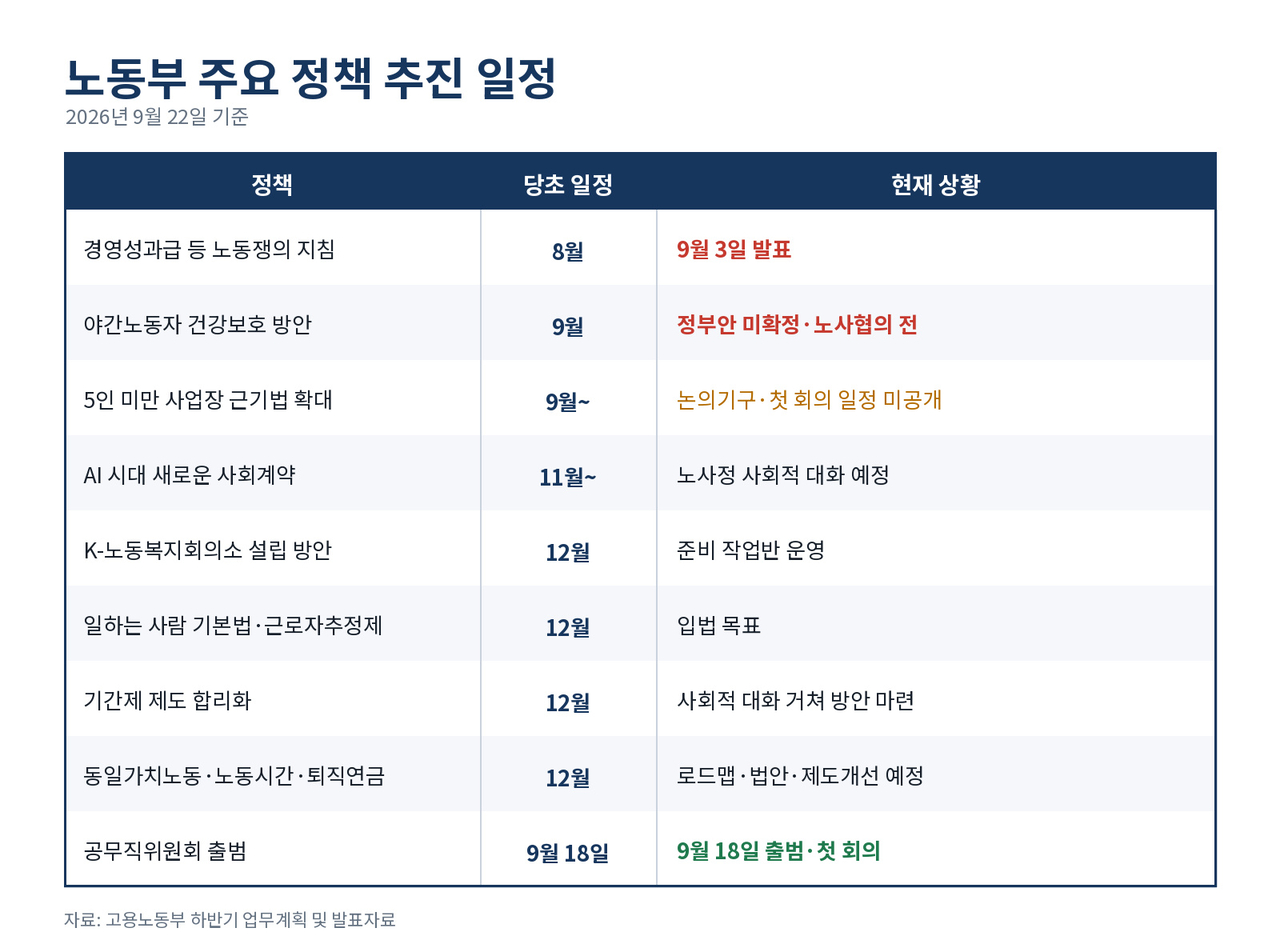
The Ministry of Employment and Labor had explicitly committed, in its second-half work plan reported to the president on Aug. 4, to completing the night-shift worker health protection plan by September. But after a series of roundtables last month with workers in the medical, care, manufacturing, logistics and delivery sectors, the target was quietly shifted to "by year's end."
The expansion of Labor Standards Act coverage to workplaces with fewer than five employees is another task in need of a schedule check. The ministry said it would analyze conditions at such workplaces from May through October while launching social dialogue from September on how to apply the law and what support measures to offer. As of Tuesday, however, no deliberative body, participating parties or date for a first meeting had been announced.
Guidelines on labor dispute targets — covering performance bonuses linked to corporate investment and operating profit, among other contentious issues — had been promised for August but did not come out until Sept. 3.
Among the major commitments made so far, the launch of the Public Service Workers Committee stands out as one of the few kept on schedule. The ministry launched the prime minister-affiliated committee on Friday, the effective date of the Public Service Workers Committee Act, and held its inaugural meeting.
The bigger concern lies ahead. Starting in November, the ministry plans to convene tripartite social dialogue covering innovation investment and profit-sharing tied to AI-driven industrial transformation, jobs for future generations and the expansion of the social safety net.
December alone is set to carry at least six tasks: establishing a framework for a K-Labor Welfare Council, legislating a basic law for working people and a worker-presumption system, rationalizing the fixed-term employment regime, drawing up a road map for equal pay for work of equal value, enacting a law to support companies in reducing actual working hours, and developing a plan to promote external reserve funds and fund-type retirement pension schemes.
The crowding has prompted concern even within the ministry. "As the drafting of government proposals and labor-management coordination on September tasks fall behind, it is hard to rule out a domino effect on year-end measures as well," one ministry official said. "Policy timelines have been announced one after another, but the research, opinion-gathering and bill drafting needed to back them up are not keeping pace."
fact0514@heraldcorp.com