'Trump's resolve has opened a window for change,' president says
Three-point blueprint for peaceful coexistence on Korean Peninsula
'A global AI basic society where no one is left behind'
President stresses solidarity for global energy supply chains
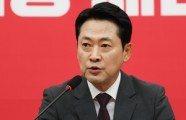
![President Lee Jae Myung delivers a keynote address at the UN General Assembly hall in New York on Tuesday (local time). [Yonhap]](https://wimg.heraldcorp.com/news/cms/2026/09/23/rcv.YNA.20260923.PYH2026092300590001300_P1.jpg)
President Lee Jae Myung called Tuesday at the 81st UN General Assembly in New York for the swift resumption of long-stalled talks between North Korea and the United States, pledging that South Korea would help lay the groundwork for dialogue aimed at ending the war on the Korean Peninsula and transitioning to a peace regime.
Lee took the podium at UN headquarters in New York at 12:49 p.m. Tuesday (local time), speaking after Mongolian President Ukhnaagiin Khurelsukh. A peace regime on the Korean Peninsula is a goal that the two Koreas, the United States, China and other stakeholders have long recognized as necessary and discussed at length, he said, adding that "fortunately, President Donald Trump's resolve has made the possibility of change — however difficult — a reality."
Stressing the need for dialogue to build a peace regime on the peninsula, Lee said the process could "halt the North's advancement of its nuclear and missile capabilities, reduce them over the medium term, and ultimately move toward a Korean Peninsula free of nuclear weapons in the long run."
The address marked the second consecutive year Lee has presented a blueprint for Korean Peninsula peace at the UN General Assembly, following last year's unveiling of the E.N.D. Initiative as a framework for ending the Cold War on the peninsula.
The E.N.D. Initiative stands for Exchange, Normalization and Denuclearization.
Lee's remarks have drawn attention to how his phased denuclearization vision — halt, reduce, eliminate — could shape a potential North Korea-US summit that observers say may be held in the near future.
Lee outlined three pillars for peaceful coexistence on the Korean Peninsula: inclusive peaceful coexistence, stable peaceful coexistence and responsible peaceful coexistence.
Under the first pillar, he said South Korea would seek mutual growth through cooperation, grounded in mutual respect for each side's system and differences.
"On the international stage as well, we will respect the North and cooperate where cooperation is possible," Lee said, expressing hope that "pathways will open for joint cooperation on shared global challenges such as health, disaster response and the climate crisis."
On stable peaceful coexistence, Lee said South Korea would "build institutional mechanisms to prevent crises and manage conflicts," and stressed the need to restore basic communication channels between the two Koreas.
Through such efforts, he said, the two sides could build trust and work toward a stable coexistence in which conflict becomes unnecessary.
For responsible peaceful coexistence — contributing to world peace — Lee said South Korea would actively work toward a Korean Peninsula free of war and nuclear weapons.
Lee also presented three visions under what he called the "K-Initiative" for South Korea's contribution to shared global challenges: a global AI basic society, a green great transformation, and solidarity for a global energy supply chain.
On the global AI basic society, Lee said South Korea would work with the international community to ensure that the benefits of AI development are not concentrated in any particular country or social stratum.
The plan envisions establishing a "Global AI Hub" involving international organizations, multilateral development banks, and representatives from industry and academia, using AI as a tool to address shared human challenges including the climate crisis and issues of health, food security and refugees.
"South Korea dreams of a 'global AI basic society' where no country and no person is excluded from the fundamental benefits of AI development," Lee said, "and we will lead the way in making artificial intelligence a tool to solve the common challenges facing humanity — including the climate crisis, health, food and refugee issues."
On climate action, Lee said South Korea would set a national greenhouse gas reduction target for 2035 and overhaul its industrial structure based on a "Korean-style green great transformation (K-GX) strategy."
The plan calls for linking carbon neutrality to new growth engines and quality jobs, and sharing related experience with the international community.
Having experienced energy supply uncertainty amid hostilities between the United States and Iran, Lee also stressed the need for solidarity to secure global energy supply chains.
"The repeated maritime blockades in the Strait of Hormuz and the Red Sea have shown how severely the daily lives of people around the world can be disrupted when key energy and logistics corridors are weaponized," Lee said. "Attacks on merchant vessels and threats to the lives and safety of crew members cannot be justified under any circumstances."
Lee said South Korea would strengthen energy supply chain cooperation through existing frameworks such as the International Energy Agency, and called on the international community to respond collectively to prevent supply chain crises from spreading into global economic and livelihood crises.
To that end, he proposed a "coalition of constructive contributors" — countries with both the capacity and the will to provide global public goods working together first.
The intent, he said, is not to create a new exclusive organization, but to flexibly and openly expand the scope of cooperation in areas where each country has strengths.
sang@heraldcorp.com