Restructuring aims to eliminate overlapping functions and sharpen expertise in customer service, retail logistics and maintenance
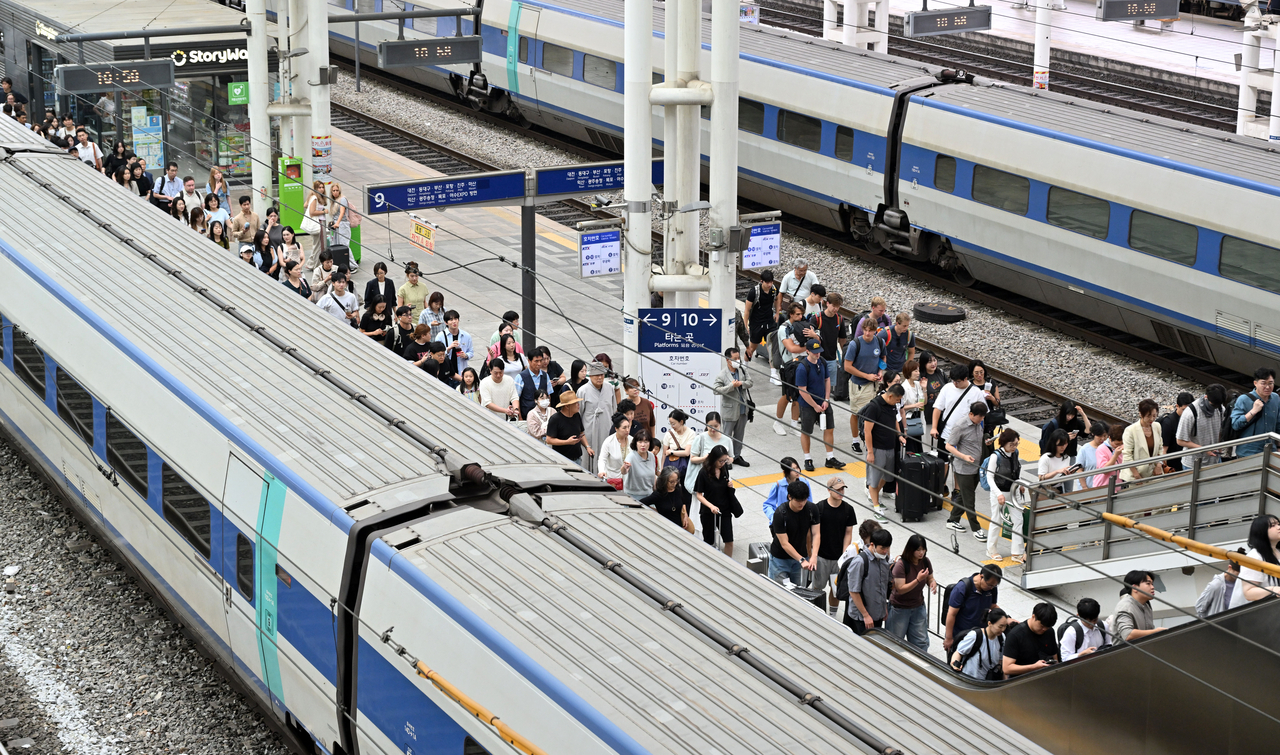
Korea Railroad Corporation, known as Korail, officially launched a restructured subsidiary system Wednesday, consolidating five subsidiaries into three specialized companies. The reorganization aims to eliminate overlapping functions, raise service quality and strengthen railway safety in ways passengers can directly feel.
The Ministry of Land, Infrastructure and Transport and Korail announced Wednesday that they had completed the consolidation process, establishing three specialized companies: a customer service unit (tentatively named Korail Tourism Networks), a retail and logistics unit (tentatively named Korail Distribution Logistics), and a maintenance unit (Korail Tech). The official names of the merged subsidiaries are to be finalized by year's end following employee consultations and expert advisory reviews.
Under the restructuring, Korail Networks and Korail Tourism Development have merged to form the customer service company, which will integrate the entire rail travel experience — from station use and boarding to connecting transport and tourism — into a single one-stop system.
Korail Distribution and Korail Logistics have combined to create the retail and logistics company, linking the two firms' infrastructure and business capabilities to build a dedicated distribution and logistics enterprise. Korail Tech, which handles maintenance and was not subject to a merger, will also significantly upgrade its cleaning and facility upkeep capabilities by introducing AI-based equipment.
The government and Korail also unveiled 10 "public-experience service" improvements designed to deliver tangible benefits to passengers through the consolidation.
The "Storyway" convenience store chain inside railway stations will cut distribution costs by dealing directly with overseas manufacturers and suppliers, using the savings to significantly expand promotional offers such as buy-one-get-one and two-for-one deals. Low-use vending machines aboard KTX trains will be removed and the space converted into luggage storage areas to make it easier for passengers to stow their belongings.
In addition, AI-powered equipment will be used to carry out special cleaning of restrooms on older conventional trains, including steam sterilization and disinfection. Starting in late October, passengers using rail tourism products will receive a 30 percent discount on station parking fees.
Employment security during the transition has also been prioritized. The ministry and Korail committed to retaining all employees without disadvantage, and plan to continue operating a labor-management-government consultative body to narrow wage and benefit gaps between subsidiaries and improve working conditions.
A detailed roadmap for adjusting functions between Korail and its subsidiaries is to be drawn up by the first half of 2027, with contract arrangements to be finalized by the end of that year.
Kim Tae-byeong, director general of the ministry's railway bureau, said the consolidation goes beyond simple organizational streamlining. "The goal is to clarify each company's role, raise their expertise, and improve the service quality and safety that the public actually experiences," he said. "We will continuously monitor key outcomes to ensure the benefits of the integration are felt on the ground, and will keep pushing to improve employee working conditions."
hwshin@heraldcorp.com