Renovated zone at Terminal 1 groups products by purpose, not brand
Exclusive labels and Korean food items added to draw domestic and foreign shoppers
Luxury sales to Koreans up 11% in September as won strengthens
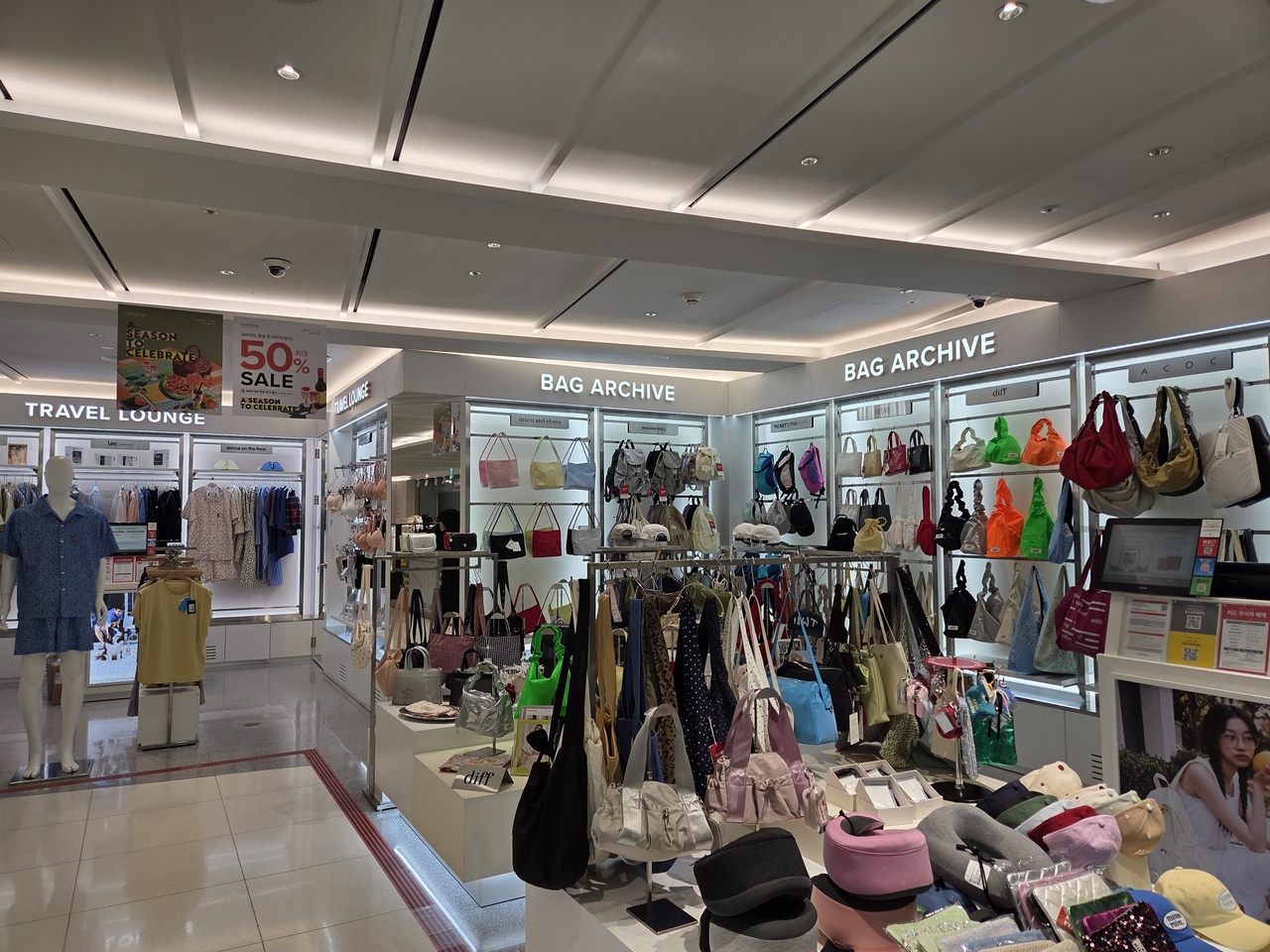
Near Gate 11 of Incheon International Airport's Terminal 1, luxury sunglasses, luggage and designer bags — the perennial duty-free staples — fill one side of the floor. Across the aisle, swimwear, practical bags and travel accessories are arranged in clearly marked zones. A gift section stocked with museum merchandise, character keyrings and souvenirs draws a steady crowd of foreign tourists.
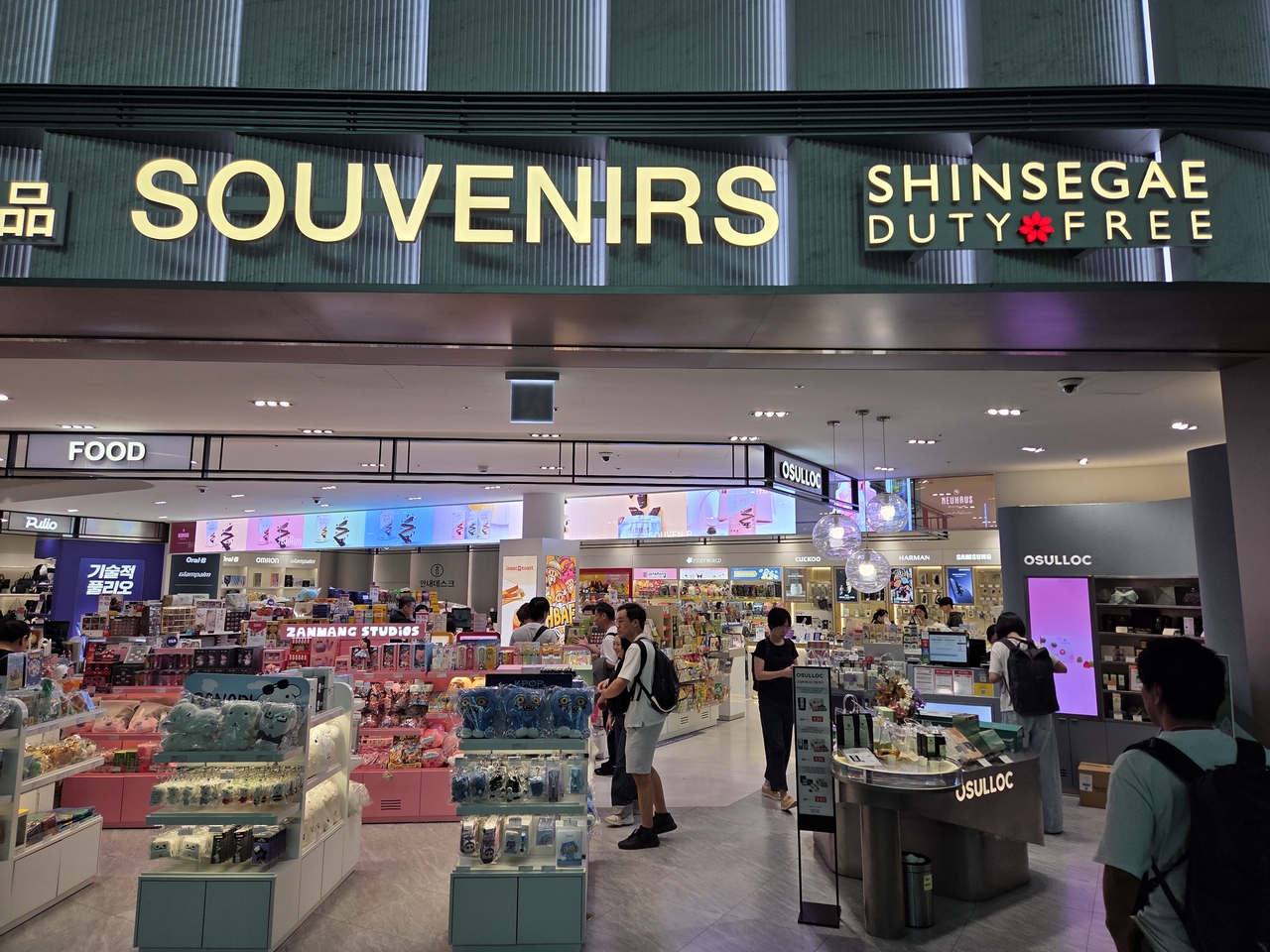
The "travel one-stop shopping zone" that Shinsegae Duty Free unveiled in July looks strikingly different from a conventional duty-free shop. The layout reflects a dual strategy: catch departing Korean travelers hunting for last-minute essentials, and capture foreign visitors looking for a final Korean souvenir before they fly home.
Shinsegae Duty Free has completely renovated its fashion and lifestyle floor at Incheon Airport Terminal 1 — the first overhaul in roughly two and a half years. More than 110 brands, including about 40 exclusive labels, have been reorganized into six core categories: eyewear, travel goods, fashion apparel, accessories, digital products and gifts.
The defining feature is that products once scattered across individual brand counters are now grouped by shopping purpose. Key zones include a "Bag Archive" for luggage and everyday bags, a "Travel Lounge" for travel supplies and lifestyle products, and a SWIM House for swimwear and resort wear.
A traveler who suddenly needs a swimsuit before a beach holiday can compare options from multiple brands in one place rather than walking the entire floor. The same logic applies to luggage. The layout was redesigned with airport time constraints in mind, so shoppers can find what they need quickly.
Exclusive brands unavailable elsewhere are another draw, aimed at customers who visit specifically for a particular label. Shinsegae Duty Free brought in more than 200 exclusive brands last year, and about 40 of the labels in the newly renovated space are exclusives.
The zone also carries Meta AI smart glasses from Ray-Ban and Oakley, which support voice-activated music playback and photo and video capture. The products are sold at the online store, the Myeong-dong branch and both Terminal 1 and Terminal 2 at Incheon Airport. A hands-on experience area has been set up on the floor.
For foreign shoppers, the zone leads with items associated with Korean culture. The gift section features cultural merchandise including "Mutz," the official goods line of the National Museum of Korea, alongside character products such as Chiikawa and Zanmang Loopy. Keyrings and plush toys catering to the "bag customizing" trend — decorating bags with charms and accessories — also fill the shelves.
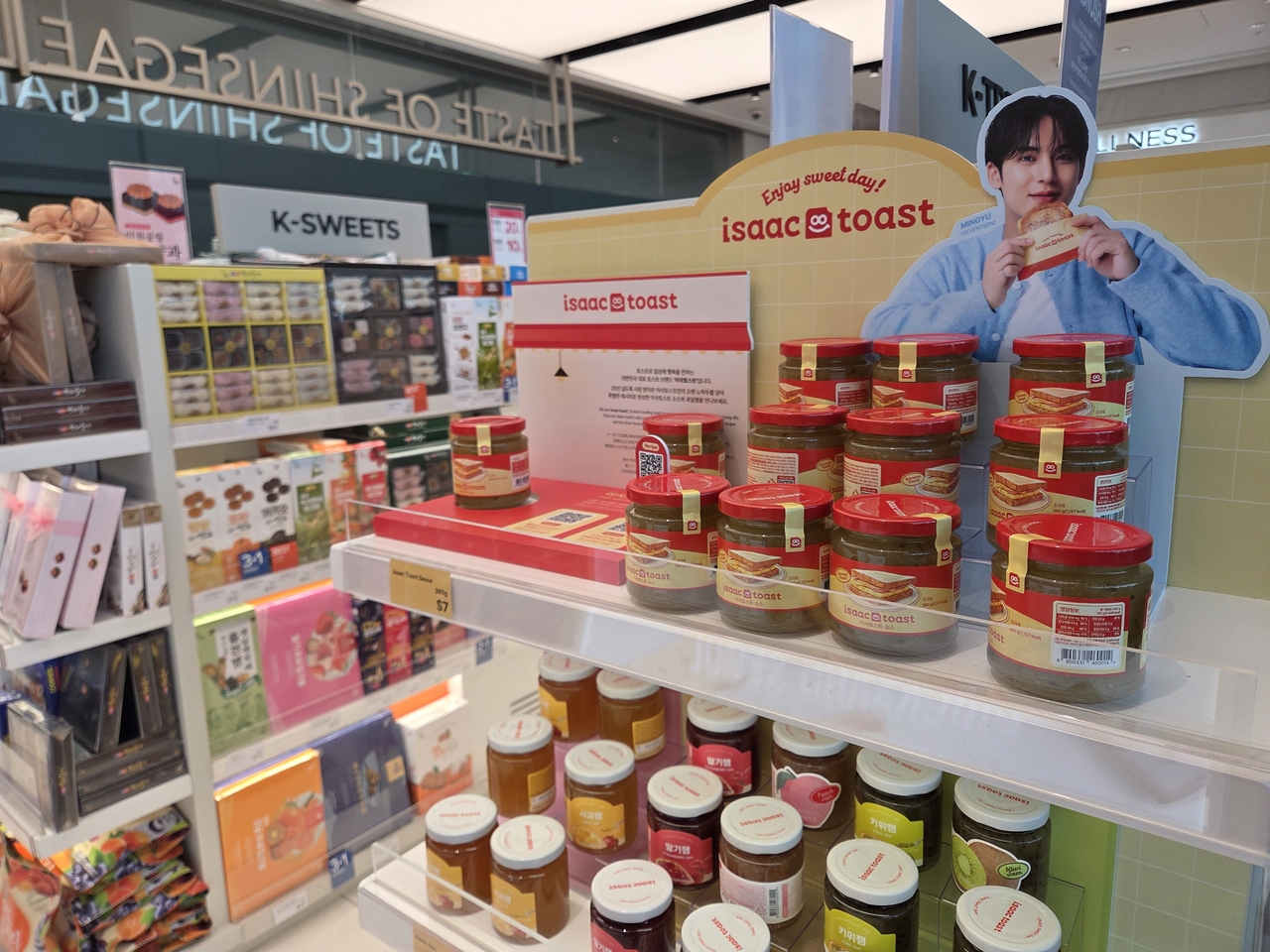
The food and beverage offering has been rebuilt around Korean food. A food curation space called "Taste of Shinsegae," first introduced at the Myeong-dong branch last year, expanded to Terminal 1 in April. Sales in the food category at Shinsegae Duty Free rose about 70 percent in the first seven months of this year compared with the same period last year.
Where seaweed and red ginseng once defined duty-free food shopping, the product mix has broadened to include brands that gained buzz in Hongdae, Seongsu and Bukchon, regional specialties and health supplements. The shift mirrors a broader change in how foreigners visit Korea: group package tours have given way to Free Independent Travel, and gift-buying habits have changed with them.
Isaac Toast is a prime example. Starting in April at Terminal 1, Shinsegae Duty Free began selling the chain's signature sauces and jams, later expanding to the Myeong-dong branch and its online store.
The sauces, produced for export, sold out rapidly. Demand was so strong that Shinsegae Duty Free initially capped purchases at two units per customer; the limit now stands at six. The sauce line has held the top spot in the online store's food category ever since.
Recent moves in the exchange rate have given a lift to domestic shoppers who had pulled back on spending. As the won-dollar rate fell back into the 1,300 won range, the won-equivalent price of duty-free goods — which are priced in dollars — dropped accordingly.
Korean consumer sentiment appears to be recovering. Domestic sales at the Myeong-dong branch fell 15.5 percent year-on-year in July, when the won-dollar rate climbed as high as the 1,500 won range, and dropped a further 10.5 percent in August. In September, however, as the won strengthened, sales edged up 1.6 percent, returning to year-earlier levels. Domestic sales in the luxury category from Sept. 1 to Sept. 13 rose 11 percent compared with the same period last year.
A weaker dollar does not automatically translate into better margins for duty-free operators, however. Duty-free shops buy goods directly from overseas brand headquarters and other suppliers in foreign currency. Merchandise purchased when the rate was in the 1,500 won range and sold after it fell to the 1,300 won range can actually generate foreign-exchange losses.
"Rather than focusing simply on sales volume, we are steering customers toward higher-priced purchases while running a range of strategies to drive traffic and spending — including incentive programs, tour group recruitment and membership partnership programs," a Shinsegae Duty Free official said.
korean@heraldcorp.com