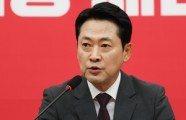
Ku Ja-yeol vows sweeping reforms at public institution amid misconduct allegations
'This is not the Woo Sang-ho model of aligning terms,' mayor says
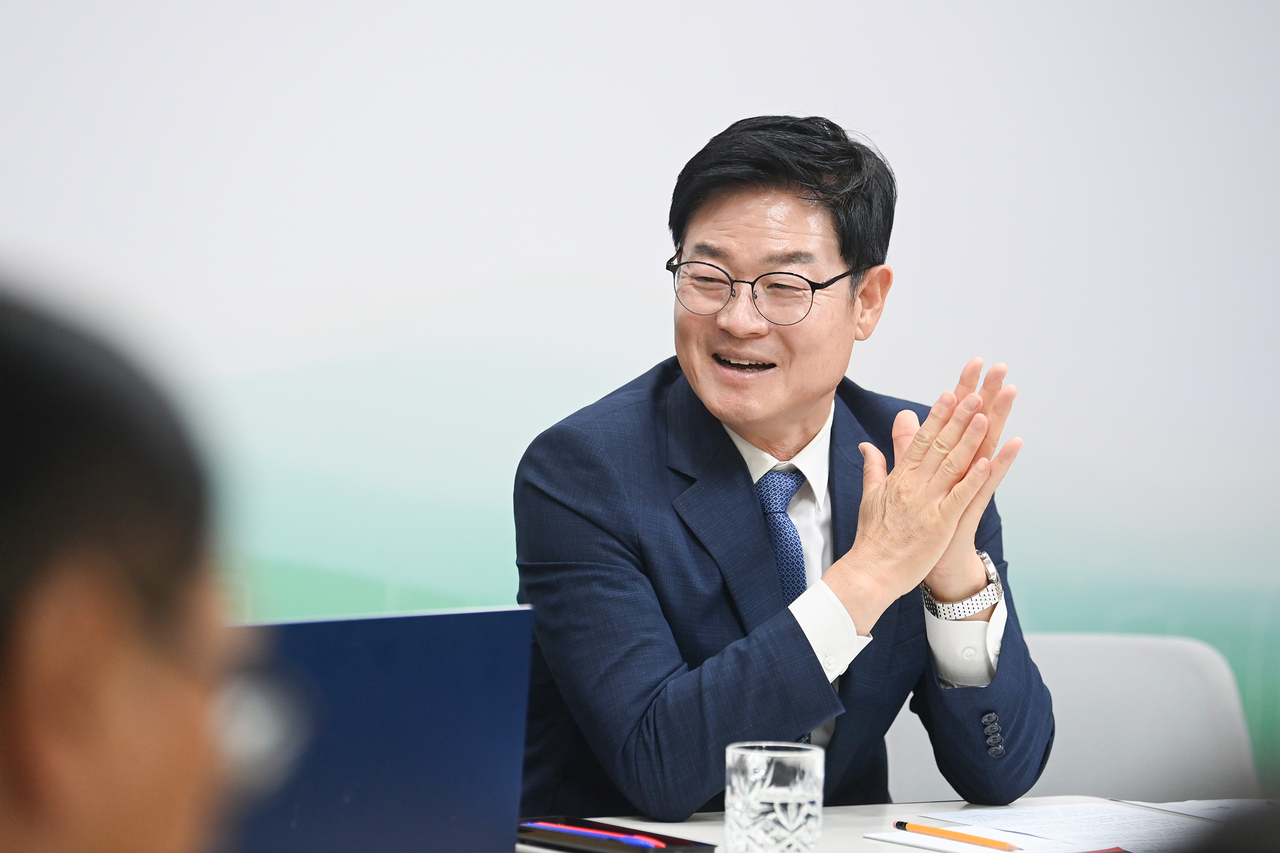
Wonju Mayor Ku Ja-yeol on Monday unveiled a plan to reform the city's affiliated and related public institutions, outlining a new direction for how the city manages development and public services.
The centerpiece of the plan is converting the Wonju Facilities Management Corporation into a new urban development corporation.
Ku opened his remarks by stressing the standards public institutions must uphold. "The Wonju Facilities Management Corporation is a public institution established to promote the welfare of citizens, so personnel decisions must be fair and budgets must be executed lawfully," he said. "An organizational culture built on mutual respect and trust is also a requirement for any public institution." He then acknowledged a series of controversies that had eroded public confidence. "There have been ongoing concerns among citizens over allegations of patronage appointments, improper use of operational expenses, private use of public labor, and workplace harassment," he said. "Wonju will use the inauguration of a new board chairman as an opportunity to comprehensively review and reform our internal controls and organizational culture."
Ku said the city would strengthen oversight of operational expense management, expand workplace harassment prevention education and communication channels, and hold senior management to a higher standard of conduct.
Asked whether the reforms aligned with Gangwon Province Governor Woo Sang-ho's push to match the terms of local government heads with those of affiliated agency chiefs, Ku was direct. "No. I have already made clear that terms will be guaranteed," he said. "The emphasis is on organizational reform and systemic improvement, not on replacing agency heads."
"We will correct unreasonable practices and organizational operations from the perspective of citizens, and build transparent and accountable governance," Ku said.
Ku laid out the rationale for the broader transformation. "Wonju is preparing for an era of 500,000 residents, and demand for urban development — including industrial complexes and transit-oriented development — is growing rapidly," he said. "Managing and operating existing public facilities alone has its limits when it comes to responding proactively to these changes. We will pursue the conversion of the facilities management corporation into an urban development corporation capable of carrying out urban development projects." The new entity, he said, would take on residential land and industrial complex development on top of its existing public facility management role.
Ku said the corporation would take responsible charge of development projects requiring a public interest dimension, and that profits generated through those projects would be reinvested in public facilities, community infrastructure and other citizen-oriented initiatives.
He said that while the Gangwon Development Corporation would handle large-scale projects, the Wonju Urban Development Corporation could focus on small- and medium-sized development projects suited to local needs. He added that the corporation could take on high public-interest projects that the Korea Land and Housing Corporation (LH) and other agencies find difficult to pursue due to low profitability.
abc@heraldcorp.com