'Korean-style production committee' to support content IP expansion and commercialization
K-Culture export package to cover entire overseas entry process
Finance, talent and AI support to be strengthened to broaden growth base for K-content
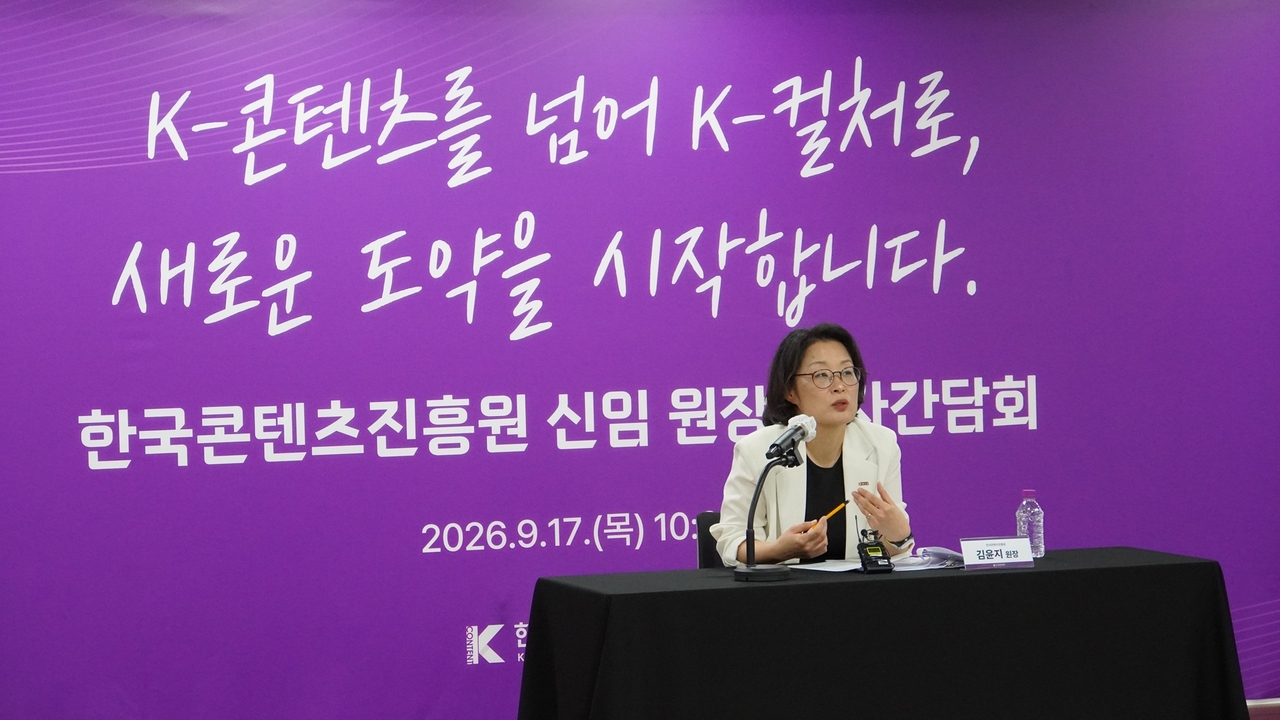
The Korea Creative Content Agency is pushing to establish a "Korean-style production committee" — a working title — to strengthen the intellectual property competitiveness of the domestic content industry. The agency plans to uncover new momentum across IP expansion, planning, commercialization and overseas entry, with the goal of leading global markets with irreplaceable K-content.
The agency announced Thursday four new strategic pillars and 10 core initiatives that include the plan.
The four new strategies are: a renewed push to become the central coordinating body for the K-culture industry; building a content IP powerhouse; strengthening the growth engine of the content industry; and establishing a field-centered organization and future-readiness framework.
The key backdrop driving the new strategies is a recognition that the support system must be overhauled, as slowing growth has become pronounced amid rising production costs, shrinking investment and talent shortages — even as the influence of K-content continues to expand.
K-Culture export package to bring content and related industries into overseas markets together
The agency will develop a "K-Culture export package" linking content with related industries such as food, cosmetics and fashion, drawing on research showing that every $100 million increase in hallyu industry exports generates roughly $202 million in exports from related sectors — about twice the original figure. The package is designed to support the entire export process, from planning through overseas marketing, distribution and contract negotiations.
The overseas promotional center known as KOREA360, which has focused on product exhibitions and hands-on experiences, will be expanded into a "K-Culture House" — an integrated export space encompassing both content IP and related industries. The "K-Expo" will be developed into a national event representing the overseas expansion of the K-culture industry. The agency also plans to strengthen joint overseas entry by linking product placement in K-content with small and medium-sized enterprises.
The overseas business infrastructure will be reorganized around regional hubs. The 28 overseas business centers currently operating across 25 countries will be restructured into primary and secondary regional hubs, with support expanded to cover market discovery, localization, business matching, contracting, commercialization and post-entry management.
The agency also plans to build an integrated K-content information system that provides tailored, in-depth data on market conditions, trade issues, and laws and regulations in each country's content industry.
'Korean-style production committee' to link IP expansion with investment
Work is also underway to elevate the domestic content industry into an IP powerhouse by enhancing the competitiveness and usability of high-quality intellectual property.
The agency will strengthen its role as an agent for IP expansion, taking into account the reality facing companies and the broader industry — that diversifying the use of content IP is difficult, and converting strong IP into revenue is rarely straightforward.
The "Korean-style production committee," which is expected to bring together major companies and institutions from across production, investment, finance, platforms, and domestic and international distribution, is central to that effort.
The agency will identify high-quality content IP and use the committee to connect partners for IP expansion. It also plans to build an integrated support framework that links currently fragmented genre-by-genre initiatives covering planning, production, distribution, commercialization and overseas entry.
In addition, the agency will introduce a program tentatively called KIPS (K-content IP Scale-up) to connect private investment with government support for promising IP, actively helping the industry attract the funding it needs most.
Finance, talent and AI support to strengthen content industry's growth engine
The agency will also strengthen the industry's growth engine through finance, talent and AI support. It plans to expand bank partnerships to develop content-specific financial products and broaden the genres eligible for content company loans — adding games, animation and music to the existing broadcast and video categories. The funding pool will grow by 10 billion won from the previous level to 37 billion won ($27.05 million).
Opportunities for young talent to gain hands-on experience in the content industry will also be expanded. The agency plans to significantly scale up government-supported work experience for people newly entering the content industry, growing the program from roughly 200 participants to about 1,000 and extending the support period to a maximum of 10 months.
To support the content industry's transition to AI, the agency will invest more than 100 billion won in developing core technologies — including ultra-immersive and experiential performance technology — to sharpen the global competitiveness of K-culture.
The agency will also work to raise the expertise of its support staff and organization. To improve the professionalism and fairness of project selection evaluations, it will strengthen a field-expert-led assessment framework, shorten the cycle for recruiting evaluation committee members and improve the competency assessment process.
The agency also plans to restructure its organizational framework to ensure the smooth pursuit of promotion policies in response to changes in the content industry and the broader policy environment, while raising employees' job expertise and capacity to respond to future challenges.
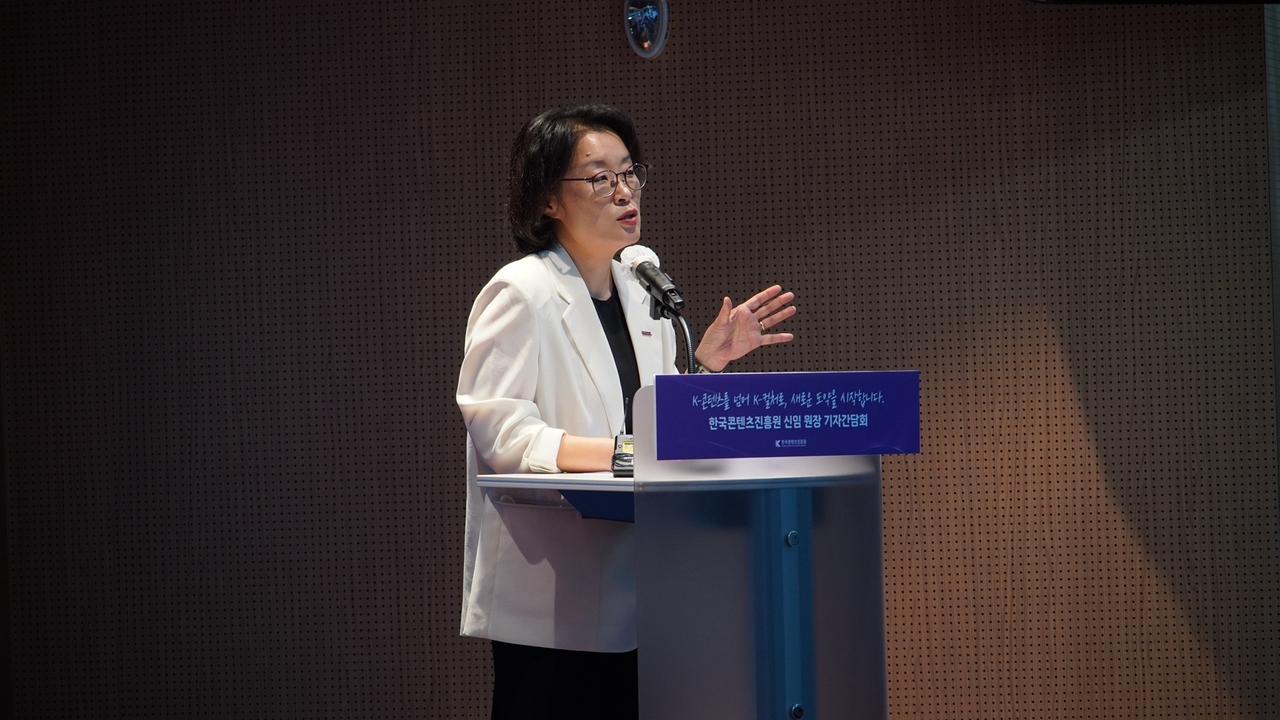
Korea Creative Content Agency President Kim Yun-ji said improving the support system in response to slowing growth and rapid environmental change is unavoidable, and that a paradigm shift is now essential for the industry to take a major leap forward. "Beyond delivering results through stronger genre-by-genre support in broadcasting, video, games and music, we will build a new growth foundation — from K-content to K-culture — through innovations in the support system that encompass IP expansion, overseas entry, and support for finance, talent development and new technologies," she said.
balme@heraldcorp.com