Constitutional Court's 2027 total budget reaches 70.83 billion won, up 14%
Nearly 2 billion won earmarked for network upgrade to handle court ruling appeals
Supreme Court to reconfigure building ahead of expanded bench
New justices' offices planned alongside relocation of research and administrative units
![Chief Justice Jo Hee-dae (left) and Constitutional Court Chief Justice Kim Sang-hwan exchange greetings at Cheong Wa Dae ahead of a meeting with President Lee Jae Myung and heads of the four branches of government on June 8. [Yonhap]](https://wimg.heraldcorp.com/news/cms/2026/09/20/rcv.YNA.20260608.PYH2026060815070001300_P1.jpg)
The enactment of the so-called "judicial reform trio" — comprising the judicial distortion crime, the court ruling appeal system and the expansion of the Supreme Court bench — in March prompted a wave of follow-up budget allocations for reorganizing the facilities and operations of the Constitutional Court and the judiciary, all now reflected in next year's budget proposal.
The Constitutional Court, whose workload surged following the introduction of the court ruling appeal system, saw its total budget rise 14 percent from this year. The Supreme Court separately set aside about 10 billion won ($7.24 million) to build new justices' offices and relocate its judicial research institute and parts of the Court Administration Office in preparation for the expanded bench.
According to the 2027 budget proposals submitted by the Constitutional Court and the Supreme Court to the National Assembly, the plans include projects covering organizational restructuring, facility upgrades and information system overhauls — all tied to the three judicial reform laws.
The most significant changes are at the Constitutional Court. Its 2027 budget proposal totals 70.83 billion won, up 8.73 billion won, or 14.0 percent, from this year's 62.11 billion won.
The court's authorized headcount will grow from 364 this year to 404 next year, an increase of 40 — 20 constitutional research officers and 20 general civil servants added in response to the new court ruling appeal system. Under that system, the Constitutional Court may review final court rulings for constitutional violations, a category previously excluded from constitutional complaint procedures under the old Constitutional Court Act. The amended law allows parties to a lawsuit to file a constitutional complaint with the court if a final ruling has violated the constitution or statutes, failed to follow due process, or infringed on fundamental constitutional rights in contravention of a Constitutional Court decision.
To accommodate the additional staff, the court has also secured a separate annex building on a lease basis. The budget for managing the leased annex has been set at 1.06 billion won.
The court is also expanding its IT infrastructure to process court ruling appeal cases more quickly. It has newly allocated 1.96 billion won for a project to boost network speeds in response to the new appeal system. The budget breaks down into 146.3 million won in construction costs and 1.82 billion won for equipment and other asset acquisitions.
A Constitutional Court official said the network upgrade project was intended "to improve the efficiency of trial support operations in response to the sharp increase in case materials expected from the introduction of the court ruling appeal system." Separately, 1.33 billion won has been newly allocated to build a decision-drafting and management system.
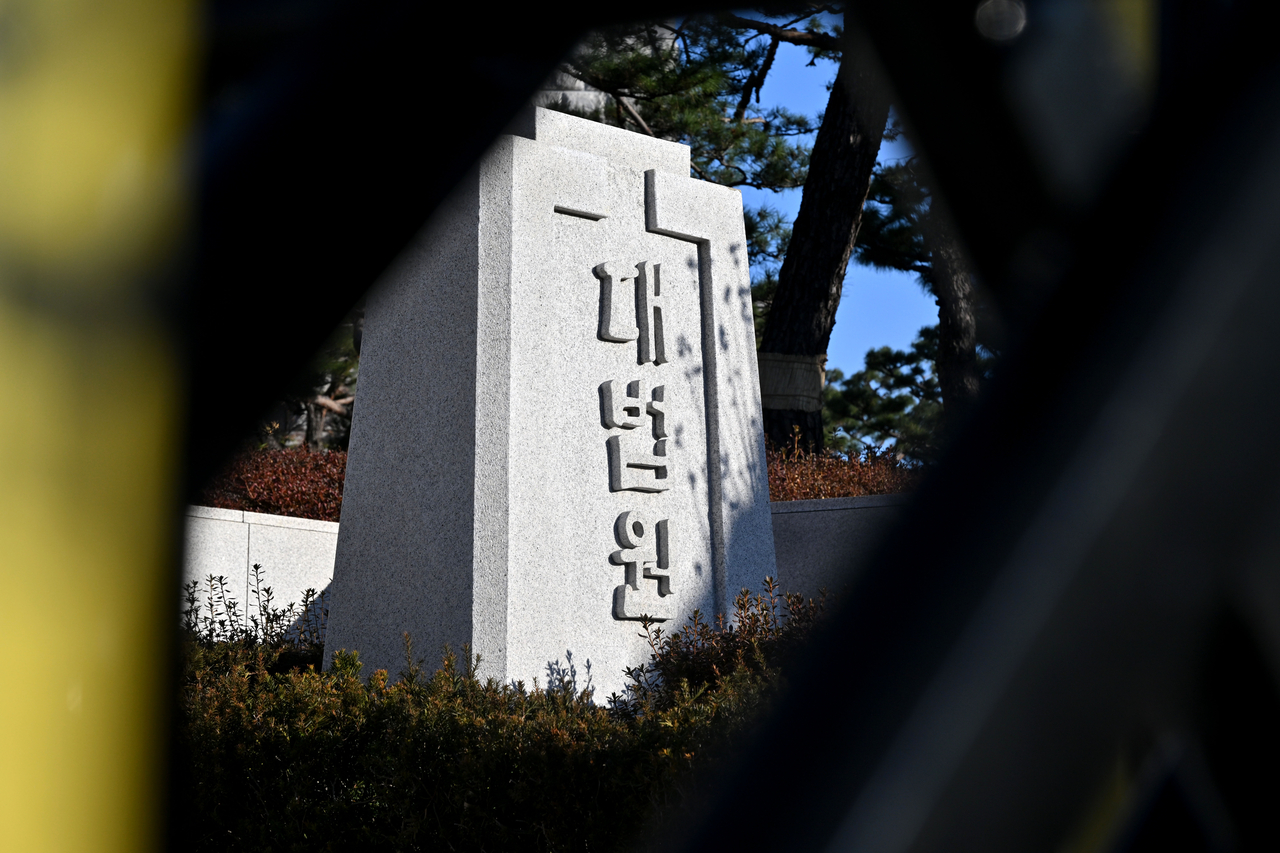
The Supreme Court is also overhauling its information systems in response to the court ruling appeal regime. It has newly allocated 410 million won for a project to establish an information strategy plan covering both the appeal system and the launch of the Public Prosecution Service and the Serious Crime Investigation Agency next month. The project aims to build a framework for sharing case records and linking electronic documents between the courts and the Constitutional Court as appeal cases are processed.
Nearly 10 billion won has been set aside to reconfigure the Supreme Court building ahead of the bench expansion. The court included 9.96 billion won in next year's budget under the heading of "requirements arising from amendments to the Court Organization Act," covering the installation of essential trial facilities including justices' offices and an internal reconfiguration of the building to secure additional space.
Of that amount, 2.25 billion won will go toward building new justices' offices. The cascading space reconfigurations needed to free up room for those offices will cost even more: 2.79 billion won has been allocated to relocate the judicial research institute, and 4.92 billion won to move parts of the Court Administration Office to an external building outside the Supreme Court complex.
The budget for supporting judges and other court personnel who become involved in criminal cases under the judicial distortion crime provision has also increased. The judicial distortion crime, added as Article 123-2 of the Criminal Act, establishes criminal penalties for judges and prosecutors. It targets judges involved in criminal trials, prosecutors who bring or maintain charges, and investigators performing criminal investigation duties — imposing up to 10 years in prison and up to 10 years' suspension of qualifications on those who commit acts of "judicial distortion" with the intent to unlawfully or improperly benefit or harm another party in a pending criminal case.
The Supreme Court raised its budget for "litigation support for acts performed in the course of official duties by judges and court staff" from 61 million won this year to 81 million won next year, an increase of 20 million won. The program covers the appointment of legal representatives or defense counsel for judges and court employees who face lawsuits or criminal investigations arising from their official duties.
Of that total, about 36 million won has been earmarked for defense counsel appointments in criminal cases — including those involving the judicial distortion crime — and for civil litigation support in cases where the Government Legal Service cannot assist. While the amount specifically attributable to judicial distortion crime cases has not been calculated separately, the budget explicitly reflects the need to support judges facing criminal proceedings under the new law.
Of the three reform laws, the court ruling appeal system and the judicial distortion crime took effect simultaneously upon promulgation on March 12. The Supreme Court bench expansion will proceed in stages: the current 14 justices will grow to 26 as four new justices are added each year from 2028 over three years, for a total increase of 12. Observers expect the budget required for organizational restructuring, facility upgrades and staffing to grow considerably in the years ahead.
yg@heraldcorp.com