Nominee for inaugural investigative agency chief faces additional vetting; 'leaderless launch' looms
Ruling party hardliners push back, forcing revisions to prosecution agency's organizational plan
Prosecutors warn of case backlogs as staffing cuts loom
With fewer than two weeks to go before the launch of the Serious Crimes Investigation Agency (SCIA) and the Public Prosecution Service (PPS) — institutions set to replace the abolished Prosecution Service — the selection of their leaders and the shape of their organizations remain unresolved.
The National Assembly confirmation hearing for the SCIA's inaugural chief has been delayed by additional vetting of the nominee, while a draft organizational plan for the PPS has drawn fierce backlash from ruling party hardliners, making revisions unavoidable. With neither the leadership nor the structural framework of the two agencies — which will separately handle the investigation and indictment functions previously combined under the Prosecution Service — yet finalized, concerns are mounting that the transition to a new criminal justice system will be marked by serious disorder.
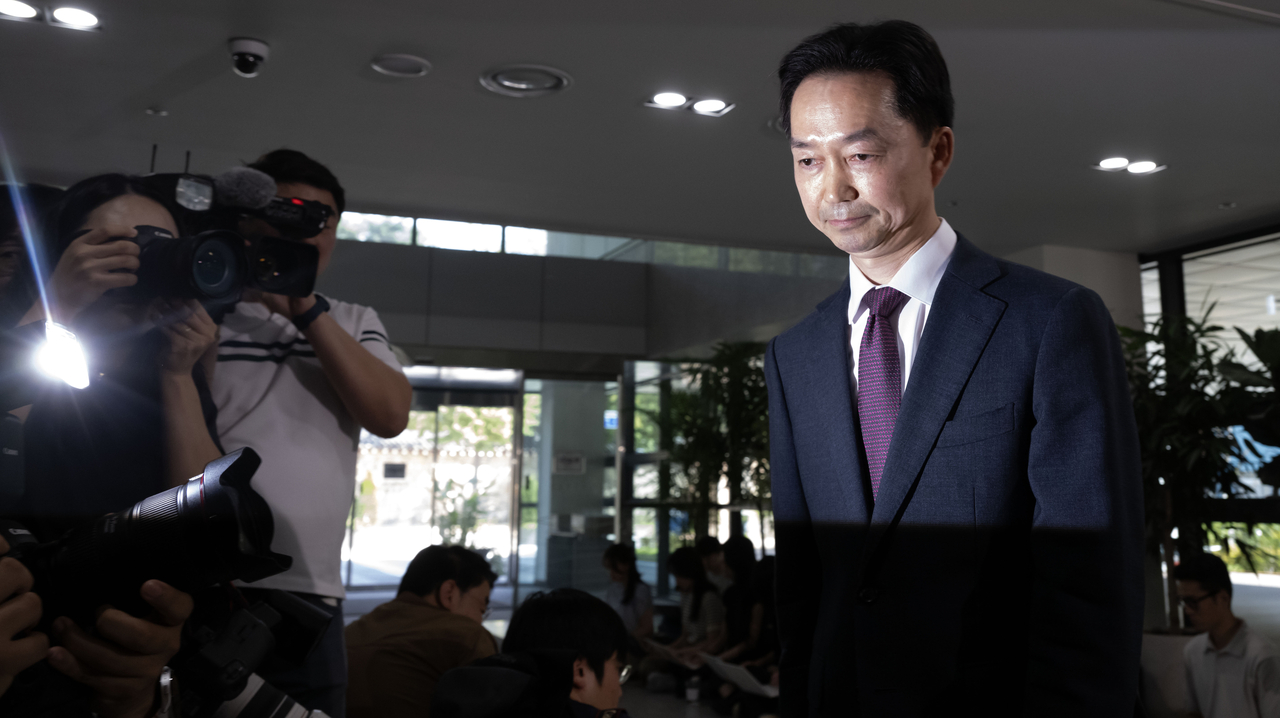
According to political and legal sources, Cheong Wa Dae is conducting additional vetting of Kim Ji-yong, the nominee for inaugural SCIA chief. Ministry of Interior and Safety Minister Yun Ho-jung recommended Kim on Sept. 7 from among four candidates put forward by the SCIA chief nomination committee, and President Lee Jae Myung formally named him as the nominee. After objections emerged within parts of the ruling camp over the selection, Lee ordered a further review.
The renewed vetting has pushed back the National Assembly confirmation process. The appointment had been expected to be completed by late this month, but the submission of the confirmation hearing request has already been delayed, and with the chuseok holiday approaching, observers say it may prove difficult to complete the hearing before the SCIA's scheduled opening on Oct. 2.
Ruling party hardliners have taken issue with several aspects of Kim's record. As a former senior prosecutor who once headed the Supreme Prosecutors' Office's criminal division, Kim had expressed opposition to separating investigation and indictment functions — a central pillar of prosecution reform. Critics have also raised his oversight of investigations into the so-called "Jeong Jin-woong assault case" and the case involving former Vice Justice Minister Kim Hak-eui's overseas travel ban. On Monday, Kim addressed his past remarks on the separation of the two functions, saying he had been "concerned about gaps in protecting crime victims" and that he "strongly supports the fundamental principle of separating investigation and indictment." He also pushed back against characterizations of him as a politically aligned prosecutor close to former President Yoon Suk Yeol, noting that he had been demoted in the first personnel reshuffle after the Yoon administration took office.
The SCIA launch preparation team also mounted a defense of the nominee. Kim Min-jae, the Ministry of Interior and Safety vice minister who heads the preparation team, held a briefing Thursday at Government Complex Seoul to rebuff the various allegations against Kim Ji-yong. On the former vice justice minister's travel ban case, Kim Min-jae said "three of the four indicted individuals were charged before the nominee joined the supervisory line for that case," and that "for the remaining one, the nominee voiced opposition to indictment in an internal meeting." On the assault case, he said Kim Ji-yong "was not the final decision-maker on the indictment."
Replacing the nominee is also seen as practically impossible within the time available before the SCIA's opening. Rep. Lee Hae-sik of the Democratic Party of Korea, who leads his party's side on the National Assembly's Interior and Safety Committee, said in a Tuesday radio interview on MBC that "it is physically impossible to reconvene the nomination committee in such a short time for the minister to select and recommend another candidate," and predicted the government would submit the confirmation hearing request for Kim to the Assembly.
Preparations for the launch of the Public Prosecution Service, which will handle indictments and the maintenance of prosecutions, are also in disarray. Resistance within the ruling camp has grown over the draft organizational regulations for the PPS that the Ministry of Justice published for public comment on Sept. 4. President Lee ordered revisions to the plan after receiving a briefing on the matter on Sept. 10.
The central dispute is over the number of prosecutors. The draft published by the Ministry of Justice set the PPS's total headcount at 8,412 — comprising 2,292 prosecutors and 6,120 general staff. Compared with the existing Prosecution Service, the overall workforce would shrink by 2,294, but the number of prosecutors would remain unchanged at 2,292. Ruling party hardliners have demanded a reduction, arguing there is no reason to maintain the same number of prosecutors when the Prosecution Service's direct investigative powers are being abolished.
Within the prosecution, officials warn that cutting the number of prosecutors would cause even more severe disruption to case processing at a time when existing staff are already struggling to handle a surge in unresolved cases. Jang Jin-yeong, a senior prosecutor at the Suncheon branch of the Gwangju District Prosecutors' Office, wrote Tuesday on the prosecution's internal network that "as the number of prosecutors falls, reassignments increase and the overall backlog grows, making it hard to bear the pressure of unresolved cases — so prosecutors end up focusing on relatively straightforward ones." He went on to say that "some ask why prosecutors are not working overtime every day or coming in on weekends, accusing them of dereliction of duty," and asked: "In the current situation, how are we supposed to clear backlogs that are multiplying fourfold, eightfold, sixteenfold, in order to reduce the harm suffered by citizens whose cases are being delayed?"
The Ministry of Justice is considering reassessing the appropriate number of prosecutors after the PPS launches, based on an analysis of actual workloads and an external research review. However, adjusting the prosecutor headcount cannot be resolved simply by revising the organizational regulations. Current law sets the prosecutor quota at 2,292, meaning any reduction would require amending the legislation itself.
The "judicial oversight division" designated for each regional PPS office in the original draft is expected to be renamed. The division was designed to review cases that investigative agencies such as the police had declined to refer for prosecution, but ruling party figures argued it was inappropriate for the PPS — which holds no investigative powers — to use the name "judicial oversight." The ruling party and government are now pursuing a change to "non-referral case review division."
The positions of "criminal planning officer" and "serious crimes investigation planning officer," both included in the original draft, are under strong consideration for outright elimination. The move reflects demands from hardliners that, since the Prosecution Service's direct investigative functions are being transferred to the SCIA, the PPS's own structure should be reorganized around its core mandate of bringing and maintaining prosecutions.
yg@heraldcorp.com