5.48 billion won earmarked for Bukseong Elementary pool... cafeteria upgrades at Jungang Girls' High School and Seoyeon Middle School
Aging facilities, restrooms and green smart school projects to move forward
Field trip support staff and buses provided... early childhood education costs also reduced
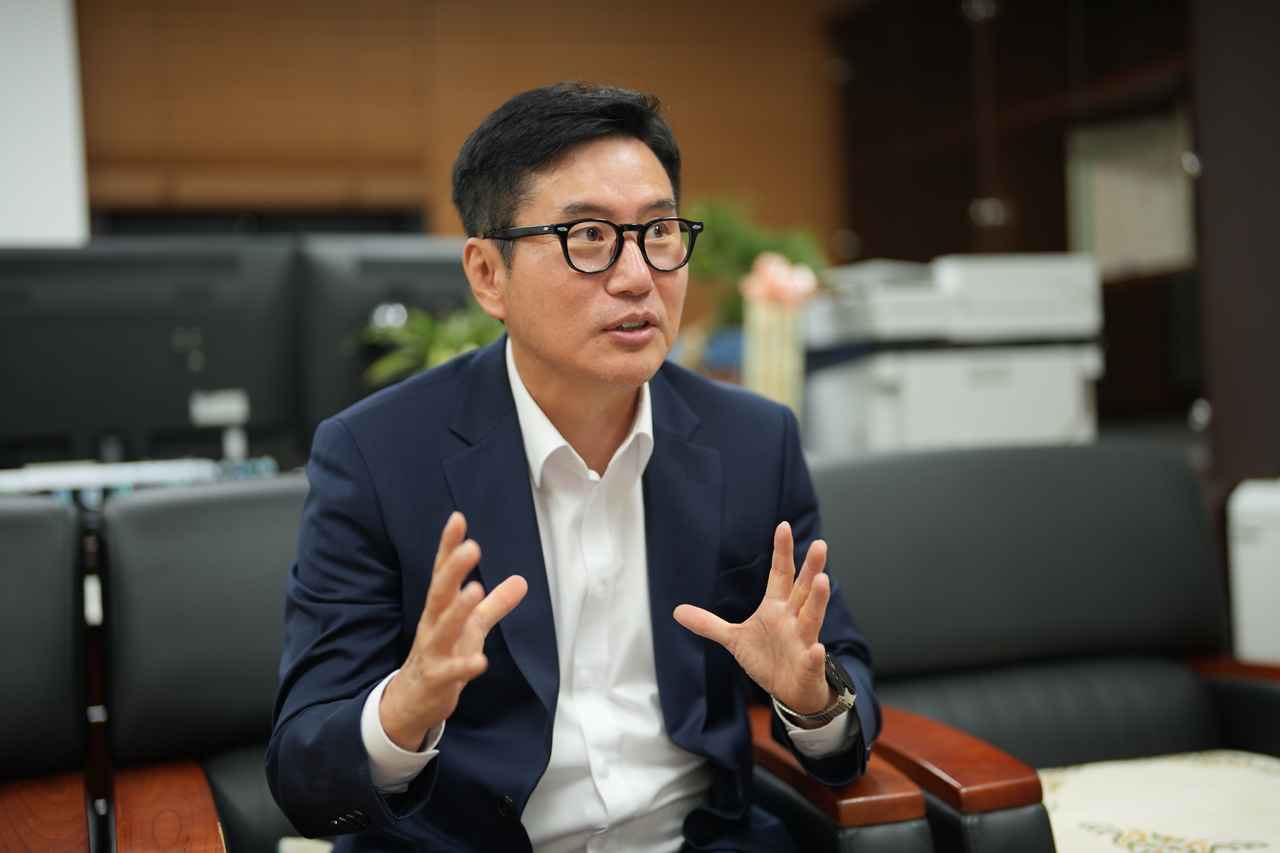
A large-scale facility improvement drive is set to transform the educational environment for students in Seoul's Seodaemun-gu. About 33.1 billion won ($24 million) will go toward projects long sought by schools — from repairing aging pools and restrooms to expanding cafeterias and creating next-generation learning spaces.
Kim Ho-jin, chair of the Seoul Metropolitan Council's Education Committee and a Democratic Party of Korea member representing Seodaemun District 2, said the funding was included in the 2026 Seoul Metropolitan Office of Education supplementary budget, which the full council passed on Sept. 11.
The budget goes well beyond routine maintenance. It covers safety and convenience upgrades to cafeterias, restrooms and sports facilities that students use daily, while also funding a broader transformation of aging school spaces to meet the demands of modern education.
Kim, serving his second term as education committee chair, reviewed the 1.17 trillion won supplementary budget submitted by the Seoul Metropolitan Office of Education, examining facility needs and pending issues at individual schools in Seodaemun-gu. The review focused on the urgency of each project, student safety and the expected impact on the learning environment.
5.48 billion won for Bukseong Elementary pool... cafeterias to expand
The most prominent item is a full renovation of the swimming pool at Bukseong Elementary School, with 5.48 billion won allocated to overhaul the aging facility. The project supports physical education and gives students a safe environment for swimming instruction.
Substantial funding has also been directed at improving the dining facilities students rely on every day. Jungang Girls' High School will receive 3.14 billion won to build or expand its cafeteria and student dining hall, while Seoyeon Middle School has been allocated 2.31 billion won for similar work along with broader facility upgrades.
Sinyeon Middle School will receive 1.79 billion won for facility and restroom improvements, and Ewha University-affiliated Elementary School has been allocated 1.52 billion won for facility upgrades.
Long-requested improvement projects at individual schools were also included. Bukseong Elementary School received 1.03 billion won for restroom upgrades, Hongeun Middle School 994 million won for facility and broadcasting equipment improvements, Inwang Elementary School 578 million won for cafeteria and general environment upgrades, and Yeonga Elementary School 389 million won for facility improvements.
Jungang Girls' Middle School has been allocated 1.52 billion won for a Green Smart School project — an initiative that renovates aging facilities while reconfiguring school spaces to support evolving curricula and digital learning environments.
The supplementary budget will allow schools across Seodaemun-gu to simultaneously pursue environment improvement projects spanning sports, dining, sanitation and learning spaces, tailored to each school's specific needs.
Learning beyond the classroom... field trip safety net strengthened
The budget also includes support for student educational activities. A program providing auxiliary staff and field trip buses to ensure safe off-campus learning at elementary schools across Seoul, including those in Seodaemun-gu, cleared the council's review.
Schools have long cited securing transportation and deploying adequate safety personnel as major burdens when organizing field trips. The new support aims to ease the load on teachers while giving students safer access to out-of-classroom activities.
Kim has said that improving school facilities alone is not enough — strengthening the support systems that underpin educational activities is equally essential if students and parents are to feel a real difference.
The scope of the improvements extends beyond school buildings. Hardware upgrades to aging infrastructure are being pursued alongside software policy measures supporting educational activities such as field trips and student safety.
The beneficiaries extend beyond elementary, middle and high school students to include early childhood education and childcare settings.
The supplementary budget also includes support to reduce education and childcare costs for 3-year-olds. Public kindergartens will receive 20,000 won ($14) per child per month, private kindergartens 110,000 won and daycare centers 70,000 won, with the aim of strengthening educational welfare from the earliest years.
Daycare centers and kindergartens in Seodaemun-gu are expected to benefit from the related support. By pairing investment in school facilities with policies to lower education costs from the infant and toddler stage, the reach of local education support has been significantly broadened.
Kim has said the guiding principle behind this supplementary budget is the "field" — keeping the focus on the actual spaces where students, parents and school staff live and work, and ensuring that the projects they need are translated into funded commitments alongside the broader policy direction of the education office.
"This supplementary budget broadly covers funding to improve aging facilities, cafeterias and safety conditions at schools in Seodaemun-gu," Kim said. "We focused on connecting the needs of the field to the budget so that students can live and learn in a safer and more comfortable environment."
"As education committee chair, I bear responsibility for reviewing policy and budgets across Seoul's entire education system, and I will also pay close attention to daycare centers, kindergartens and schools in Seodaemun-gu," he added. "I will personally look into local education issues and make sure the necessary funding and support are firmly secured."
7toy7@heraldcorp.com