A visit to the Isu maintenance center reveals how staff collect, repair and redistribute the city's Ttareungi fleet — and why even bikes that look fine get pulled from service
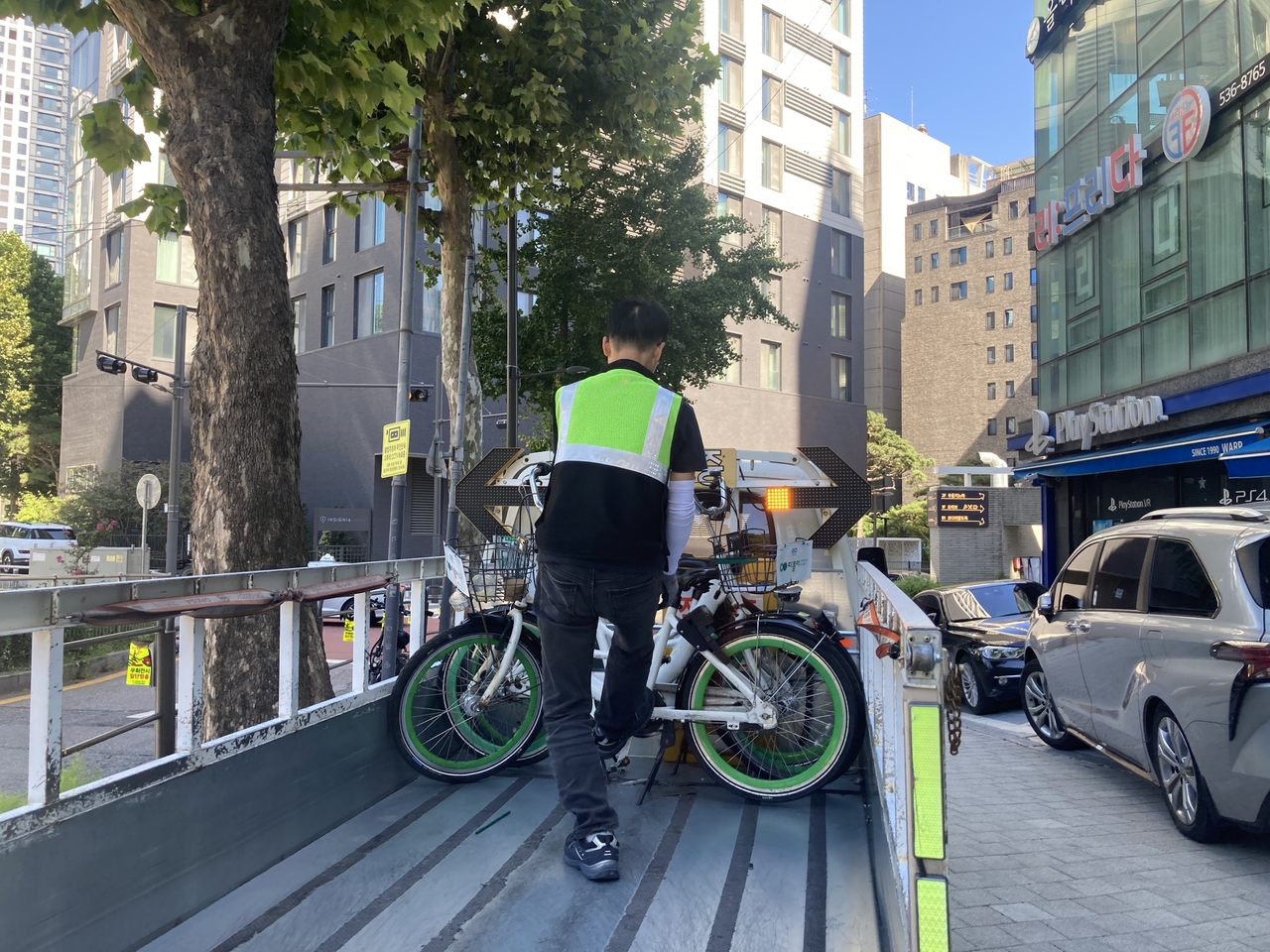
A one-ton truck pulled out of the Ttareungi public bike Isu Center near Isu Station on Seoul Metro Line 7 on Tuesday afternoon, heading out to collect broken bikes. Team leader Jeong Yeong-do opened the Ttareungi manager app on his phone, and a map appeared dotted with red markers — each one a rental station where a broken bike had been reported.
At the first stop, the Isu Intersection station, three bikes had been flagged for repair. Jeong matched the serial numbers shown in the app to the bikes on the rack. The reported faults included a faulty pedal, stiff handlebars and a brake problem. "Even if a reported bike looks perfectly fine to the eye, we collect it according to the manual and bring it back to the center," Jeong said. "Because this is a public bike used by many people, we want to make sure no one gets hurt even from a minor defect."
Although no fault had been reported for one bike at the station, Jeong also swapped out its battery. "Ttareungi runs on GPS, and the battery sits under the saddle where the QR code is," he said. "The battery drains constantly to maintain the signal — a fresh one usually lasts about a week." Battery replacement, he added, is one of the most frequent tasks for maintenance staff, alongside collecting broken bikes.
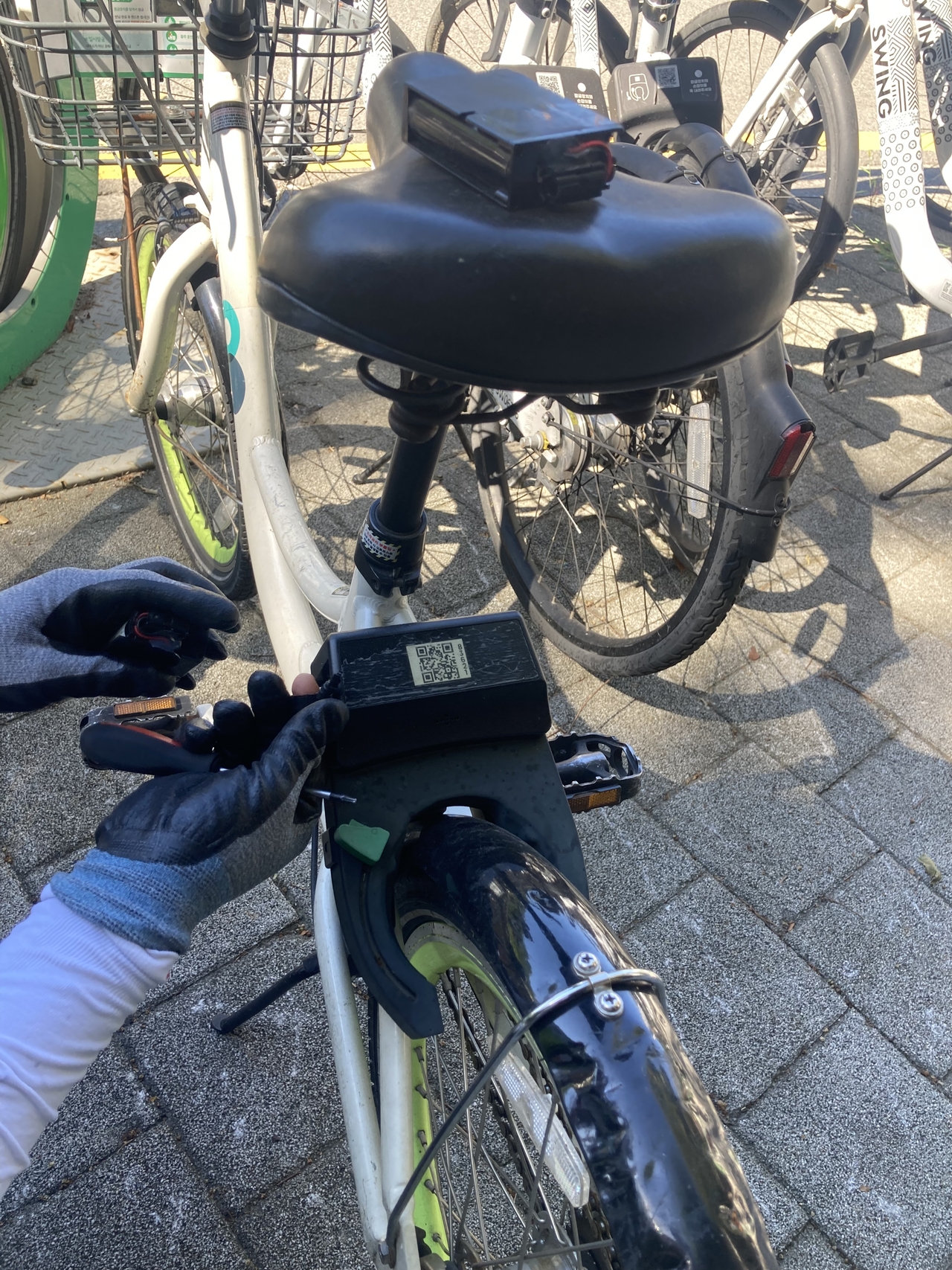
The Herald Business accompanied Jeong and other staff from the Gangnam district office of the Seoul Facilities Corporation, which manages Ttareungi, on a collection run that day.
Seoul currently operates 45,000 Ttareungi bikes spread across 2,794 rental stations throughout the city. Those stations are divided among 11 maintenance centers — six south of the Han River and five to the north.
The Isu Center covers all of Seocho-gu and parts of Gangnam, Dongjak and Gwanak. Four teams work morning and afternoon shifts, collecting broken bikes and redistributing units across stations.
"Redistribution is actually our main job," Jeong said. "We take bikes from stations that are overloaded and move them to stations that are running low. During busy seasons like now, fault reports go up and there are more bikes to redistribute, so we stay pretty occupied." During the outing, stations near subway stops were stocked with dozens of bikes, while quieter side-street stations sometimes had only one or two — or none at all.
The Isu Center oversees about 240 rental stations, from which an average of 40 to 50 broken bikes are reported each day. But the actual number collected is roughly double that. "When we get to a station, we often spot bikes that need maintenance even though no one reported them," Jeong said. "If a staff member judges that a bike needs work, we load it up regardless. So figure about twice the reported number actually gets collected."
Fault report data from the Seoul Facilities Corporation show the scale of the problem. Reports totaled 162,058 in 2024 before falling to 112,970 last year. Through last month this year, 71,236 reports had already come in — meaning well over 100,000 bikes break down in a given year.
Regular users say breakdowns are a familiar frustration. Kim, a 44-year-old resident of Songpa-gu, said he often scans a QR code at a station only to get a message saying the bike is out of service. "Because so many people use them, I suppose there are bound to be a lot of breakdowns," he said.
Under Seoul Facilities Corporation policy, any bike reported as broken is collected and taken to a maintenance center, where it is inspected and repaired before being returned to a station.
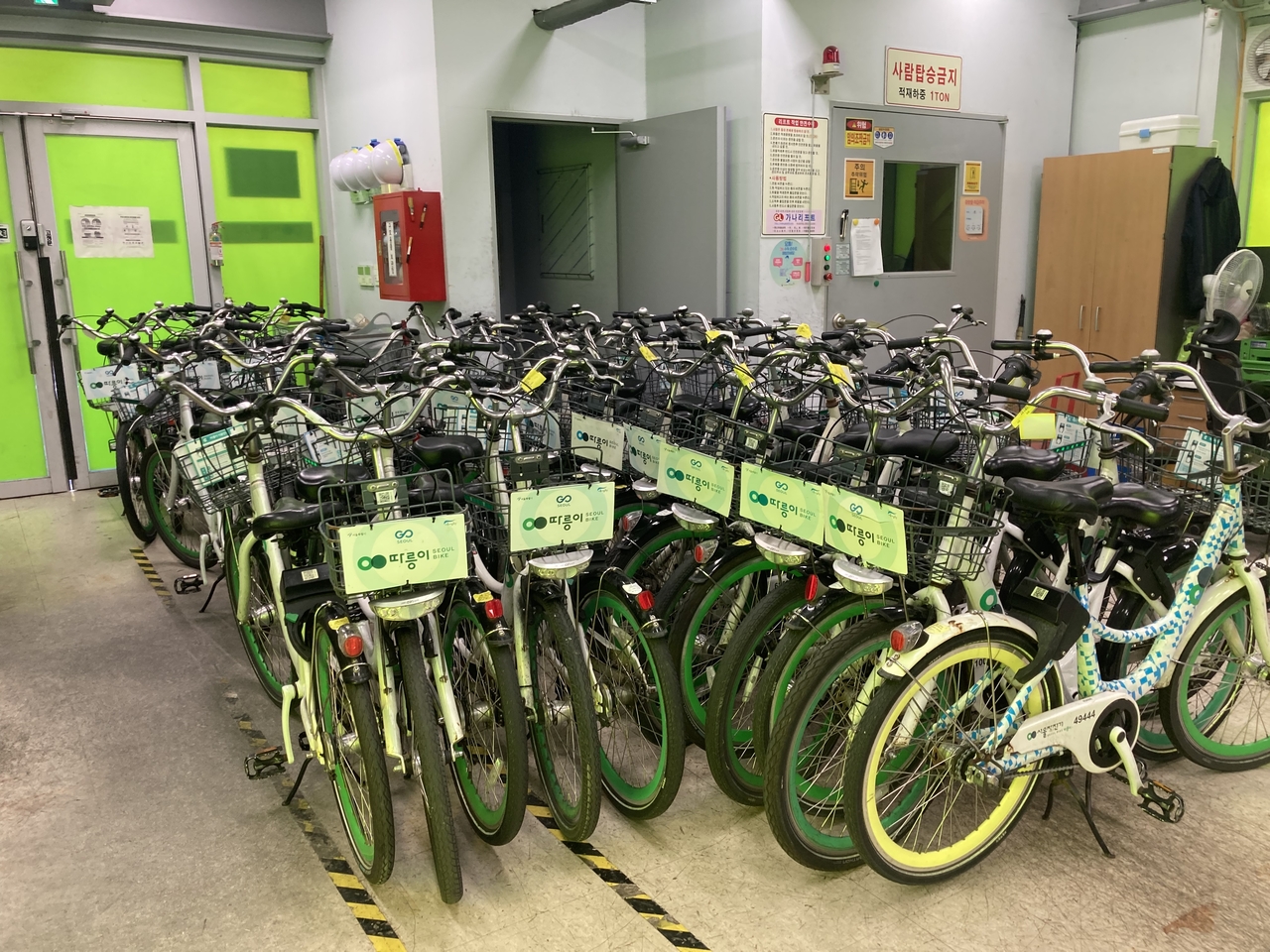
Not every broken bike is scrapped — the Seoul Facilities Corporation retires bikes based on quantitative criteria rather than fault reports alone. "We conduct detailed inspections on bikes that have reached thresholds for service life, rental count or mileage, and scrap only those that can no longer be safely operated," a corporation official said. "Bikes that have been in service for more than six years and have been rented at least 3,000 times or have covered more than 6,000 kilometers are assessed for wear and retired if necessary." About 1,400 bikes were scrapped in 2024; that figure rose to around 2,000 last year and has already reached a similar level through last month this year.
The corporation salvages about nine categories of reusable parts — including wheel sets and brake levers — for use as maintenance components, saving roughly 200 million won ($148,000) in procurement costs each year. Parts that cannot be reused are transferred free of charge to the Seoul Urban Metal Recovery Center.
The corporation urged riders to use dedicated bike lanes wherever possible to reduce wear and to report faults immediately when they occur. "For safety, please use the bike lane rather than the sidewalk," Jeong said. "And if a bike is broken, please report it so other riders don't get hurt — it helps us collect and fix it quickly."
Since its official launch in October 2015, Ttareungi has become a fixture of daily life in Seoul, logging about 283.47 million cumulative rides and about 5.36 million registered members as of the end of last month.
ikson@heraldcorp.com