Baesammyeon Juga's traditional liquor tasting class
Fermentation process likened to the four seasons
Raw-rice fermentation method skips the steaming step
No artificial additives such as aspartame used
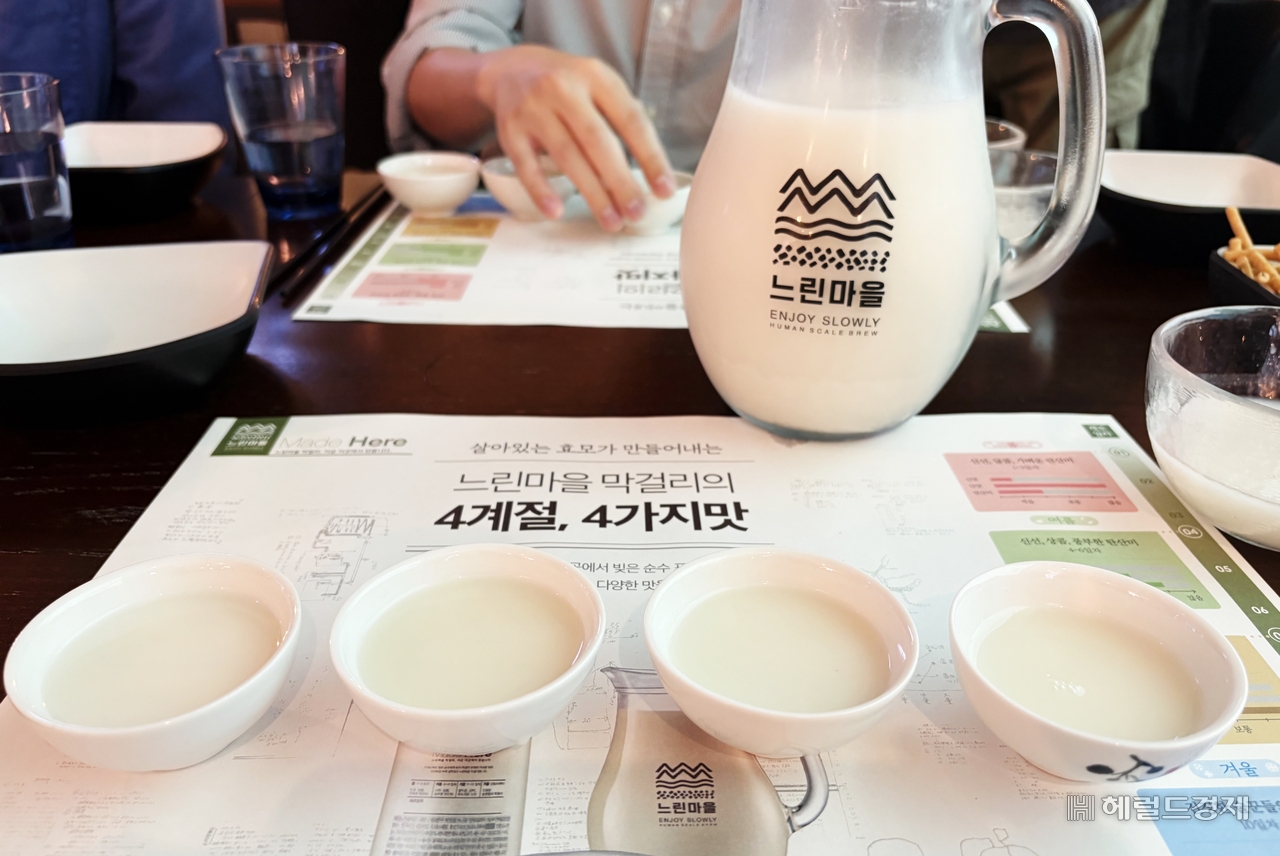
"Just as the seasons shift from spring to summer, autumn and winter, the flavor of fresh makgeolli changes with time. Find the one that suits your taste."
Baesammyeon Juga held its "Traditional Liquor Gourmet Class" on Thursday at the Yangjae branch of Neurin Maeul Yangjojangin in Seocho-gu, Seoul. The company walked attendees through its core concept of the "four seasons" and the brewing secrets behind its products.
Neurin Maeul makgeolli is the makgeolli brand of Baesammyeon Juga, founded by the second son of the late Bae Sang-myeon, who established Kooksoondang. The company also operates the Neurin Maeul Yangjojangin dining pub chain, which currently has 35 locations.
Jang Yun-seok, head of marketing at Baesammyeon Juga, said fresh makgeolli contains live yeast that continues alcoholic fermentation after bottling. "We divided the fermentation timeline into four seasons — spring (Sept. 1–6), summer (Sept. 7–11), autumn (Sept. 12–18) and winter (from Sept. 19 onward)," he said. He added that aroma and flavor shift with each stage of aging: makgeolli that has entered the "winter" phase loses some of its sweetness and carbonation compared with the first day, while sourness and bitterness become more pronounced.
Labeling each product with a seasonal name based on its aging period is a story-driven marketing strategy designed to help consumers understand and enjoy the differences with ease.
Shoppers buying online can select their preferred seasonal variety directly. In stores, a QR code on the packaging reveals the same information. When a reporter scanned a QR code on a bottle in the store and entered the production date, the screen displayed the flavor profile for "spring."
Seasonal preferences also varied by gender. An analysis of Neurin Maeul makgeolli purchases on Homeseul.com, Baesammyeon Juga's online store, from 2024 to 2025 found that women most often chose the sweet, easy-drinking "spring" variety (39.8 percent), while men favored the fully fermented "autumn" variety (36.2 percent).
Age also played a role. Customers in their 20s through 50s most often picked "spring," while those in their 60s showed the strongest preference for "autumn."
Tasting the four varieties in sequence, the "spring" makgeolli was notably sweet and smooth, its early-stage fermentation lending a light, delicate character. "Summer" was bright and lively with crisp carbonation. "Autumn" carried a richer, rounder flavor that evoked a well-ripened harvest. "Winter," the final pour, delivered a dry bitterness with a cold, weighty finish.
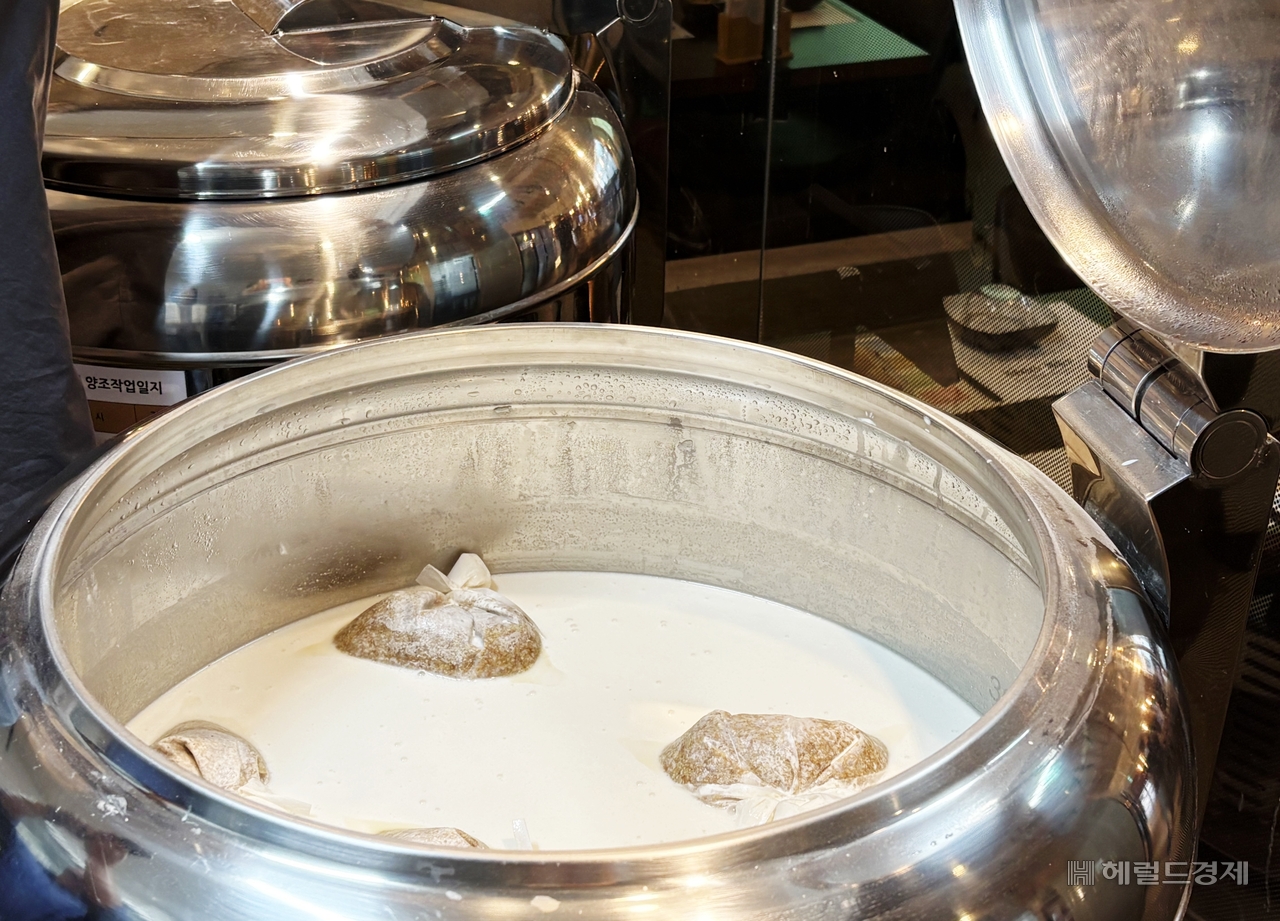
A side-by-side comparison with other makgeolli brands highlighted further differences. Neurin Maeul's color was a deeper, milkier white, and the rice flavor was noticeably more pronounced — the result of a higher rice content in the recipe. The company uses more rice to draw out natural fruity aromas and sweetness without relying on artificial sweeteners. Baesammyeon Juga uses no aspartame, antioxidants or other artificial additives, brewing solely with rice, nuruk (a traditional fermentation starter) and water.
Another key to the flavor is what the company calls the "raw-rice fermentation method." Jang said that while most brewers steam rice before mixing it with nuruk, Baesammyeon Juga skips that step entirely. "We grind the raw rice into powder and ferment it directly," he said.
The ability to ferment unsteamed rice comes down to the nuruk developed by the late Chairman Bae, who researched historical texts and obtained a patent for a traditional liquor manufacturing method using raw-rice fermentation in 1982. "This nuruk contains a powerful amylase enzyme capable of breaking down the starch in raw rice, so fermentation proceeds without cooking the grain," Jang said.
The class also introduced a six-step method for fully appreciating traditional liquor: first observe the color, then smell the aroma, roll the liquid across the entire tongue, feel the finish as it goes down, catch the lingering scent, and finally savor the aftertaste.

gorgeous@heraldcorp.com