Disputes remain over function allocation across three offices and placement of nationally appointed deputy mayor
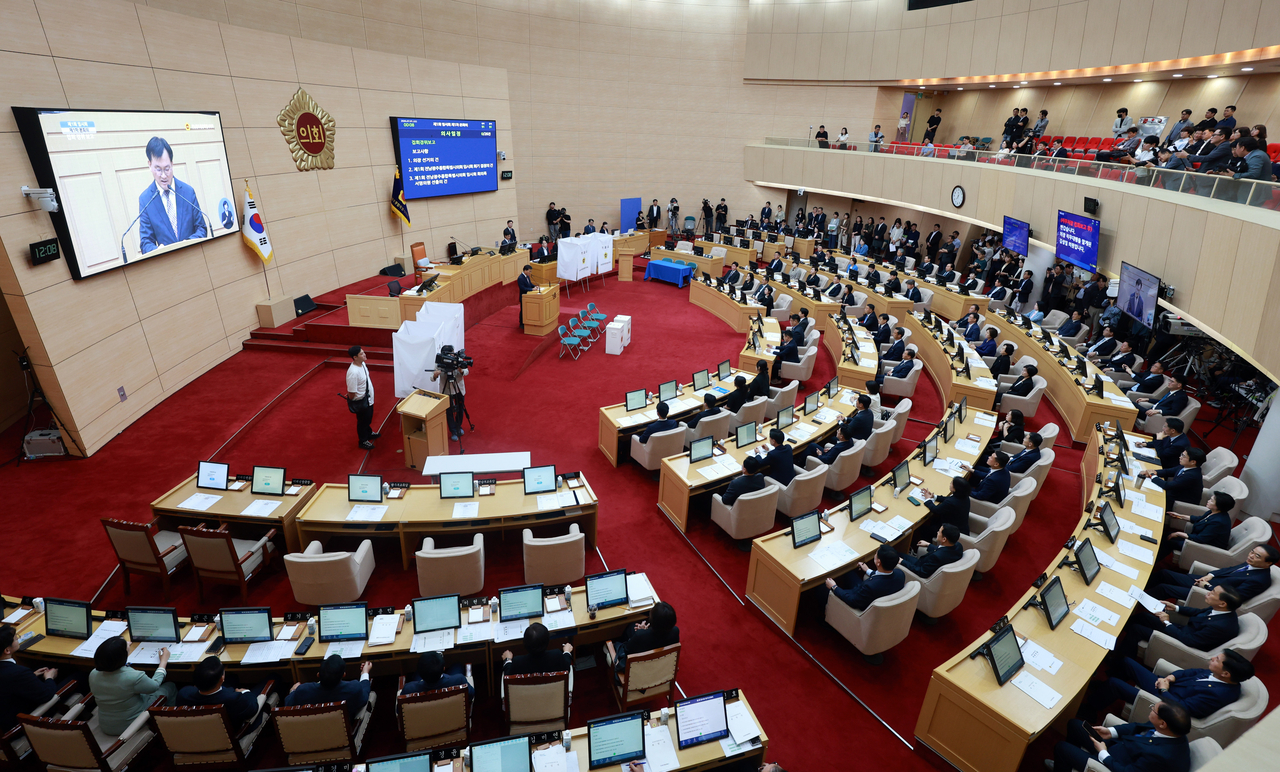
The South Jeolla-Gwangju Integrated Special City's first organizational restructuring plan passed a plenary session of the city assembly Friday.
The South Jeolla-Gwangju Integrated Special City Assembly held the third plenary session of its third regular session and approved the "Ordinance on the Full Revision of the Administrative Organization Establishment Ordinance of the South Jeolla-Gwangju Integrated Special City" by a vote of 46 in favor, 35 against and 8 abstentions among 89 members present.
The measure cleared the assembly floor by the narrowest of margins — one vote more than the 45 needed for a majority of members present.
A separate ordinance partially revising civil servant staffing levels to reflect personnel reallocation under the restructuring also passed, with 62 in favor, 15 against and 7 abstentions among 84 members present.
Ahead of the vote, 11 assembly members had filed to speak in opposition, but debate closed after only two — Jin Ho-geon and Lee Haeng-do — took the floor. No member spoke in favor.
Jin Ho-geon, a Democratic Party of Korea lawmaker representing Gokseong, argued in opposition that the merger should proceed gradually, with the former South Jeolla Province and Gwangju maintaining their separate organizational and budget structures for at least two years through 2028 while allowing sufficient personnel exchanges and preparation. "The pace of reorganization must be slowed," he said.
Lee Haeng-do, a Democratic Party lawmaker representing Yeongam 1, said the agriculture and fisheries sector's standing and functions had not been properly reflected in the plan. He also said he could not accept what he described as conditional processing — passing the reorganization plan first and then redrafting it subject to approval from the Ministry of Interior and Safety.
The first reorganization since the merger had been a drawn-out process, with disputes over how to distribute functions among the three offices and how to assign civil servants, compounded by competing regional interests.
In the assembly, disagreements over the allocation of functions among the three offices — in Gwangju, Muan and the eastern district — as well as the placement of a nationally appointed deputy mayor led the Planning and Finance Committee to defer its review on Sept. 9. The executive branch subsequently submitted a revised plan, and the standing committee cleared it Tuesday.
The executive branch is also moving quickly on follow-up personnel procedures.
It plans to promote some senior officials before chuseok, with the remaining promotions and transfers to follow after the holiday, completing all personnel moves by Oct. 7, when the reorganization takes effect.
The plenary session Friday approved a total of 16 agenda items, including the two ordinances related to the reorganization.
Also passed were the first supplementary budget for 2026, settlement and contingency expenditure approval bills for fiscal year 2025 covering the former South Jeolla Provincial Government, Gwangju Metropolitan City and both education offices, a resolution to form a youth special committee, and the appointment of its members.
sij@heraldcorp.com