IBS and KISTI analyze 17 autism-risk genes, find two shared molecular patterns; results open door to personalized treatment; study published in Science
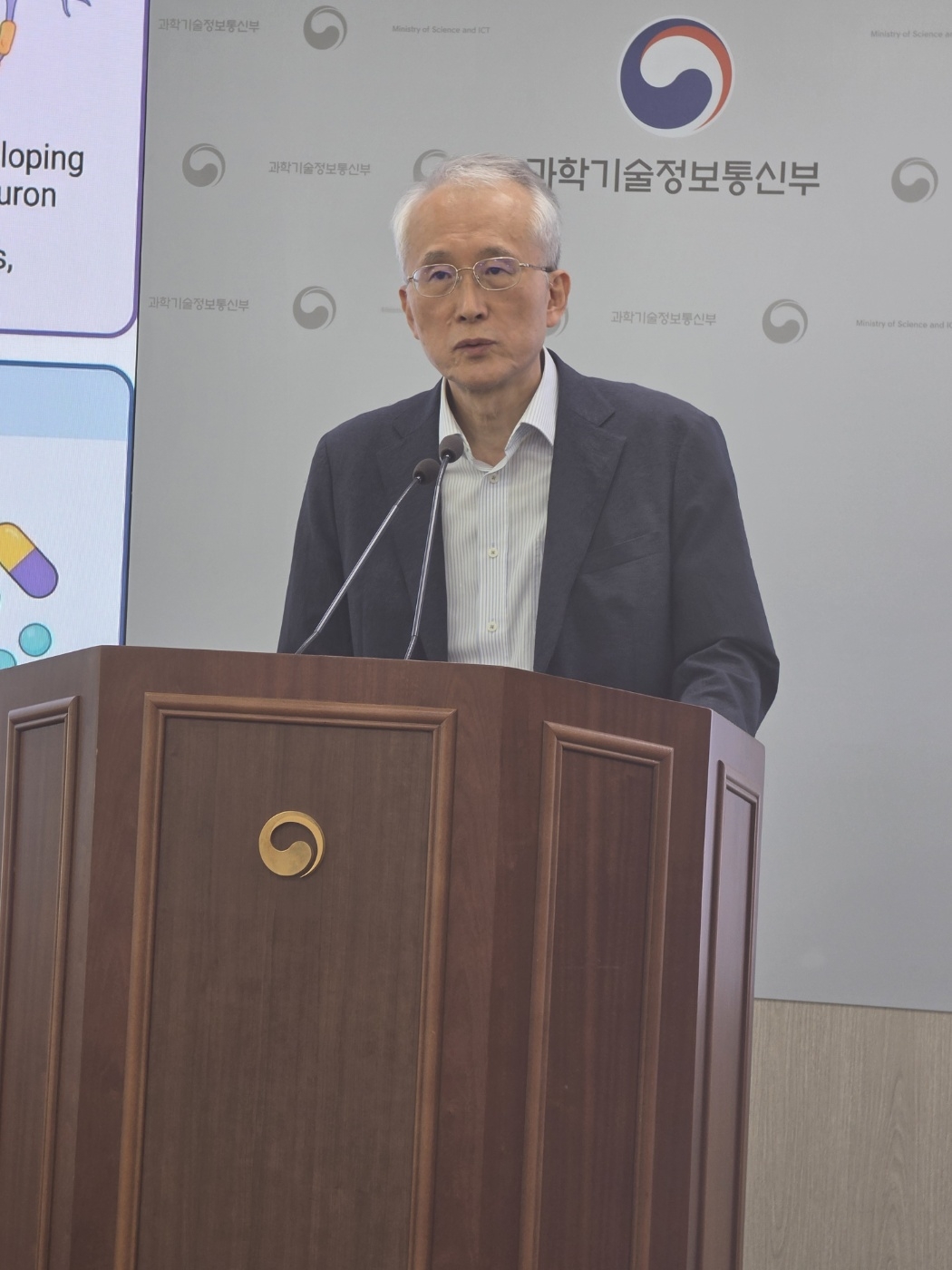
Korean researchers have found a new clue to unraveling the complex mechanisms behind autism spectrum disorder, a condition linked to more than 1,200 causal genes. For the first time, they have shown that mutations across different autism-risk genes ultimately converge on two common molecular patterns — a finding that could lay the groundwork for personalized autism treatments, as drug responses appear to differ depending on which pattern is present.
The Ministry of Science and ICT announced Friday that a joint research team — led by Kim Eun-joon, director of the Institute for Basic Science's Center for Synaptic Brain Dysfunctions and a professor in the Department of Biological Sciences at KAIST, together with the Digital Bio-Computing Research Division of the Korea Institute of Science and Technology Information — conducted a large-scale analysis of mouse models carrying mutations in autism-risk genes. The team found that diverse genetic mutations converge on one of two opposing transcriptomic states, or patterns of gene activity.
The findings were published Friday in Science, one of the world's most prestigious academic journals.
Autism spectrum disorder is a neurodevelopmental condition characterized by difficulties in social communication and interaction, as well as restricted and repetitive behaviors. Diagnoses have risen sharply — more than fourfold — over the past two decades. While more than 1,200 risk genes have been identified to date, the varying functions of those genes have made it difficult to pinpoint a shared mechanism underlying the disorder.
The research team selected 17 autism-risk genes involved in synaptic function, gene expression regulation and intracellular signaling, then built mouse models carrying mutations in each. They analyzed 1,008 RNA sequencing datasets obtained from the prefrontal cortex to compare gene expression patterns across the models.
The analysis revealed that mice with different genetic mutations fell into two distinct and opposing transcriptomic states. The transcriptome — the complete set of RNA produced by a cell or tissue — serves as an indicator of how actively genes are being expressed.
In the first group, expression of synaptic genes responsible for signaling between neurons was reduced, while genes related to gene expression regulation and RNA processing were activated. The second group showed the opposite pattern: synaptic gene expression increased, while genes involved in regulation and RNA processing were suppressed.
In other words, although the risk genes driving autism vary widely, the molecular changes they produce in the brain can be organized into two common patterns.
![Two opposing molecular brain states observed in mouse models carrying autism-risk gene mutations. [Provided by the Ministry of Science and ICT]](https://wimg.heraldcorp.com/news/cms/2026/09/17/news-p.v1.20260917.87ea8741c7d64f5d84a60d731e2e7ca9_P1.png)
The two groups also showed markedly different responses to drug treatment. When the research team administered the antidepressant fluoxetine and the mood stabilizer lithium, the first group showed consistent recovery in the abnormal expression of multiple genes. In the second group, however, responses varied from gene to gene, making it difficult to identify any clear pattern of recovery.
This suggests that even when the same drug is used, treatment responses can differ depending on a patient's underlying molecular characteristics. However, the findings reflect molecular-level changes observed in mouse models and do not constitute proof of therapeutic efficacy in human autism patients.
The team further validated the results using single-nucleus RNA sequencing — which analyzed about 1 million individual cell nuclei — along with gene co-expression analysis. Similar molecular patterns were observed not only in other autism mouse models but also in transcriptomic data from the brains of actual autism patients.
The study is significant in that it shifts the focus away from individual risk genes and instead establishes a research framework for understanding autism through shared molecular characteristics.
"Because autism involves such a wide variety of causal genes, studying them one by one has limited our ability to understand the common mechanisms behind the disorder," Kim said. "Now that a new research framework has been proposed — one that interprets diverse genetic causes through shared molecular features — this will serve as an opportunity to broaden the horizons of autism research."
nbgkoo@heraldcorp.com