Hong Ji-sun says Yongsan Park and alternative sites are separate issues, leaving supply option open
Seoul proposes additional sites including Jungnang-gu and Mapo-gu rail depots
Experts say it is time to formalize public debate on site selection
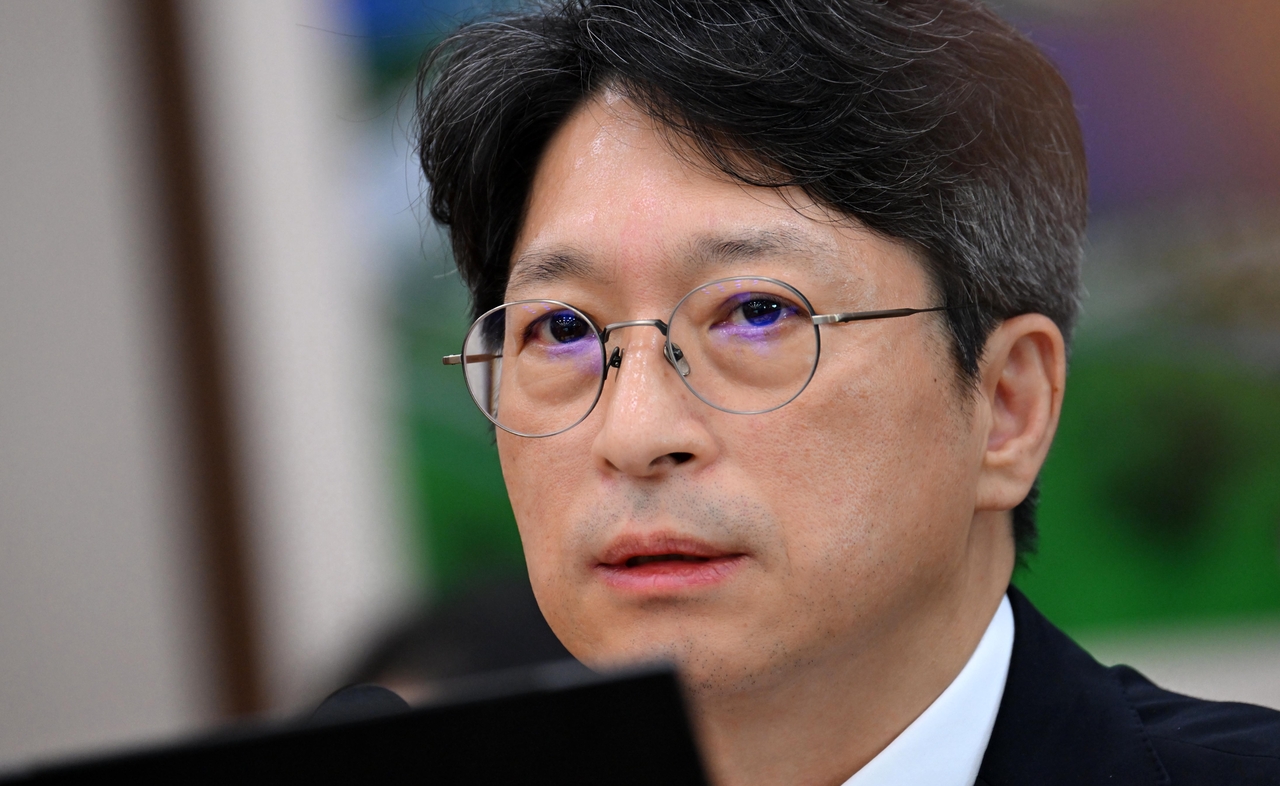
If Hong Ji-sun is confirmed as minister of land, infrastructure and transport, stalled negotiations between the ministry and the Seoul Metropolitan Government over housing supply sites are expected to resume in earnest. The central government has kept open the possibility of using part of Yongsan Park for housing, while Seoul city hall has been pushing the discussion away from Yongsan by proposing a series of alternative sites, including rail depots in Jungnang-gu and Mapo-gu. Hong also signaled at her confirmation hearing that she would pursue housing development at Yongsan Park if there is public consensus, making it a key question how the two sides will find common ground on where to build youth housing.
At her confirmation hearing at the National Assembly on Wednesday, Hong said that converting the former US military base in Yongsan into a park remains the guiding principle, but added that "if there is public consensus, I believe we can pursue the question of whether there is room to supply housing for future generations and young people in the peripheral areas."
The remarks suggest the government is still considering the Yongsan Park area as one of its primary housing supply candidates. In a written response submitted ahead of the hearing, Hong said the Yongsan Park site and the Tancheon water reclamation center site — which Seoul Mayor Oh Se-hoon has proposed as an alternative — should be treated as separate questions, and that it was necessary to examine whether the Yongsan site could independently contribute to housing stability for future generations.
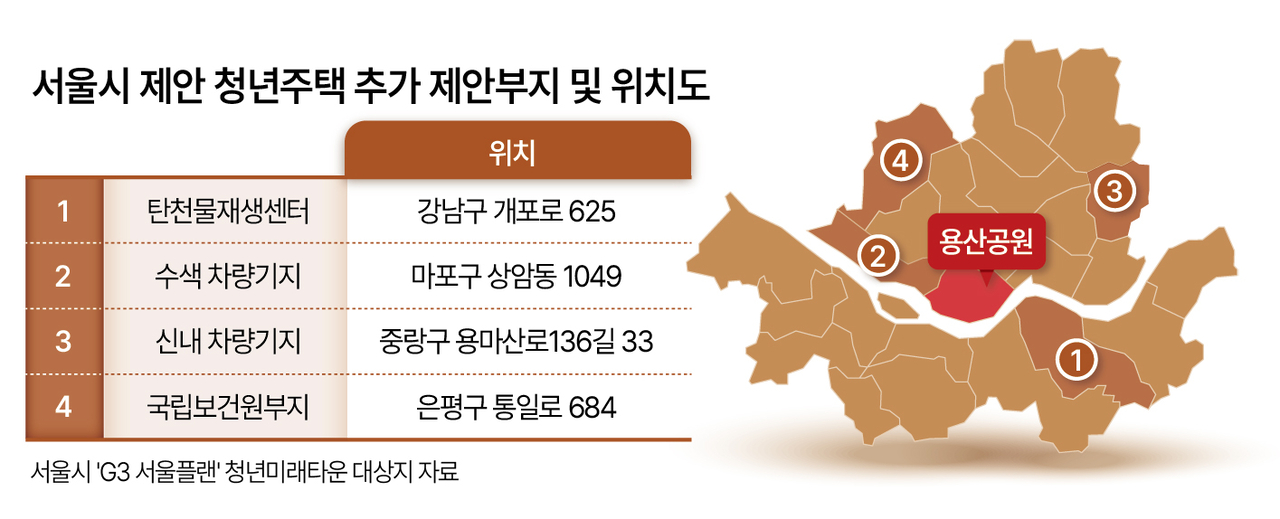
While the central government leans toward Yongsan, Seoul city hall has been actively seeking alternatives. At its "Global Top 3 Seoul Plan" announcement last Friday, the city proposed three additional substitute sites beyond the Tancheon location: the National Institute of Health site in Eunpyeong-gu, the Susaek rail depot in Sangam-dong, Mapo-gu, and the Sinnae rail depot in Jungnang-gu.
The city envisions developing these sites into "Youth Future Towns" that combine residential and industrial hubs, aiming to address both the housing shortage and the jobs crisis at the same time. Lee Chang-moo, a professor of urban engineering at Hanyang University, said the Yongsan Park site carries hidden variables that are difficult to schedule — including negotiations with the US military and soil decontamination — whereas the sites proposed by Seoul have relatively clear procedural paths, allowing for faster project execution.
"There is also a meaningful difference in that the concept is not simply about supplying housing, but a mixed-use development combining residential, employment and lifestyle infrastructure," he added.
The sites Seoul has proposed differ fundamentally from the Yongsan Park land in that they are not new development targets but extensions of urban planning the city has already been pursuing.
Among them, the National Institute of Health site in Eunpyeong-gu — a city-owned parcel designated as the lead project site — was put up for sale last year at around 450 billion won ($329 million) as part of a creative industry hub initiative, but the auction drew no bids. The city plans to relaunch the sale and eventually develop the site into a youth innovation district combining youth housing, startup spaces, a job center and cultural facilities.
![Seoul Mayor Oh Se-hoon walks through Yongsan Children's Garden last month in a roughly 15-minute video explaining the controversy over housing development at Yongsan Park and the city's position. [Seoul Metropolitan Government]](https://wimg.heraldcorp.com/news/cms/2026/09/17/news-p.v1.20260824.ee93af00a60e4af7b8dcfcf41e287623_P1.jpg)
The Susaek rail depot in Sangam-dong, Mapo-gu, is an area where the city has long envisioned large-scale mixed-use redevelopment. Seoul has sought to turn it into a growth hub for the city's northwestern corridor in connection with the Sangam Digital Media City, but the project has been deadlocked due to friction among local governments, requiring coordination with Goyang and Korail. For Seoul, having the site designated as a youth housing supply location would give the project fresh momentum while also delivering housing units — two goals at once.
For the Sinnae rail depot in Jungnang-gu, a study on development strategy and master planning for the surrounding area was launched this year, with work underway to map out a development approach linking office, transportation, residential and commercial functions. The site is also close to the parcel where the Seoul Housing & Communities Corporation is planning to relocate its headquarters.
However, if development proceeds simultaneously with the Taereung Golf Course — where the government is pushing to build 6,800 homes — the projects would require a more comprehensive regional and local transportation plan. The city has said it is too early to estimate specific housing unit counts for these sites.
Park Hap-su, an adjunct professor at Konkuk University's graduate school of real estate, said all the proposed sites — including the Sinnae rail depot, which serves as a prime eastern gateway to Seoul, as well as the Susaek depot and the National Institute of Health site — have strong locational advantages. "It appears Seoul has put forward a sufficiently robust set of alternative supply site options," he said.
Experts say that as the debate over youth housing supply sites drags on, the discussion needs to be formalized through a public deliberation process. One real estate expert said that with public opposition to Yongsan development already confirmed, no proper public consultation schedule has yet emerged. "It is time to step away from the turf war between the Ministry of Land, Infrastructure and Transport and Seoul city hall and focus on reaching a rational solution," the expert said.
Park also stressed that establishing public consensus on whether the government should break with the principles of the Special Act on Yongsan Park to supply youth housing must come first. "A formal public opinion-gathering process, such as a public hearing, needs to happen as soon as possible," he said.
hope@heraldcorp.com