Top policy think tank to chart city's future and drive new growth engines
The city of Hanam has officially launched the Hanam Future Development Committee, a top-level policy think tank tasked with charting the city's long-term direction and identifying new growth engines.
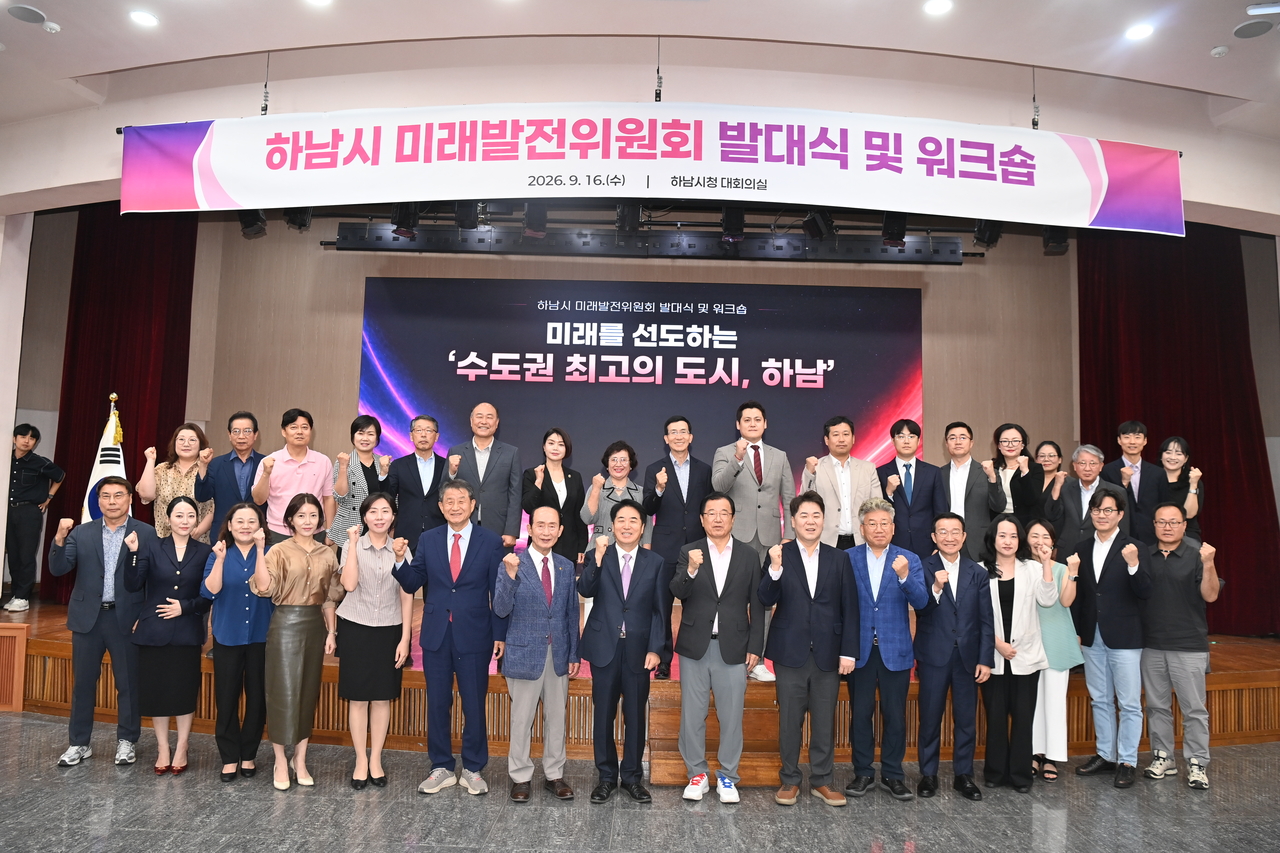
The committee held its inaugural ceremony and workshop Wednesday at the main conference room of Hanam City Hall, formally beginning its advisory work on key policies and pending issues of the ninth elected municipal administration.
The launch marks a significant step as the committee takes shape as a permanent advisory body established under a municipal ordinance. The city had previously operated a temporary Future Development Committee — modeled on a mayoral transition team — during the lead-up to the ninth elected administration, with that body's mandate expiring July 20. On Aug. 31, the city enacted the Ordinance on the Establishment and Operation of the Hanam Future Development Committee, laying the legal foundation for a sustained structure. The transition body set up to prepare for the new administration has thus been converted into a standing policy organ designed to help shape four years of city governance.
The committee's focus is not on reviewing projects already underway. Its core function is to identify areas where Hanam has unmet needs not yet addressed by city policy, and to propose new measures to fill those gaps. With the Gyosan new town development, expanded metropolitan transportation networks and large-scale cultural industry projects all advancing simultaneously, the committee is positioned to serve as an urban strategy think tank — looking beyond individual projects to survey the city as a whole and flag missing priorities.
The committee is led by Hanam Mayor Lee Hyeon-jae as chair and former Korea Research Institute for Local Administration President Kim Il-jae as vice chair. About 60 people participate in total, including specialists in urban planning, economics, transportation and culture, civic representatives from each district, and civil servants. Of these, 42 are appointed members.
The committee is organized into five subcommittees: future strategy and planning (7 members), urban development and transportation (8), investment attraction and employment (8), education and welfare (9), and culture and tourism (10). Senior city officials — including the directors-general of planning and finance, economy and culture, and transportation and construction, as well as the heads of the Future City Project Division and the Lifelong Education Institute — also participate to provide departmental expertise and implementation capacity.
Each subcommittee will focus on identifying new policy tasks that Hanam needs within its respective area. The approach combines the subject-matter expertise of specialists with the on-the-ground experience of civic representatives to generate policy proposals, which the relevant city departments then review for implementation.
The first part of Wednesday's event featured the presentation of appointment certificates and an overview of the committee's operating direction. The second part was a workshop in which Kim Kyung-min, a professor at Seoul National University's Graduate School of Environmental Studies and a Harvard University doctoral graduate in urban planning and real estate, delivered a special lecture titled "K-Culture Complex and Hanam's Urban Competitiveness Enhancement Strategy." Participants examined growth strategies linking K-culture with urban space and explored ways to strengthen Hanam's city brand and competitiveness. A discussion session following the lecture allowed subcommittees to share their respective agendas and directions.
"The Future Development Committee will serve as a central pillar of the ninth elected administration and play a pivotal role in shaping Hanam's future," Mayor Lee said. "I ask that you go beyond reviewing projects already in progress and propose new tasks that Hanam truly needs. We will actively examine the feasibility of every proposal that comes out of this committee."
He added that "the specialized knowledge and experience each member brings, along with the voices of residents felt firsthand in the field, are Hanam's greatest asset," and urged members to "draw on the capabilities you have built in your respective fields and work actively for the development of Hanam."
pjh@heraldcorp.com