Legislative notice for restructuring plan set for Oct. 7; changes take effect next year
Reorganization aims to strengthen execution of 'G3 Seoul Plan' core projects
New 'Livelihood Economy Headquarters' to serve as economic control tower
Population, labor and housing policy divisions to be bolstered
Dedicated units for international exchange, tourism and urban space innovation also planned
Oh Se-hoon vows to focus all capacity on realizing 'Seoul as a quality-of-life special city'
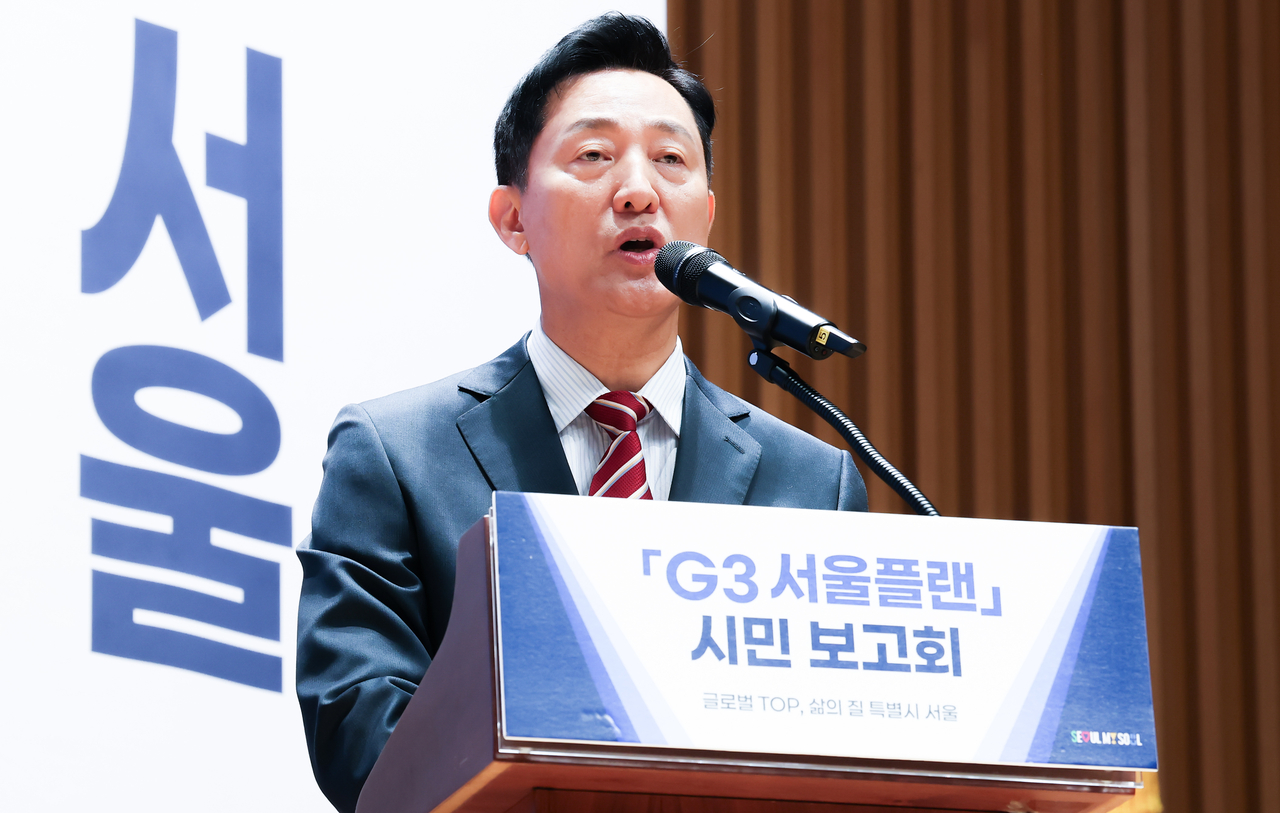
The Seoul Metropolitan Government will elevate its public health bureau to a full headquarters, rename its architecture planning office to a rapid housing supply policy office, and establish a new economic control tower called the Livelihood Economy Headquarters.
The city announced Thursday that it had drawn up the "9th Elected-Term Seoul Metropolitan Government Organizational Restructuring Plan." Seoul plans to open the proposal for public legislative comment through Oct. 7 before submitting it to the Seoul Metropolitan Council. The restructuring is designed to reinforce the organizational capacity and staffing needed to execute the core projects of the G3 Seoul Plan, which was unveiled Wednesday.
The key elements of the reorganization plan cover three broad areas: strengthening health and disaster-response units for a safer daily life; creating dedicated organizations to boost Seoul's global competitiveness; and bolstering divisions handling population, labor and housing policy to realize Seoul as a quality-of-life special city.
To narrow health disparities among residents and build toward a "100-year healthy city Seoul," the city will upgrade the Citizens' Health Bureau to the Citizens' Health Headquarters. A new public medical policy office will be established to deepen expertise in essential medical care and infectious disease management. The smart health division will be reorganized into a health vitality division.
To enable the Seoul Metropolitan Fire and Disaster Headquarters to serve as the on-site control tower during major disasters, the rank of the headquarters' field response commander will be elevated. New units will also be created — an advanced equipment response team to expand the use of cutting-edge disaster gear such as robot dogs, and a fire law support team to strengthen the expertise of fire department special judicial police. A Jamsil Sports Complex integrated development task force will be established under the Urban Infrastructure Headquarters.
The Livelihood Economy Headquarters will be created to oversee the full spectrum of economic policy, from supporting small businesses and revitalizing commercial districts to nurturing future industries. A new economic vitality policy office will be set up to pursue the urban strategy of "24-hour vibrant economy city Seoul" for regional economic revitalization. The creative industries planning office will be reorganized into a strategic industries policy office. An international exchange and cooperation office will also be established directly under the first administrative deputy mayor. Through a new investment attraction division, the city will maximize its capacity to identify investors and develop investment strategies for key development sites including the Yongsan International Business District and Seoul Digital Bio City. A tourism content division will be added to the tourism and sports bureau to identify immersive and experience-based tourism offerings.
A spatial development innovation division will be set up within the Urban Space Headquarters to strategically integrate key development tools including pre-negotiation processes, transit-oriented area revitalization and mixed-use urban redevelopment.
Policy areas closely tied to residents' daily lives — including population, labor and housing — will be reinforced. In line with the Framework Act on Population Strategy, which took effect Wednesday, a population and family policy office will be created within the women and family division to drive a comprehensive population strategy. A population policy planning unit will also be established to analyze demographic shifts using data and develop overarching strategies.
A new employment and labor bureau will be created to integrate customized job-matching services and efforts to build a fair and safe working environment. A labor inspection division and a social economy division will be established under the new bureau.
To meet the target of breaking ground on 310,000 housing units by 2031, the architecture planning office will be reorganized into the rapid housing supply policy office to maximize the speed and effectiveness of housing delivery. The international events support division under the administrative bureau will be expanded and restructured into an international events support corps in preparation for the 2027 World Youth Day in Seoul.
The regulatory innovation planning office will be abolished. However, regulatory reform work will continue steadily and without interruption, centered on the creative regulation planning unit — the dedicated division for identifying and improving regulations.
"This reorganization lays the groundwork for putting the G3 Seoul Plan into full action and bringing Seoul's future vision to life in the daily lives of its residents," Seoul Mayor Oh Se-hoon said. "The ultimate purpose of strengthening Seoul's global competitiveness lies in the better lives and happiness of each and every resident. We will focus all of the city government's capacity on improving residents' quality of life and will absolutely realize 'Global Top, Seoul — a quality-of-life special city.'"
Earlier Wednesday, Oh unveiled the G3 Seoul Plan, setting out a vision of Seoul as a global top city and quality-of-life special city, along with five future city images — a healthy and safe city, an inclusive growth city, a stable housing city, an opportunity and vitality city, and a spatial innovation city — as well as 20 strategic goals and 100 core tasks. "Reaching the global top three is not simply about climbing the rankings of world cities — it is a strategy for translating Seoul's competitiveness into better lives for each and every resident," Oh said. "We will make the five future city images and 100 core tasks the top priorities of city administration, see them through to the end, and prove their worth through results, not declarations."
cook@heraldcorp.com