Mapo Art Center artist-in-residence takes the stage Wednesday
Program features Chopin's four Scherzos and Schubert's Piano Sonata No. 20
The 21-year-old who once called herself 'dust in the universe' is now 26 — and certain
A story of failure, self-doubt and a hard-won reversal
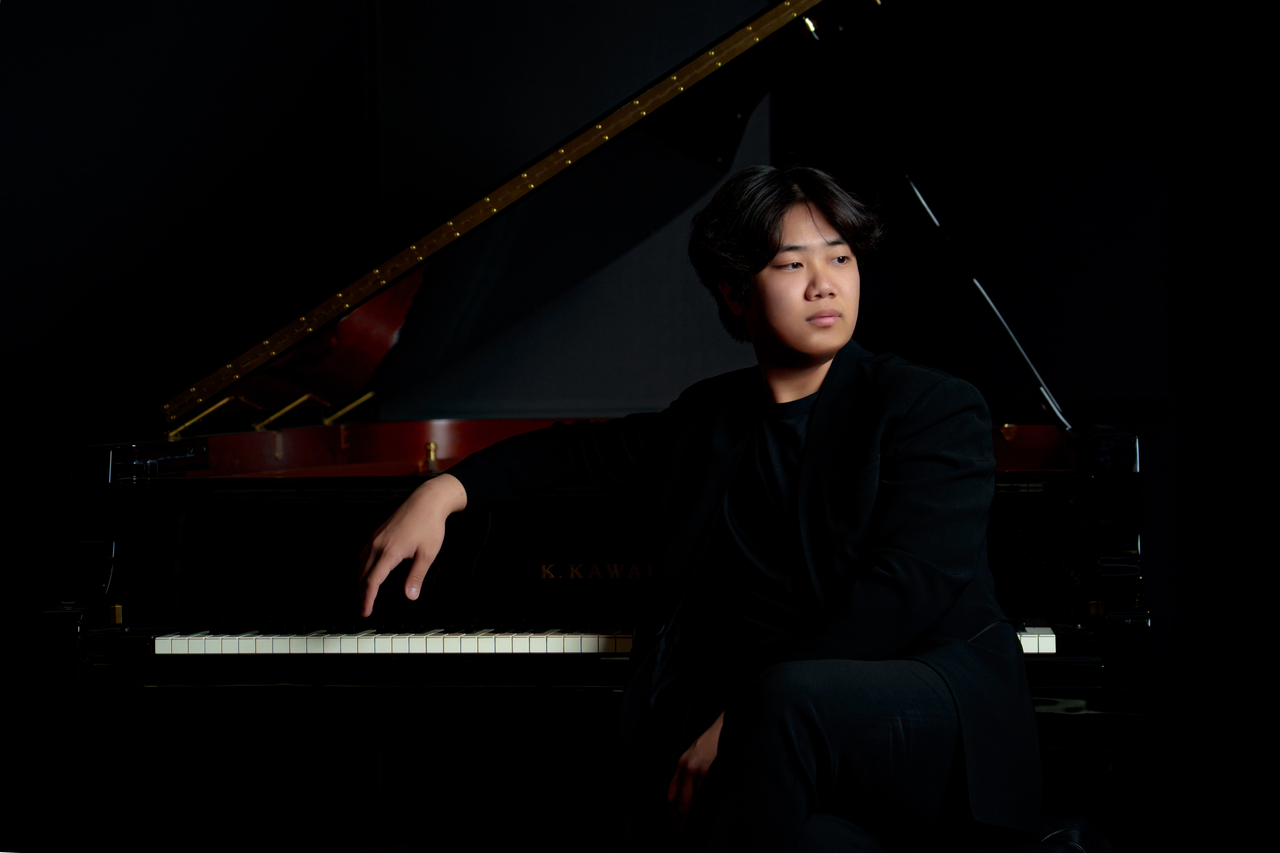
"I feel like I'm forcing myself to play without any real talent. In the end, everyone is just a speck of dust in the universe — I'm simply grateful to be invited onto a stage."
Those were the words of a 21-year-old pianist in 2021, as a once-in-a-generation pandemic gripped the world. She had been called a prodigy, and her very name — Sun Yul, meaning "melody" in Korean — seemed destined for music. Behind the mask she wore that day, her eyes were shy and unsteady; it was easy to chalk it up to the introversion common among performers. Five years later, those same eyes carry something altogether different: an unshakeable self-belief. It is the clear-eyed radiance that belongs only to someone who has cracked open a shell of self-denial and found themselves whole on the other side.
Sun, 26, was selected this year as an artist-in-residence at the Mapo Cultural Foundation and will meet audiences across three concerts. Her second appearance — at Mapo Art Center on Wednesday, following a first concert in June — comes immediately after she completed four weeks of military training, so she will sit down at the piano with close-cropped hair rather than her usual full locks. The first half of the program features all four of Chopin's Scherzos; the second half presents Schubert's Piano Sonata No. 20 in A major (D. 959) — a work she once vowed never to touch again after playing it at her undergraduate graduation recital.
Meeting her ahead of the concert, Sun said her challenge this year has been confronting a personal trauma. "I wanted to give myself time to look back at who I am," she said.
'I tried everything and still failed — I thought quitting was the only answer'
Sun has carried her name as a conversation piece her whole life — people invariably ask how she could possibly be named "melody," and whether her email address is "melody" too. Her parents gave her the artistic name, and the music world took notice early: she moved through the elite track of Yewon School, Seoul Arts High School and early admission to the Korea National University of Arts (K-Arts).
At school she was the model student — punctual with homework and practice, never causing trouble, doing exactly what her teachers asked. People in the music world agree that the first word that comes to mind when they think of Sun Yul is "diligence."
But a diligent student does not always walk a smooth path. Behind Sun's conscientiousness lay a brutal dark period. While classmates and peers were collecting prizes at competitions, she was not. "Honestly, from high school onward I never once won a major award at a competition," she recalled. "It wasn't that I wasn't entering — I kept at it consistently, and it just didn't work out."
What frightened her most at the time was the judgment of others. As the failures mounted, the years when she should have been growing became years of wandering and hardship.
"At first my goal was simply not to be the person people said, 'Oh, she was just a flash in the pan — someone who shone a little when she was young.' Then gradually I started thinking, 'Maybe that really is what I am.' I stopped believing in myself."
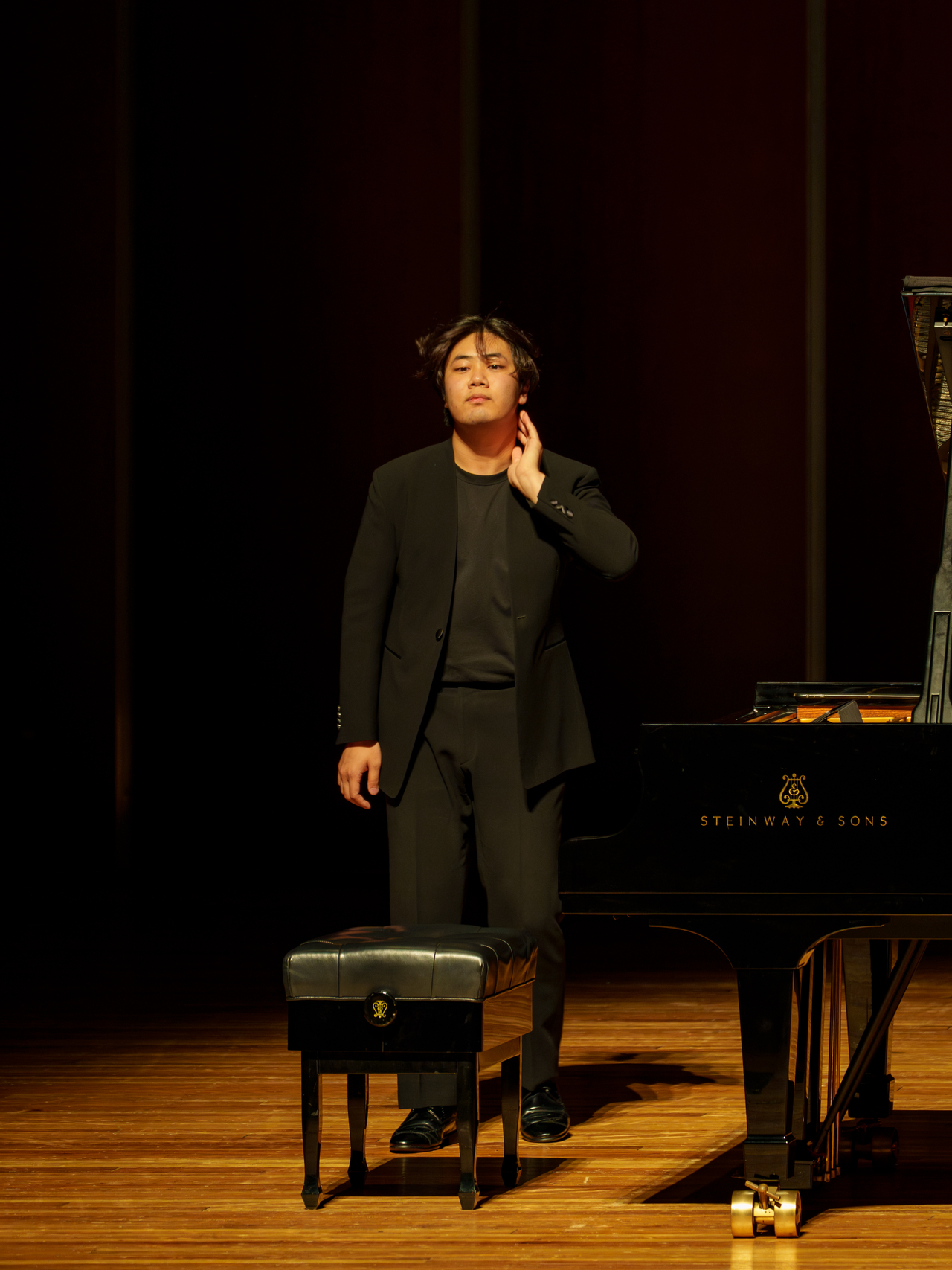
By her third and fourth years of university, even showing up to school felt painful. Then, in the first semester of her senior year, she sat down to register for a competition and was confronted by a stark reality: there was not a single award to list after her name. She turned to her mother with the resignation of someone who had already given up. "Mom," she said, "I've been at this for eight years and I have nothing to show for it."
"I genuinely wondered whether I had no talent at all, whether it was really time to stop. From five years ago and even after that, I kept feeling like I shouldn't be playing the piano anymore. I hated going to school, it was exhausting, and I thought: maybe this isn't my path. If I just let go of my own ambitions, everything would be over."
Having hit what felt like rock bottom, she stepped off the safe track she had followed her entire life. The model student who had never defied her elders listened to her own heart for the first time — and decided to study abroad. The destination was not the obvious one: those around her recommended Germany, but she chose Paris. That was in 2022.
"Up to that point I had never once made a choice that was truly my own. Going abroad was the first time. I had always been the obedient student who did what she was told, so when I dug my heels in for the first time, everyone was shocked — and the opposition was fierce."
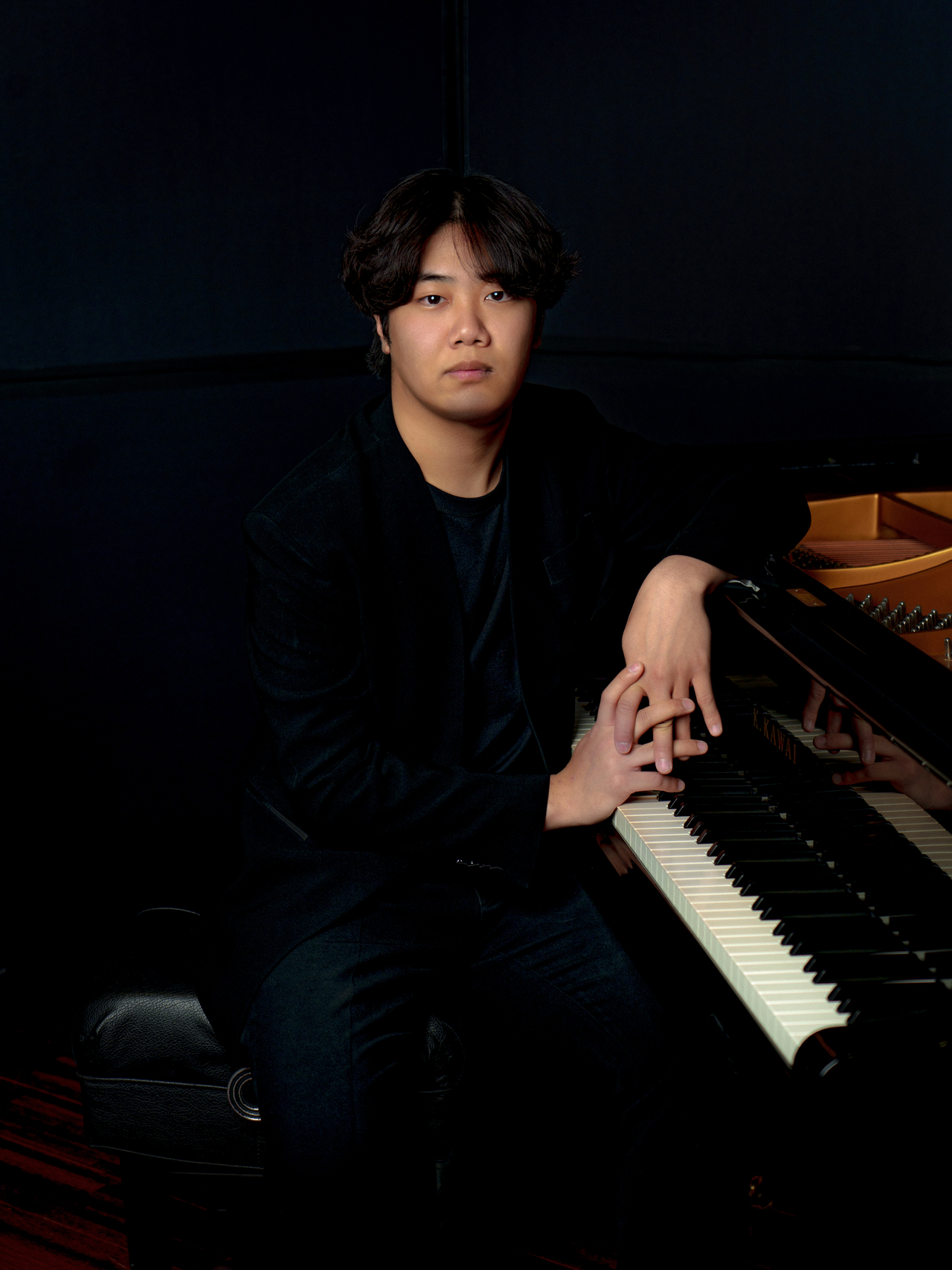
Choosing France over Germany was itself an unexpected move. Paris was unknown territory for Sun — a world she had no information about and no familiarity with. "I knew I needed a change, and I felt that to change I couldn't live the same life as everyone else," she said. "So I chose somewhere most people don't."
She had barely any grounding in French music. Before leaving for Paris, the only French pieces she had ever played were Ravel's "Gaspard de la nuit" and Debussy's "Pour le piano." But having nothing left to lose meant having nothing left to fear.
"I had no certainty it would work out. But I had certainty that, because it was my own choice, I would never regret it. I had already seen the bottom — I kept thinking, 'Can it really get any worse than this?' Having no fear of the choice meant I could actually commit to it fully."
The door finally opened in Paris, where she had gone with nothing to fall back on. Telling herself she would give it until she turned 25, she kept entering competitions while she studied. What followed looked almost like a deliberate strategy: from the moment she settled in Paris, she began sweeping the competition circuit. She took second place at the 2023 Isang Yun International Music Competition, then won prizes at the Maria Canals Competition in March 2024 and the Istanbul Sion Orchestra International Piano Competition in April 2024, before claiming the top prize at the Gina Bachauer International Piano Competition in June. She then won first place at the Seoul International Music Competition — placing in all four competitions she entered within a single year, writing what she calls her "reversal narrative."
"I had gotten so used to losing that even when I started winning, my first thought was, 'Why are they giving this to me?' Then, after the Seoul International Music Competition, I had a moment of realization: 'Ah — I've actually built up some experience now.'"
'I hid my weaknesses behind busy notes — now I want to break out of safe playing'
The phrase "flawless technique" has long trailed Sun's name. She shakes her head at it. What she will admit is that she consistently chose technically demanding repertoire — not out of strength, she says, but as a refuge to conceal what she felt was a lack of inner depth.
"A competition is a stage where you have to show your strengths, so I thought I had no choice but to hide my weaknesses. I felt my expressiveness and inner depth were severely lacking. That's why I preferred pieces with a lot of notes — I always gravitated toward 19th- and 20th-century works, and 21st-century works, and avoided Baroque, Classical and core Romantic repertoire. I thought fast tempos and energetic pieces could hide me."
Sun names two teachers as the most important figures in her musical life: Kim Dae-jin, a professor at K-Arts, and Olivier Gardon, the professor she studied under in France. "The direction they ultimately pursue in music, and even the way they teach, are similar," she reflects. The crucial difference between the two, she says, became the soil from which the pianist she is today grew.
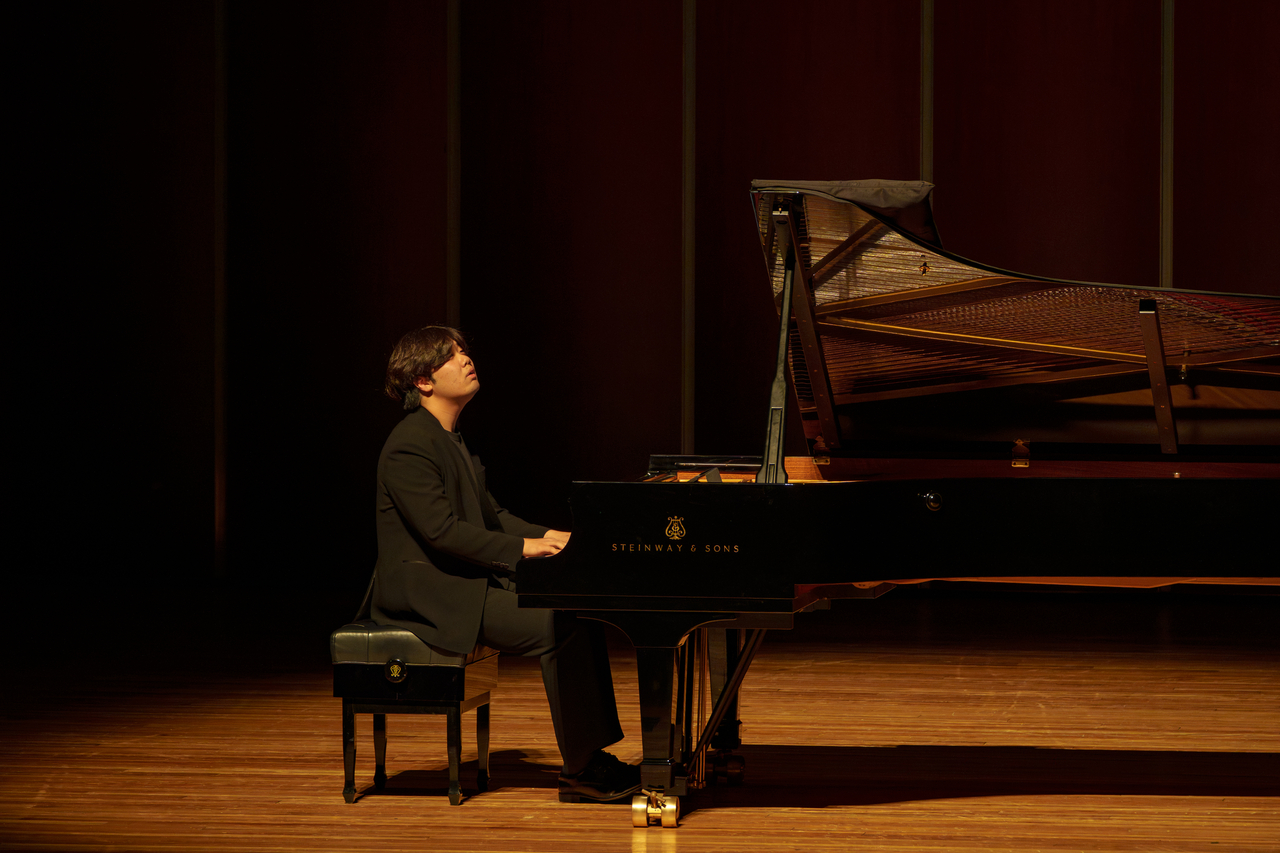
"The difference is that Professor Kim spent enormous energy during my undergraduate years shoring up my weaknesses. Without him, I would have gone to France and still been adrift. Professor Gardon, on the other hand, drew out my strengths. There are many things Professor Kim said to me back then that I only understood the meaning of while studying under Professor Gardon — those 'aha' moments came later."
What Gardon pressed Sun to do was face things head-on: stop avoiding, start filling the gaps. "I began studying German repertoire last year," she said. "I've been studying the aesthetics of filling silence — the spaces between the notes — and I've felt a strong desire to build real inner depth."
The Schubert Sonata No. 20 she will perform as artist-in-residence is the direct fruit of that fierce confrontation. "I chose it for my graduation recital at K-Arts and was so inadequate that I deeply disappointed myself," she said. "I put it away and told myself I'd never play it again, but my teacher kept recommending it." She added that when she received the artist-in-residence offer, the Schubert sonata was actually the first piece that came to mind.
"Honestly, I was so scared — I agonized over what to do and ended up putting it last on the program. I don't think I can go on forever playing only technically showy works, and I wanted to break out of that. I think it's actually the hardest piece I know, but I felt like the challenge had to start somewhere difficult."
Slowly, one step at a time, she is building self-belief — and her approach to performance has changed along with it. "I always thought of myself as someone who plays it safe," she said. "But lately I've been breaking a lot of that down. I'm not really afraid of being criticized anymore."
"These days I even think that a performance that sparks debate is a good performance. The pieces we play became famous precisely because they were provocative in their time. There were ideas I used to always cut — things I thought were too much — but not anymore."
For all the stages she has stood on, none of them feel comfortable yet. She says she enjoys competitions because they let her meet peers her own age, but severe stage fright means she always regrets entering in the moments just before she goes on. At concerts, she fights the fear so intensely that she only changes into her performance clothes five minutes before she walks out. Yet the moment she is alone with the piano on stage, Sun pours herself into what she sees as her role: that of a translator.
"I think of notes as letters of the alphabet, and composers as writers who have written something in those letters — and performers are the ones who translate it," she said. "The performer's own opinions shouldn't get in the way of what the composer wrote. Bringing in a brilliant idea is fine, but it has to be an idea the composer would agree with."
Sun's mid-20s have been eventful, to say the least. The ground has hardened after the rain; she has passed through a long tunnel and found her own path at last. Now serving as a social service worker in the arts and sports field, she teaches high school students — and shares her own story with young people gripping an uncertain future. Having walked the same road, she understands their feelings better than most.
"The standard of success is not something someone else sets for you — you have to set it yourself," she said. "In hard moments, in moments when you want to give up, the easiest thing to do is ask yourself why you are still making music. The answer — 'because I love it' — comes quickly." Perhaps because of everything she has been through, there is a quiet happiness and ease about her now.
"If music stops making you happy, I want to tell people: leave it boldly. If you can live your life happily, that is success. Honestly, as a performer I am still endlessly lacking — I think of this as just the beginning. But as a person, I think I have succeeded. I am living happily doing what I love. I want to keep living the way I am now — having never given up on the piano, because it is what I love."
shee@heraldcorp.com