Makers focus on restful sleep environments, using AI to find and maintain each user's optimal sleep temperature
Sleep quality is closely tied to temperature, as well as physical factors such as light and noise. Heating mat makers are now using AI sleep control to automatically adjust warmth through each stage of a user's sleep cycle — and the technology has become the industry's defining competitive edge.
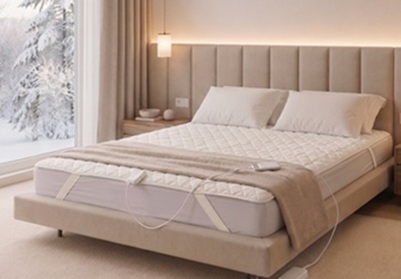
Kyung Dong Navien recently launched two products — the Sukmienmae Onsu and the Sukmienmae Carbon — both featuring an AI sleep mode. The core function is AI temperature control: the mode uses a smartphone microphone to detect and analyze the user's breathing sounds in real time, then actively adjusts the mat's temperature in response to changes in sleep stage.
Particularly during light REM sleep — when the body's ability to regulate temperature weakens and sensitivity to the surrounding environment increases — the system automatically lowers the temperature to encourage deeper sleep. The company said the mat continuously matches warmth to the user's alternating cycles of deep sleep and REM sleep, improving overall sleep efficiency.
Kyung Dong Navien offers two product lines: a hot-water mat and a carbon mat. The company said customers who prefer a warm, cozy heat should choose the Sukmienmae Onsu, while those who prioritize convenience may prefer the Sukmienmae Carbon.
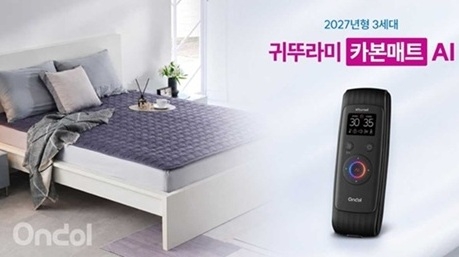
Kiturami, which became the first in the industry to launch a carbon mat in 2020, has also entered the AI race with its new AI Ondol product.
The mat features an AI sleep control system and what the company calls a "smart temperature system," automatically adjusting heat to match each user's preferred sleep temperature and habits. The AI mode determines the user's optimal temperature and usage duration during sleep, and detects whether the user has left the mat, to deliver a personalized heating environment.
Pressing the AI button on the smart remote for three seconds activates the mode. The first function, the AI sleep control system, identifies the user's preferred temperature and usage time during sleep and analyzes individual sleep patterns based on accumulated data. It then automatically adjusts the temperature throughout the night, eliminating the need to set temperature and timer separately.
The AI also responds when a user gets up during the night. The second function — the smart temperature system — detects whether the user has left the mat and automatically switches to an energy-saving mode when the mat is unoccupied. The company said the AI mode reactivates once it senses the user has returned.
"We have combined 60 years of heating technology with AI-based intelligent sleep control," Kiturami said. "We will continue to advance our carbon mat so that customers can enjoy a comfortable and restful sleep environment."
freiheit@heraldcorp.com