Samsung Asset Management holds press briefing on second-half market outlook
Kospi's 6,500–7,000 range seen as floor-building zone
Strong earnings open upside; shareholder returns cap downside
Shipbuilding, autos and financials back semiconductors as broad pillars
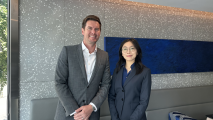
![Im Tae-hyuk, executive director of Samsung Asset Management's ETF management division, speaks at an online press briefing Wednesday to mark the publication of a new ETF investment guide. [Samsung Asset Management]](https://wimg.heraldcorp.com/news/cms/2026/09/16/news-p.v1.20260916.f6450eaef00d4827adca2b710765d523_P1.png)
Amid growing investor anxiety following a sharp rally and subsequent correction in the domestic stock market, analysts say South Korean equities have entered a zone of historic undervaluation with ample room to rebound. Stocks are trading at their lowest price-to-earnings multiples relative to major peers — and the cheapest they have been since 2006.
At an online press briefing Wednesday to mark the publication of a new ETF investment guide, Im Tae-hyuk, executive director of Samsung Asset Management's ETF management division, said the Kospi had surged to the mid-9,000s before retreating to the 5,000s and is now locked in a battle between 6,500 and 7,000. "Even with some downside risk still open, the current level is the last line of defense where the market is building a solid floor," he said.
Im also noted that the index's performance remains among the best in the world, even if overshadowed by the scale of its pullback from the peak. The Kospi is up roughly 57 percent year-to-date, neck and neck with Taiwan's market at about 59 percent for the top two spots globally. The US S&P 500 gained just over 10 percent over the same period. "The higher the mountain, the deeper the valley," Im said.
The core of Im's bullish case rests on valuation. Based on MSCI country indexes, South Korea's forward price-to-earnings ratio stood at 5.06 times as of end-August — the lowest among major markets. That is roughly one-quarter of the United States (20.06 times) and Taiwan (19.14 times), one-third of Japan (16.38 times), and half of China (10.76 times).
"Developed markets average around 18 times and emerging markets around 10 times, yet Korea is at 5 times," Im said. "The forward PER has never been this low since 2006 — we are in an extraordinarily deep discount zone."
He attributed the undervaluation primarily to doubts about the sustainability of earnings. Profits have surged, but concerns that the trend could reverse are keeping those gains from being reflected in share prices.
"The market is pricing in an earnings peak-out and keeping valuations depressed, but there are reports that BlackRock is resuming investment in emerging-market equities," Im said. "Money that had been sitting on the sidelines because of volatility is now coming in, judging that prices are extremely cheap." He added that even a partial normalization of the forward PER to around 6 times — well short of 10 — would leave substantial room for share price gains.
Im also shrugged off concerns about the Kospi's heavy reliance on Samsung Electronics and SK hynix.
"Samsung Electronics and SK hynix are among the most profitable companies in the world, and the outlook for next year is no different," he said. "Neither the earnings outlook nor the AI outlook has turned, yet the discount is somewhat excessive right now."
He added that the KOSPI 200 is an all-star index where, beyond semiconductors, shipbuilding, autos and financials all have clear growth drivers of their own.
By sector, semiconductors stand to benefit from the expansion of AI investment — Morgan Stanley projects capital spending by major technology companies will rise 49 percent by 2027. Shipbuilders have secured more than three years' worth of orders. Hyundai Motor's hybrid vehicle sales rose 25 percent in the first half. LG Energy Solution's ESS sales in the first half jumped 4.6 times. The financial sector was cited as a candidate for rerating, driven in part by expanding shareholder returns.
Im said growing shareholder returns could also provide a floor for the market. "Major conglomerates, including SK hynix with its announcement of a large-scale buyback and full cancellation of shares, are pursuing aggressive shareholder return policies," he said. "A structure in which solid earnings open the upside and strengthened shareholder returns firmly defend the downside should continue."
Im also highlighted the accelerating pace of AI development. "Even the presentation slides for today's briefing were produced using AI — the speed of advancement is enormous compared with just two months ago," he said. "Given the pace of AI progress that we feel on the ground, the likelihood of semiconductor demand rolling over is slim, and even if it does, it will not be as severe as the market fears."
Samsung Asset Management also unveiled a new ETF investment guide at the briefing. The book compiles practical questions the firm's staff most frequently encountered while communicating directly with investors throughout this year. Designed in a workbook format, it allows readers to study five key questions in 10 minutes a day and reinforce their learning through quizzes and exercises.

jiyun@heraldcorp.com