Behind every public figure's appearance lies a personal health and beauty regimen. This series examines the diets, workouts, procedures, and fashion and lifestyle choices of people in the spotlight.

Actor Lee Joo-yeon, 39, a former member of the K-pop group After School, recently said she has been trying to lose weight after noticing the popularity of the so-called "bone-thin" body trend. Doctors warn that people who are already at a healthy weight risk harming not just their body fat levels but also their muscle mass and bone health if they push themselves to conform to a trending physique.
Lee made the remarks Monday on her YouTube channel during a tarot card reading session, when the conversation turned to dieting.
After a viewer shared that they kept starting and abandoning diets, Lee said, "There are so many 'bone-thin' people around these days, so that's why I'm trying to lose weight too."
"Bone-thin" is not a medical term but a slang expression referring to a body so lean that the bones are visibly prominent. It has gained traction particularly among younger people as extremely slender celebrities and influencers appear repeatedly on social media.
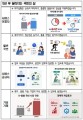
Being light on the scale, however, does not automatically mean being healthy. For those already within a normal weight range, drastically cutting food intake in pursuit of a lower number can leave the body short of the energy and nutrients it needs.
Losing more weight when already at a normal range can bring fatigue and difficulty concentrating, health experts say.
The Korean Society for the Study of Obesity classifies adults with a body mass index (BMI) of 18.5 to 22.9 as normal weight and those below 18.5 as underweight.
While BMI alone cannot capture a person's full health picture, there is little health benefit to be gained when someone already in the normal range cuts intake so severely that they drop into the underweight category.
When the body takes in far less energy than it needs, fatigue is typically the first sign. People may find that they feel unrefreshed even after a full night's sleep, tire easily during exercise, or struggle to concentrate.
A study published in the Journal of the Japanese Society of Nutrition and Food Science found that 92.2 percent of women who were dieting were either underweight or of normal weight. Among them, 25.9 percent reported fatigue symptoms — higher than the 19.7 percent seen among women who were not dieting.
The problem is that the body does not draw solely on fat reserves when energy runs short. If severe caloric restriction continues over time, the body begins breaking down the protein that makes up muscle tissue for fuel, leading to a loss of muscle mass.
The result can be a body that shows the desired number on the scale but has less muscle and reduced physical capacity than before.
Bone density is another concern for underweight women, experts say.
Excessive weight loss can also take a toll on bone health.
An analysis of 1,767 premenopausal women in South Korea, published in the International Journal of Clinical Practice, found that 18.4 percent of underweight women had low skeletal muscle mass — far higher than the 1.7 percent seen among women of normal weight.
The proportion with low bone density was also higher among underweight women, at 23.9 percent, compared with 9.4 percent among those of normal weight.
Bone is not static tissue — it undergoes a continuous cycle of breaking down old bone and building new bone. That process requires not only adequate energy but also a range of nutrients, including protein, calcium and vitamin D.
When food intake is too low, supplying enough of these nutrients becomes difficult. When weight loss is accompanied by a reduction in muscle mass, the mechanical stress that muscles place on bones also decreases, which can work against long-term bone health.
For women, menstrual changes can be a warning sign when an energy deficit persists.
In women, extreme dieting can also disrupt the menstrual cycle.
When the body is in a prolonged state of energy deficit — for instance, when high levels of physical activity are not matched by sufficient food intake — it can adapt by reducing energy allocated to functions it does not consider essential for survival.
If the reproductive hormone system is affected in this process, menstrual cycles can become irregular or stop altogether, and bone health can suffer at the same time. A recent expert consensus statement on energy deficiency in female athletes noted that low energy availability can be linked to menstrual irregularities and bone loss.
If menstrual cycles become noticeably irregular or stop for several months after starting a diet, and if persistent fatigue, dizziness or heightened sensitivity to cold appear alongside those changes, it is important not to dismiss these as a normal part of losing weight — food intake and overall health should be assessed.
A healthy diet is not about getting as thin as possible.
Even when weight loss is genuinely needed, the pace and approach matter.
The US Centers for Disease Control and Prevention (CDC) notes that gradual weight loss of about 1 to 2 pounds — roughly 0.45 to 0.9 kilograms — per week is more effective for maintaining weight over the long term than rapid loss. Healthy weight management also involves regular physical activity, adequate sleep and stress management, not just diet.
A combination of aerobic and strength training is recommended. Aerobic exercise helps increase energy expenditure and improve cardiovascular fitness, while strength training is important for preserving muscle mass during weight loss. The CDC recommends that adults get at least 150 minutes of moderate-intensity aerobic activity per week, along with muscle-strengthening activities on two or more days a week.
When it comes to eating, it is better to draw from a varied mix of protein, whole grains, vegetables, fruit and healthy fats rather than eliminating entire food groups such as carbohydrates or fat. The CDC similarly advises against cutting out whole categories of food, recommending instead that people meet their nutritional needs through a diverse range of foods.
The goal of healthy weight management is not to match a trending body shape as closely as possible. What matters more than the number on the scale is whether the body is functioning normally — including muscle mass, physical stamina, menstrual health and bone health. A thinner body is not necessarily a healthier one.
rainbow@heraldcorp.com