483.9 billion won to be invested by 2031
Complex to produce 3.7% of daily national egg output; 355 jobs expected
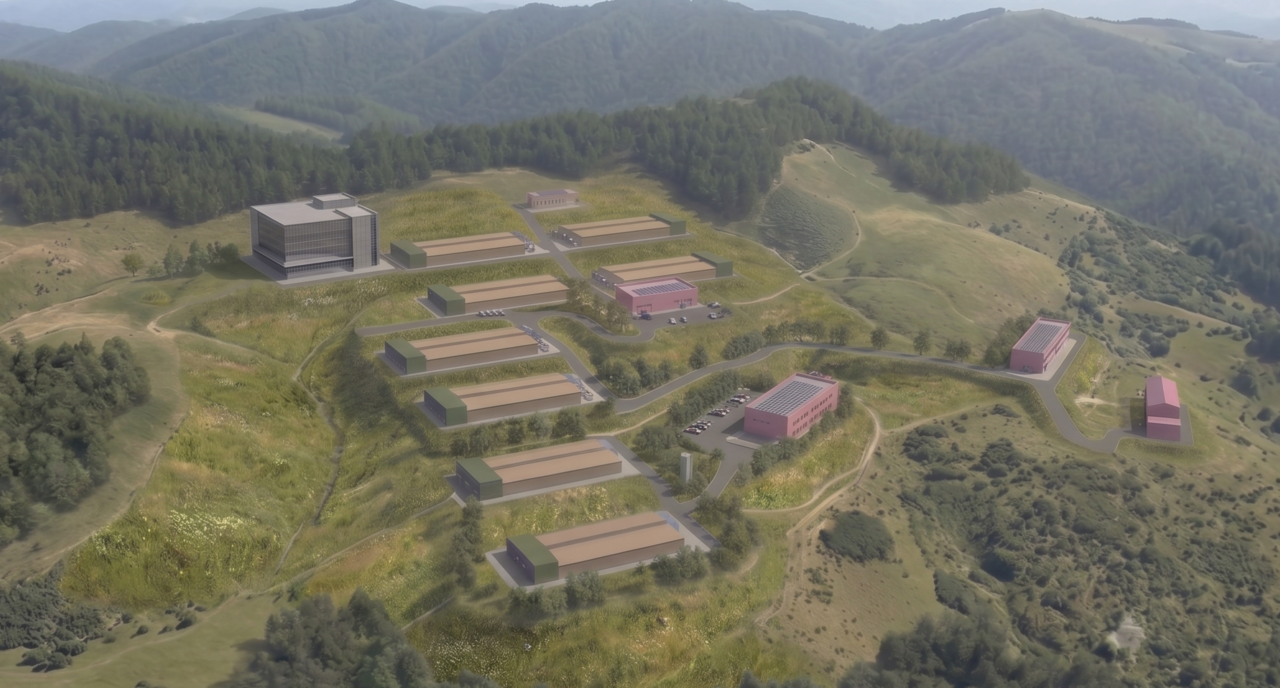
South Korea's first smart egg-laying complex will be built in Taebaek, Gangwon Province, with 483.9 billion won ($360 million) to be invested by 2031 to raise about 3.2 million laying hens and produce 1.86 million eggs a day.
The Ministry of Agriculture, Food and Rural Affairs announced Wednesday that it had selected Taebaek as this year's designated site for its smart livestock complex development project.
A smart livestock complex brings together ICT-based smart farm facilities, livestock data centers and related infrastructure on a single site. Complexes for dairy cattle are already operating in Dangjin, South Chungcheong Province; pig complexes have been established in Goseong, South Gyeongsang Province, and Nonsan, South Chungcheong Province; and Hanwoo beef cattle complexes are in place in Goheung and Damyang, South Jeolla Province. The Taebaek facility will be the first dedicated to egg-laying hens.
The complex will cover 45 hectares and carry a total project cost of 483.9 billion won. Of that, 17.8 billion won will come from the national government and 8.2 billion won from local authorities, with agricultural corporation Ganong Bio financing the remaining 457.9 billion won through its own funds and loans.
Once complete, the complex will house about 3.2 million laying hens and produce an average of 1.86 million eggs per day — equivalent to 3.7 percent of the country's daily egg output.
Taebaek's high-altitude geography was a key factor in its selection. The city experiences no tropical nights, reducing heat-related stress on laying hens during summer, and its lack of migratory bird habitats lowers the risk of highly pathogenic avian influenza (HPAI). Poultry have no sweat glands and are highly vulnerable to heat; when barn temperatures exceed 26.7 degrees Celsius, the birds can suffer heat stress that affects both their health and laying rates.
Increasingly difficult egg production conditions also drove the push for a large-scale production base. HPAI-related culls and heat waves can suppress laying rates, and starting next September the minimum floor space per laying hen will increase from the current 0.05 square meters to 0.075 square meters.
The project is also expected to boost the local economy. Ganong Bio, currently based in Pocheon, Gyeonggi Province, will relocate to Taebaek to develop the complex. The Ministry of Agriculture, Food and Rural Affairs estimates the move will create about 355 new jobs. Taebaek's population has fallen from 115,000 in 1986, when the coal industry was booming, to 36,700 this year.
Easing community concerns about the complex remains a challenge. Civic groups in neighboring Samcheok have raised worries about odors, dust and the spread of livestock disease. Taebaek city plans to install air purification and forced-ventilation drying systems in all barns and to treat and recycle wastewater. If needed, the city will also consider introducing a monitoring system that allows residents of both Taebaek and Samcheok to directly inspect odor and wastewater management conditions.
Chicken manure will be used as biomass fuel to generate renewable energy, and a portion of the electricity sales revenue will be shared with nearby residents. Plans also include an egg-experience facility and festival, senior employment programs, and free egg delivery for elderly residents living alone.
"The selection of Taebaek as the smart livestock complex site will mark a new milestone in the future of South Korea's egg industry," Lee Jae-sik, the ministry's livestock policy director, said. "We will support Taebaek's development into an egg industry cluster encompassing production, processing, retail, research and development, and the training of specialized personnel."
adastra@heraldcorp.com