
'Platform vendors' transaction costs reach 21% of monthly sales'
Association pushes back against Korea Federation of SMEs survey findings
'Negative generalization of platform market cannot serve as basis for legislation'
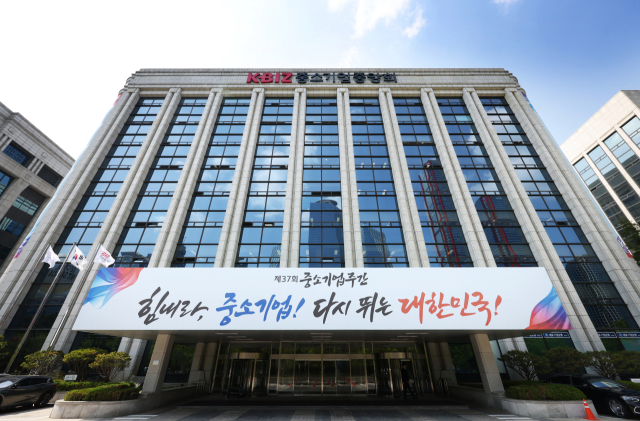
The Korea Online Shopping Association has pushed back against a Korea Federation of SMEs survey finding that transaction costs for vendors on online platforms amount to 21.7 percent of their monthly sales, saying the results "distort the market through exaggerated interpretation."
In a statement released Tuesday, the association said it has "deep concerns" about the survey, arguing that it "lumped together costs and transaction types of entirely different natures, and negatively generalized the entire platform market based on subjective responses and some extreme values, rather than accurately reflecting the trading reality of vendors."
The Korea Federation of SMEs' "2026 Online Platform Vendor Transaction Survey," released the same day, found that transaction costs borne by platform vendors reached 21.7 percent of their average monthly sales. Broken down by platform type, online food delivery apps accounted for the highest share at 26.2 percent, followed by online shopping malls at 20.6 percent and accommodation apps at 18.3 percent. Coupang Inc had the highest transaction cost burden among individual companies at 45.0 percent.
The association said the "total transaction costs" figure includes not only mandatory intermediary commissions but also advertising fees, payment processing fees, delivery charges, data usage fees and various add-on service costs that sellers pay voluntarily to boost sales and expand their business. It called for mandatory and optional costs to be reported separately to prevent misunderstanding, and for the specific calculation formula to be disclosed.
The association also took issue with the finding that transaction cost burdens rose across all platforms compared with last year's survey. Without disclosing whether the same vendors were tracked each year in a panel study, or whether the sample composition was consistently controlled, the results cannot demonstrate a market-wide trend, it argued.
On the finding that 53.7 percent of online shopping mall vendors generated 100 percent of their sales through their primary platform, the association said this "reflects the characteristics of a sample limited to platform vendors," adding that "cross-sectional surveys of different samples cannot be used to conclude that costs are rising or dependence is deepening."
Regarding the finding that transaction cost burdens reach as high as 45 percent for some companies, the association said the survey "did not disclose how many companies produced that figure, which cost items and services those vendors had selected, or whether the data matched actual contract records." It stressed that "a single highest response value should not be highlighted as if it were the general trading condition of the market."
The association also said a finding interpreted as vendors feeling that "a considerable amount of time is needed to recover the full settlement amount before the deadline" should not create the false impression of a legal settlement deadline problem. On responses indicating that vendors had experienced unfair trade practices or improper conduct, the association said these represent "the subjective perceptions of respondents" and that "subjective experiences and policy preference responses are not objective evidence of unfair conduct or the need for legislation."
The association criticized the approach of mixing cost categories with different transaction types and extrapolating unverified extreme values and subjective responses into market-wide problems. It said "surveys that serve as the basis for regulatory legislation must prioritize accuracy, representativeness and reproducibility," and that such an approach "cannot provide the right solutions even for small and mid-sized merchants."
The association urged the Korea Federation of SMEs to transparently release its survey data and issue corrections and supplementary analysis with a more balanced approach, warning that findings presented without adequately disclosing the limitations of the methodology and calculation basis should not be used as grounds for enacting an online platform fairness law.
spa@heraldcorp.com




