Pianist Marc-André Hamelin
First collaboration with the Korea National Symphony Orchestra, Saturday–Sunday
'I play these pieces because they are great music, not because they are hard'
Live performance videos have accumulated 5.22 million views on YouTube
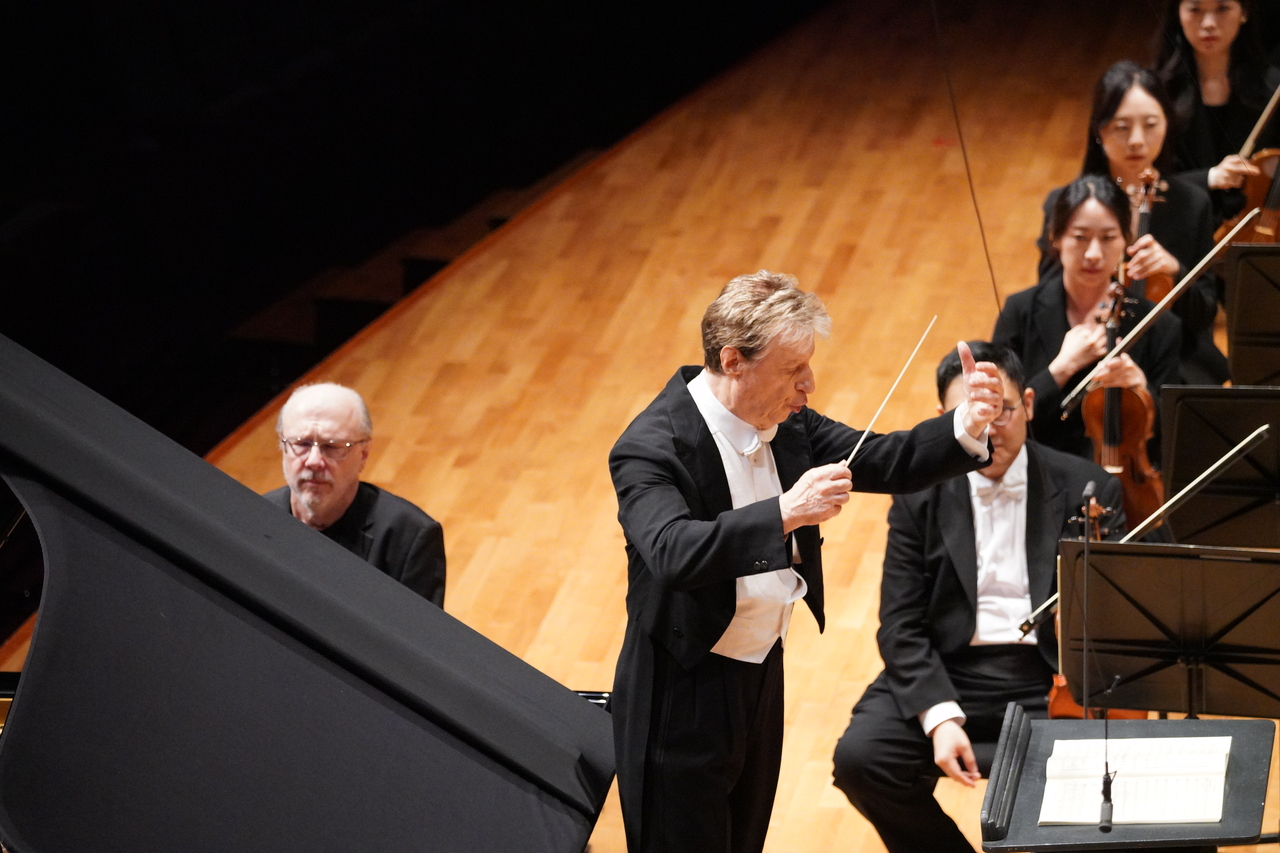
It was the threshold of early autumn, yet the hall felt like the heart of late fall. As the piano's deep, unhurried waves folded over the low, noble melody of the horn, the air in the auditorium settled into stillness. Notes scattered across the keys dissolved into the orchestra's resonance, then returned, whole and undiminished, to the voice of a single piano. Deep but never heavy, passionate but never rough — the music's compact, slow-burning phrases were at turns aching and solitary, until at last they broke open into something luminous.
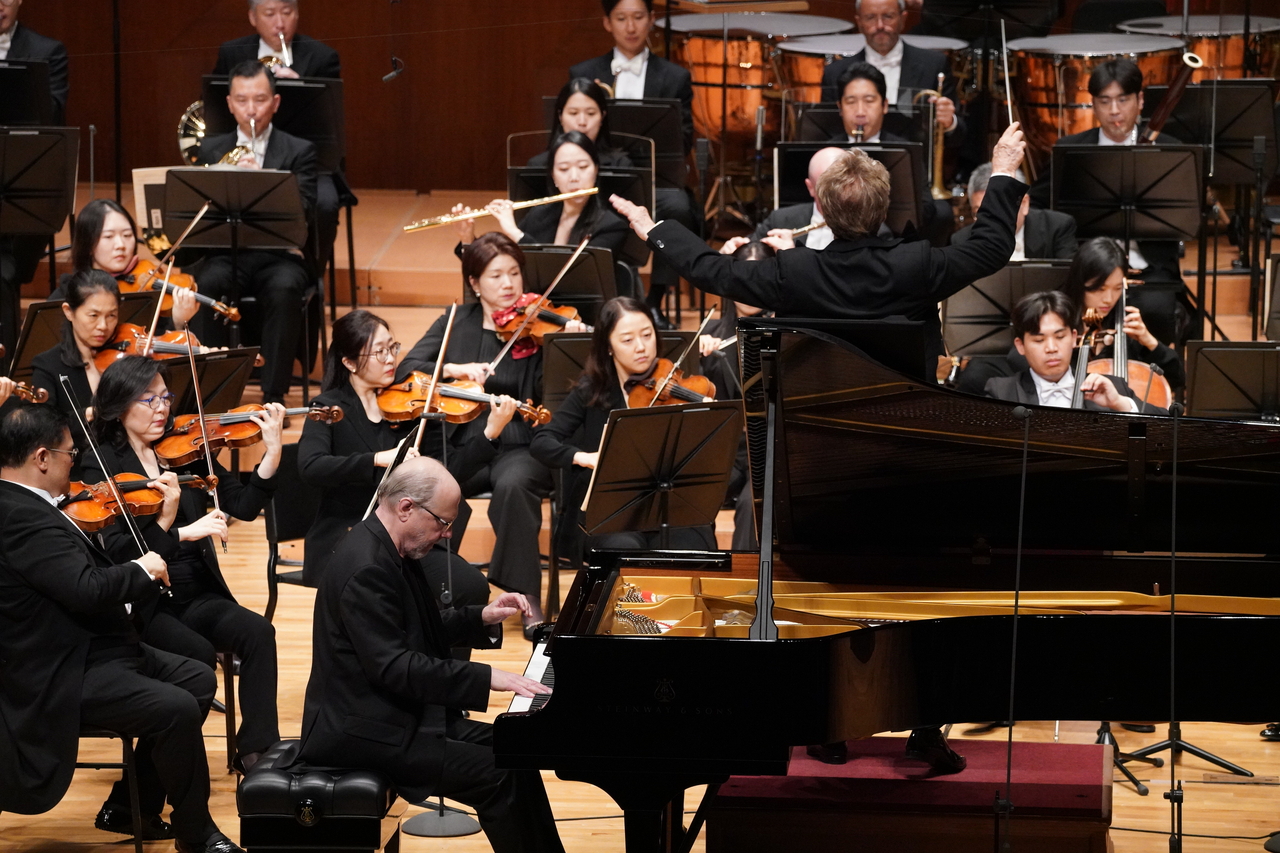
Brahms' Piano Concerto No. 2. From the first keystroke, a crystalline sense of space filled the hall. The feeling of wanting to hold on arrived almost immediately, as the faint, textured afterglow of each phrase was nudged aside by the next. Before any impression could linger, an articulation honed to the precision of a lens moved across all 88 keys. Shaping a grand orchestral architecture while sustaining an intimate dialogue with the strings and woodwinds, the soloist revealed a sovereign dignity that no ensemble could absorb. The master's long-held artistic ambition — expressed years ago as a wish to "embody every adjective in the dictionary on the keyboard" — found its clearest vocabulary that day inside Brahms.
"The Graceful Ghost" — 3.1 million views. Robert Schumann's "Scenes from the Forest" — 960,000 views. Franz Schubert's "Piano Sonata No. 21" — 520,000 views. Maurice Ravel's "Gaspard de la nuit" — 350,000 views. Claude Debussy's "Images, Book 1 — Reflets dans l'eau" — 280,000 views.
The cumulative total: 5.22 million views. These are the YouTube figures for live performance videos recorded during master pianist Marc-André Hamelin's 2024 solo recital in Korea. Classical music enthusiasts hailed the recordings as among the finest performances of 2024, and they reached that remarkable number in just two years.
Yet an entirely different musical reputation shadows him. Unlike the robust popular metrics his YouTube presence suggests, Hamelin has long made a habit of conquering the keyboard's most impregnable fortresses with apparent ease — earning him the labels "incarnation of transcendent technique" and "difficult-repertoire specialist." Even among classical devotees, a preconception persists that he is a scholarly purist who seeks out only obscure and forbidding works. He is, after all, the man who has rendered flawlessly on the keyboard the extreme repertoire of Charles-Valentin Alkan, Leopold Godowsky and Kaikhosru Shapurji Sorabji — composers who test the very physical limits of the human body. Hamelin, however, draws a calm but firm line against both the praise and the prejudice.
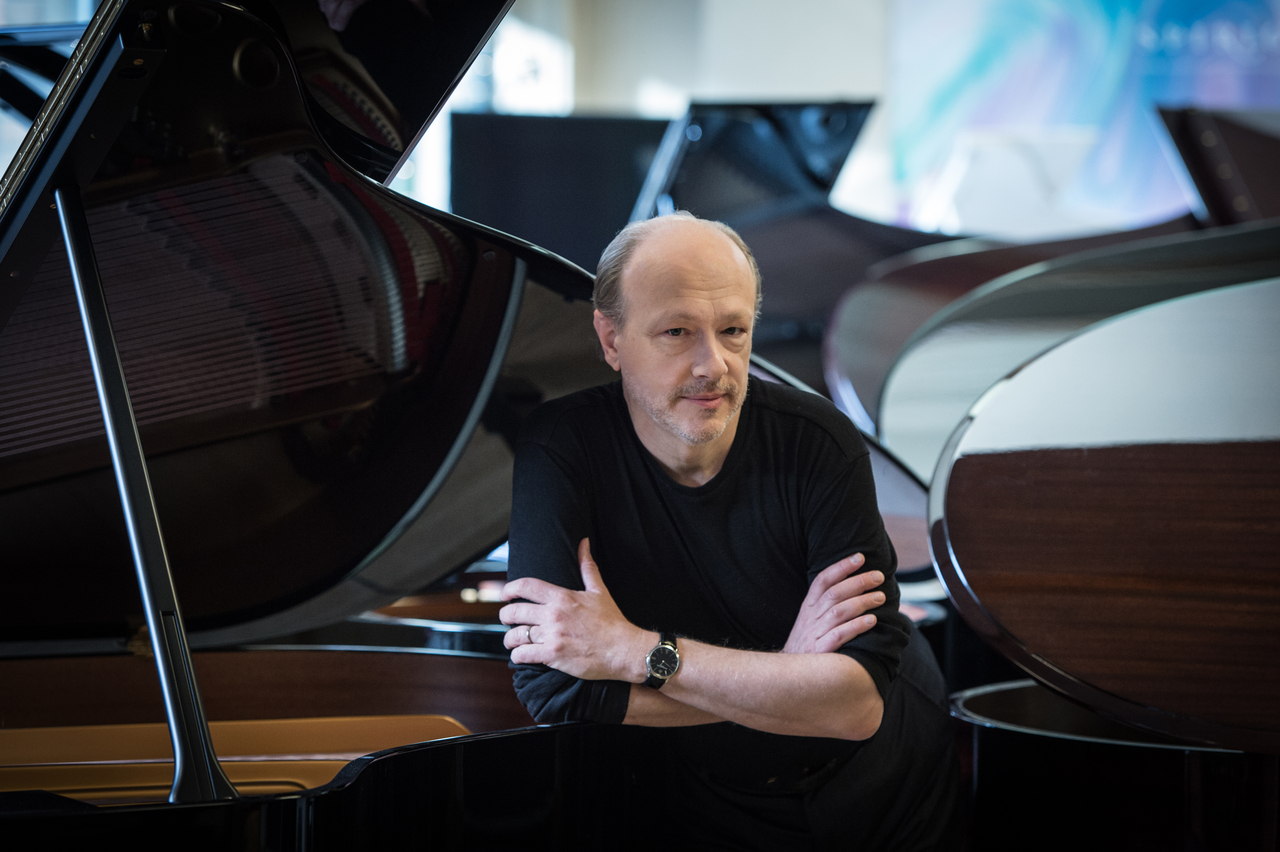
"There is only one reason I play those pieces: they are great music. I always wish they were not considered so difficult. I, too, had to pour years of grueling effort into learning and internalizing them, just like any other performer."
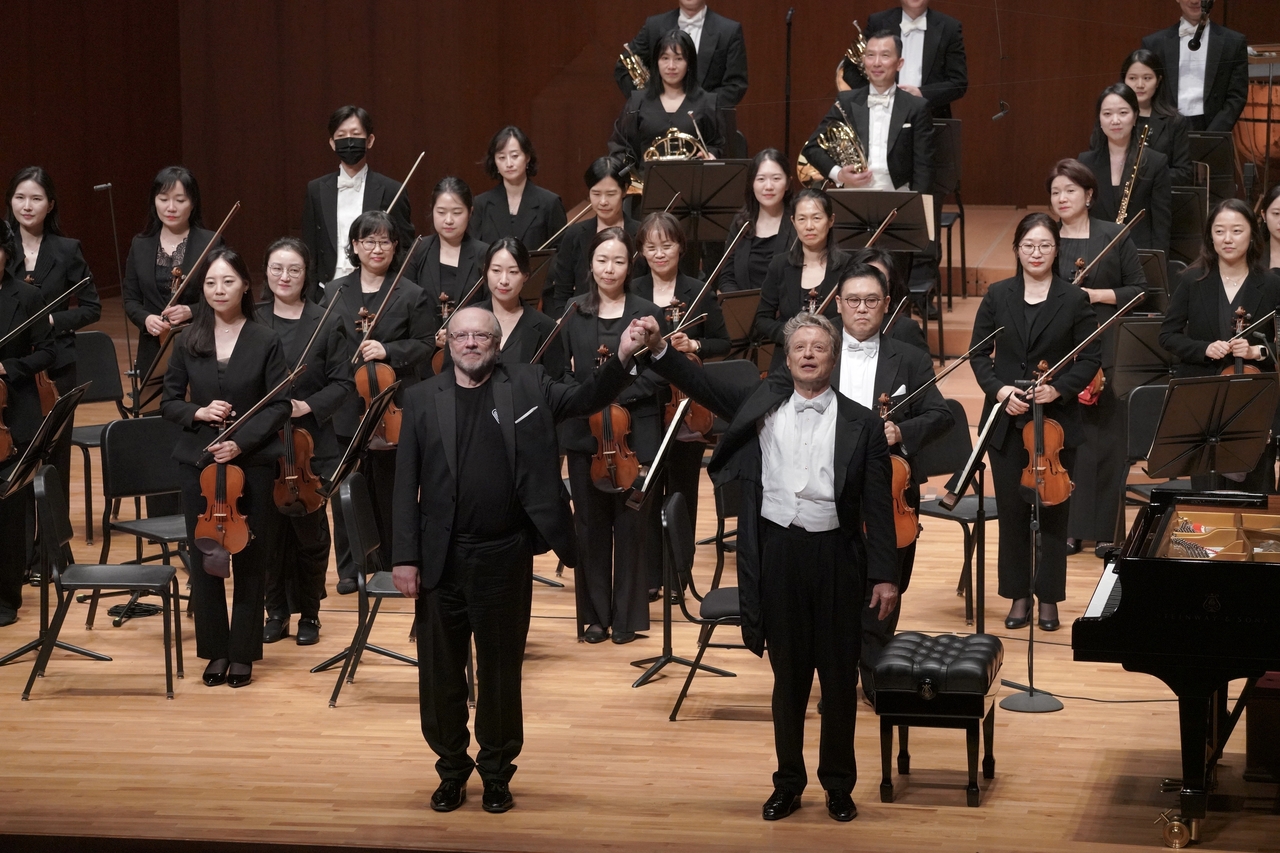
He returned to Korea for the first time in two years. Hamelin joined the Korea National Symphony Orchestra — led by Artistic Director Roberto Abbado — for their first collaboration. It marked the first time the internationally acclaimed master had performed with a Korean symphony orchestra. The concert recording will be released worldwide on Nov. 13 through "DG Stage+," the global classical platform of Deutsche Grammophon — itself a first for a Korean orchestra on that platform.
Speaking with The Herald Business after two rehearsals before the performance, Hamelin called the sessions "a joyful and productive encounter." He was struck, he said, by the musicians' flexibility — "a willingness to adjust to whatever was asked" — and by the closeness and harmony of their ensemble playing. "This is the maestro's first year," he added, expressing confidence that "the conductor and the orchestra are a very good match, and I look forward to seeing where they go from here."
The Brahms Piano Concerto No. 2 that Hamelin brought to his collaboration with the Korea National Symphony Orchestra is a monumental masterpiece of German Romanticism. "I have been playing the Second Concerto for nearly 40 years now," he said. "It is the oldest friend in my musical journey — a 'good friend' — so it is the piece I suggest to orchestras as often as I can."
For him, a "good friend" means more than simply the length of time spent together. It also means a state of ultimate liberation as a performer — something earned through that time.
"When I first put this piece on stage as a young man, I was pressing the keys without fully understanding what I was doing. It is a work that is technically demanding for both hands in every pianistic sense. After living with it for so long, over so many years, it has become something I can express as pure music rather than a summit to be conquered."
'An explorer sifting through 82,000 scores… playing even the Moonlight Sonata as if for the first time'
The first label that follows Hamelin is "explorer of difficult repertoire." For decades he has sought out unknown works and brought them to light. The world of scores he has discovered seems to have no end. "A friend of mine has a collection of rare score PDFs that runs to about 82,000 files, and it keeps growing," he said. "Discovering unfamiliar music is a pleasure in itself."
The same spirit runs through his recording of Frederic Rzewski's protest-song variations "El pueblo unido jamás será vencido," and through a recent episode at the Husum Festival in Germany, where he delivered the complete set of Earl Wild's George Gershwin études as an encore. On the Rzewski work, he said: "I have never been a social activist, but I deeply identify with the sense of popular feeling and solidarity the music carries." He added, however, that "as a pianist, my mission was not to shout political slogans but to maximize the musical persuasiveness of the piece so that it fully honored its spirit."
Yet he says he would "not recommend the path of the excavator" — his own path — to anyone. The reality is that concert halls around the world have little choice but to build programs around well-known repertoire.
"A large share of concertgoers are afraid to pay for a ticket to hear a piece they don't know. No matter how wonderful or approachable the music is, the fear of being disappointed by an unfamiliar work keeps them away. But if you choose a famous piece everyone knows, you fall into the trap of being compared with every other pianist who has played it. I am encouraged that more young performers are lately taking bold steps into unfamiliar repertoire and making it work — I hope it is the beginning of a good trend."
In his approach, there is no hierarchy between celebrated masterworks and hidden gems. The supreme value he pursues at the keyboard is a single-minded clarity in conveying the essence of the music and the essence of its message, without addition or subtraction. "Whether the piece is well known or not, my approach is fundamentally the same," he said.
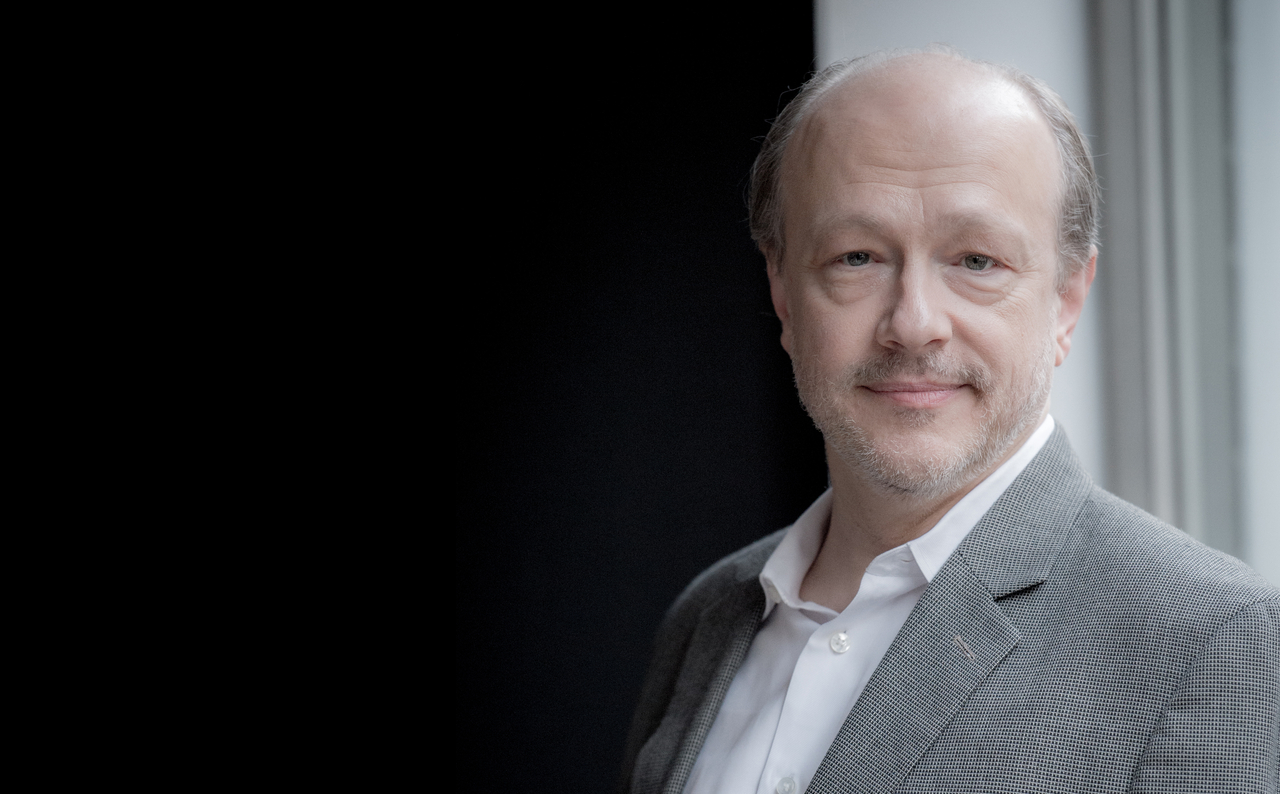
"With a well-known piece, I try to bring the audience face to face with something they have never noticed before. With an unfamiliar piece, I try to give them the pure joy of discovery. Even if it is Beethoven's Moonlight Sonata, I try to play it as though the audience has never heard it once in their lives."
He believes that breaking through the shell of familiarity and drawing out strangeness is what allows him to achieve a genuine musical communion with his listeners. "The most important thing when I perform is to convey the essence of the music and the essence of its message without distortion," he said. He had promised to "deliver the very heart of Brahms," and in the hall it seemed as though each listener's own private Brahms — one they had not known was there — was welling up like a spring.
'Practice only at the piano? I practice 24 hours a day'
One of the more surprising things about the master pianist is his practice habits. Hamelin is well known as a performer who spends relatively little time sitting at the piano — he has said himself that people "would be astonished" to learn how few hours he actually practices at the instrument. But for him, practice is not confined to the act of playing. He insists that every moment spent in reflective thought away from the keyboard — in the ordinary spaces of daily life — counts as practice.
"I actually practice 24 hours a day. The best ideas come to me while I am walking. It is time to think about music purely, without physically producing any sound. Walking stimulates the body and gets the blood moving, and when that happens the tempo stabilizes and the architectural structure hidden beneath the notes becomes much clearer."
What matters, he says, is not the quantity of practice but its quality. "How many hours I practiced on a given day is not important," he said. "The satisfaction of closing the day with the feeling that 'on Monday I found the solution to a passage I had been stuck on' is far greater than the number of eight hours logged on Tuesday."
Hamelin's encores are a talking point every time. "The Graceful Ghost," which has accumulated 3.1 million views, was the third encore he chose during his 2024 Korea visit. "It may surprise you, but sometimes I don't know what I'm going to play until the very moment I sit down on the piano bench," he said. "Ultimately it is a matter of reading the audience's reaction and energy."
True to his word, each leg of this visit took on a different color depending on the communion with the hall. At the Goyang performance on Saturday, he delivered no fewer than three encores, conjuring an inexhaustible magic at the keyboard; at the Seoul performance, a single encore drew the audience into deep contemplation and rapture.
"There is no doubt in my mind that Korean audiences will receive whatever I offer with the most open hearts possible," he said. "Korean audiences are among the finest in the world — among the most focused, and among the most sensitively responsive." His choice that evening was No. 12, "My Joy," from Franz Liszt's piano transcriptions of Chopin songs, drawn from the "17 Polish Songs."
The encore — Chopin's Romanticism reborn through Liszt's pianism — offered a glimpse into the roots of Hamelin the score explorer. A man who rescues uncharted difficult works from obscurity while remaining deeply versed in the canonical German repertoire, he unfailingly opens the strata of the past at the decisive moment. As a performer who is also a composer, the DNA of the classical tradition runs deep within him.
"I think today's musicians owe a great debt to the music of the past. In some cases that debt is stated explicitly; in others it is unmistakably present in the music itself. I am entirely dependent on the past, and my own compositions are connected to a kind of homage to more traditional music."
His excavation of unknown works is, in its own way, another act of restoring the legacy left by the great masters. When the 60-minute journey was over, what remained on the stage was the transparent, lucid conversation Hamelin had held with a friend of 40 years. The criterion by which he selects pieces from among countless scores follows a clear north star.
"First, the piece has to move me. More important than that, I have to feel certain it will move the audience as well. That is where it all begins."
shee@heraldcorp.com