Suspect sold 7.4 billion won worth of lighting fixtures with falsified origins to government agencies over two years
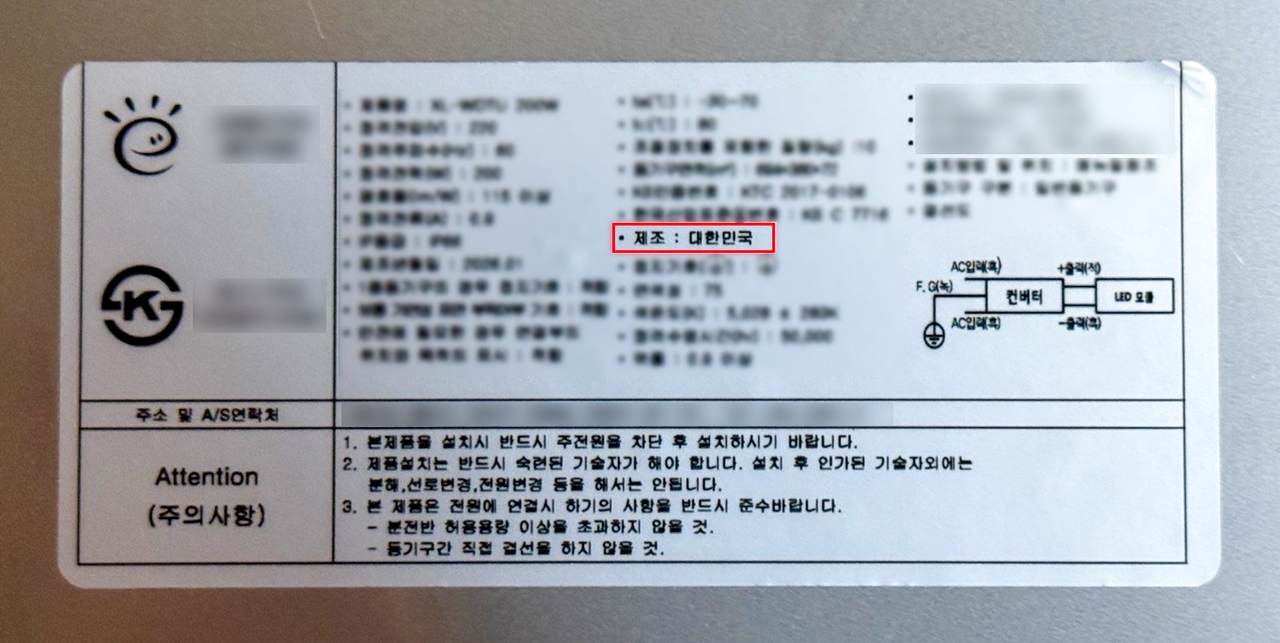
A public procurement supplier who falsified product origins to secure government contracts has been caught by customs authorities.
The Seoul Customs Office under the Korea Customs Service said it apprehended a man in his 50s, identified only as A, for supplying road and tunnel lighting fixtures made with Chinese components to government agencies while labeling them as domestic products. Authorities referred the case to prosecutors without detention on July 21 on charges of violating the Foreign Trade Act.
The lighting fixtures A sold were assembled in South Korea using parts imported mostly from China, with the domestic component ratio falling below 85 percent — the threshold required for a "Made in Korea" designation. Under trade regulations, the products were required to carry a separate label identifying China as their country of origin.
Foreign trade management regulations require that when a product's final assembly country differs from its country of origin, both must be displayed. A labeled the fixtures only as "Manufactured in the Republic of Korea" and omitted any reference to China.
The investigation found that A sold more than 16,000 lighting fixtures bearing misleading origin labels between April 2024 and this year, totaling 7.4 billion won ($5.5 million) in sales. Of that amount, 5.6 billion won worth was improperly supplied to government agencies and other public institutions.
Authorities said the practice put law-abiding domestic small and medium-sized manufacturers — those that legitimately meet domestic content requirements — at a competitive disadvantage in government procurement, undermining the domestic manufacturing sector and market order.
The case also exposed a gap in government support policy for small businesses: A's company held a "direct production certification" issued by the Ministry of SMEs and Startups, which allowed it to participate in public procurement contracts managed by the Public Procurement Service.
Yoon Cheong-un, director of the Seoul Customs Office's Investigation Bureau 1, said falsely labeling foreign goods as domestic products to supply government agencies is a serious crime that deprives honest small and medium-sized manufacturers of sales channels and jobs. "We plan to further strengthen enforcement going forward," he said, urging the public to report any such misconduct to the Korea Customs Service's smuggling tip-off center.
kwonhl@heraldcorp.com