
All training hours counted as paid work time; shifts adjusted by labor-management agreement
Kolmar Korea wins excellence award for combining group sessions with one-on-one counseling
Five firms, including Jung-gu Facilities Management Corp., receive Korea Labor Foundation secretary-general awards
Ministry of Employment and Labor, Korea Labor Foundation select seven outstanding companies
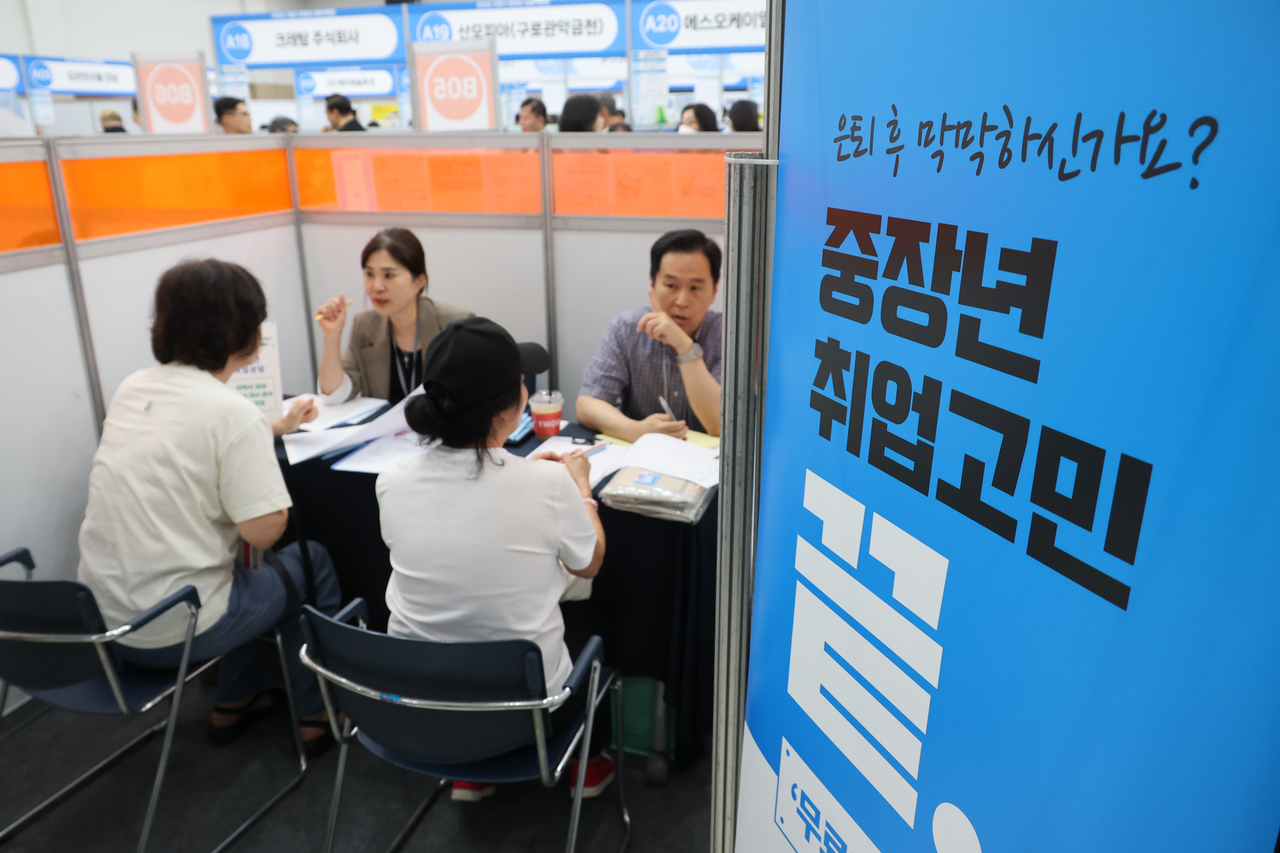
Baeksong Medical Foundation, which extended reemployment support services to subcontractor workers and counted all training hours as paid working time, was named the top company in this year's reemployment support service awards.
The Ministry of Employment and Labor and the Korea Labor Foundation announced Tuesday the selection of seven companies as "2026 Outstanding Reemployment Support Service Companies." The reemployment support service regime requires companies with 1,000 or more employees to provide career planning, job placement and employment and entrepreneurship training to workers aged 50 and older who leave involuntarily — including through mandatory retirement.
Baeksong Medical Foundation, a medical corporation, received the Minister of Employment and Labor Award for top honors, while Kolmar Korea took the excellence award. Five organizations — Seoul Jung-gu Facilities Management Corp., Ansan Transportation, the Korea Research Institute of Bioscience and Biotechnology Innopolis Foundation, the Korea SMEs and Startups Agency's distribution arm, and Hyundai HDS — received the Korea Labor Foundation secretary-general award.
Baeksong Medical Foundation developed a joint reemployment support model with its partner company, Korea S-Way, allowing workers from both the primary employer and subcontractor to participate together. The two companies established a joint career development support committee that meets monthly, and the foundation explicitly stated in its operating guidelines that subcontractor workers are also eligible for the service.
The foundation counted all training hours as paid working time and adjusted work schedules through a labor-management agreement. The arrangement drew high marks for enabling workers in hands-on roles — such as cooking, cleaning and parking management — to attend training without worrying about gaps in coverage.
Kolmar Korea combined eight hours of group training per day with one-on-one job placement counseling, providing more sessions than legally required. Participant satisfaction reached 4.83 out of 5, up 0.31 points from the previous year. The company incorporated the program into its work rules and set aside a separate budget of 13 million won ($9,660) for next year. It also established an onboarding support system for 12 new hires aged 50 and older, broadening the scope of support from the period just before retirement to early career management.
Seoul Jung-gu Facilities Management Corp. ran separate training tracks for general staff and one-on-one counseling for public service workers, and improved its contract-worker rehiring system to re-employ eight mandatory retirees. Ansan Transportation conducted joint consulting with Sinwon Transportation, a small and medium-sized enterprise in the same industry, and held training sessions during working hours.
The Korea Research Institute of Bioscience and Biotechnology Innopolis Foundation linked the program to its own retirement support initiative, helping two employees transition to new careers early. The Korea SMEs and Startups Agency's distribution arm covered certification exam costs of up to 3 million won per person and dedicated four hours each month — during the last week — to training. Hyundai HDS built a retirement support program tailored to the IT sector and provided services to 33 employees.
Twenty-eight companies participated in this year's evaluation. The Korea Labor Foundation screened 11 companies that passed the document review stage, assessing their program outcomes, efforts to overcome challenges and potential for broader adoption. Key criteria also included whether workers had a choice of programs, whether working hours were adjusted, whether primary and subcontractor companies implemented the service jointly, and whether career planning began as early as workers' 40s.
fact0514@heraldcorp.com



