'Apgujeong 428 site to be reborn as a park-style art museum'
Linking culture, fashion and tourism to strengthen Seoul's industrial competitiveness
Support for emerging designers' sales channels and overseas expansion; reforms to community sports system
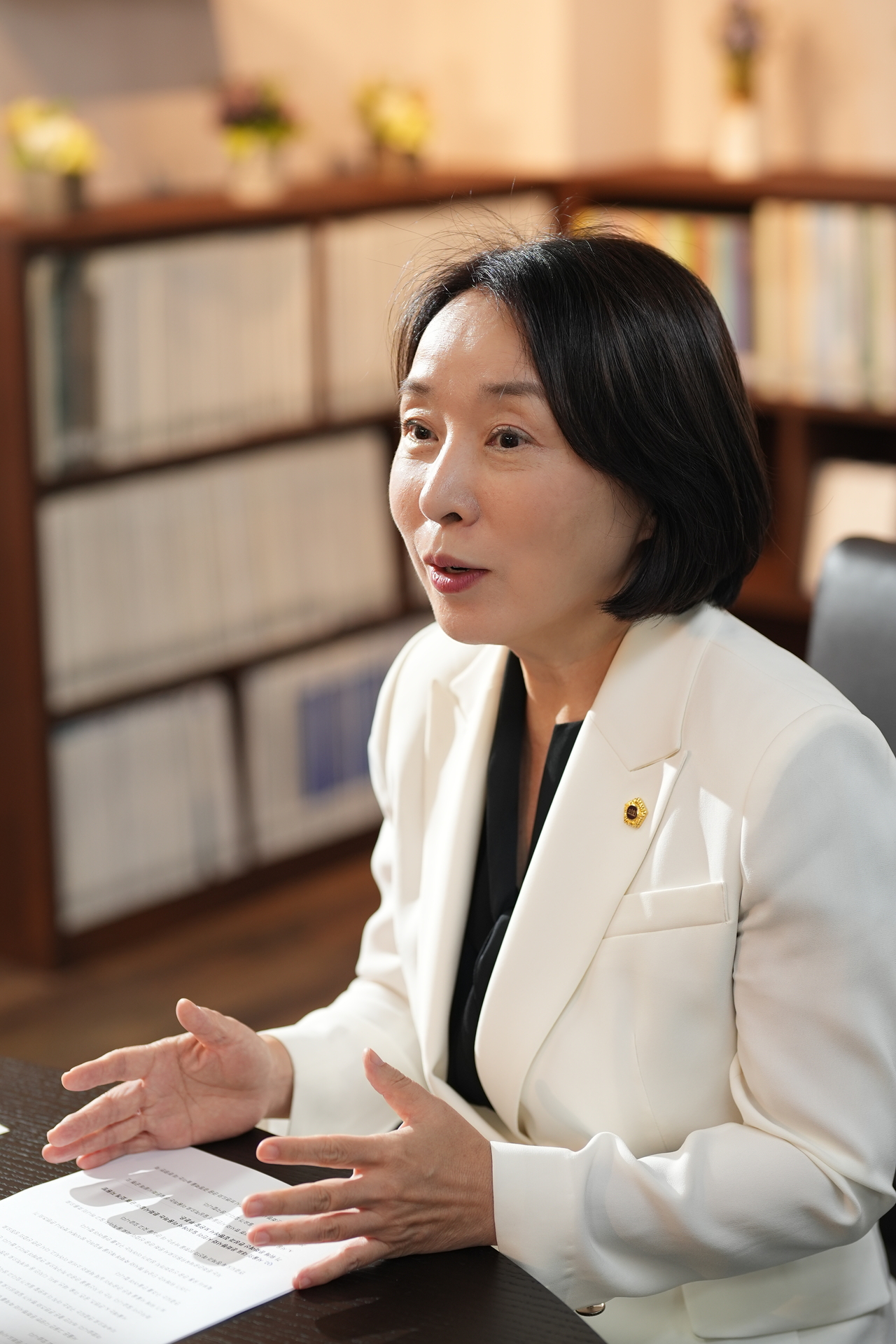
Seoul Metropolitan Council member Min Kyung-hee (People Power Party, Gangnam District 1) has outlined her core legislative agenda: connecting culture, fashion and tourism to industry and jobs, while crafting policies that make a tangible difference in residents' daily lives.
Speaking with The Herald Business at the council members' office building Monday, Min said she intends to draw on her hands-on experience as a fashion designer and entrepreneur to advance Seoul from a "cultural city" to a "cultural industry city."
She said she is committed to pursuing, within her current term, a plan to transform the Apgujeong 428 public parking lot near Hyundai Department Store's Apgujeong flagship into a public cultural space combining a forest park and an art museum. She added that she would also work to overhaul the management of school-based multi-use sports facilities and lay the institutional groundwork for medical tourism and the nighttime economy to drive real growth in local commercial districts.
Grassroots politics born from residents' complaints: 'Policy is design for citizens'
Min's entry into politics grew out of the everyday frustrations of her neighbors. Seeing elderly long-term residents of Apgujeong-dong struggle to access administrative information or file complaints with the district office and the Seoul Metropolitan Government, she began getting involved in community affairs.
Through her work as a building representative and on residents' associations, she examined local issues — including reconstruction projects — alongside community members. Fielding questions from public agencies and relaying information back to residents convinced her that on-the-ground problems needed to be solved through institutions and policy.
Since joining the Seoul Metropolitan Council, Min has served on the Culture, Sports and Tourism Committee, the Management Committee and the Budget and Accounts Special Committee, broadening her legislative work to cover cultural policy, budgets and local issues. Alongside reviewing committee briefings and budget documents, she makes time to visit senior centers and community sites to hear directly from residents.
Min said design is not simply about creating a beautiful appearance — it is a process of solving problems so that people can use things more conveniently. Policy, she said, should likewise be a form of design that reduces citizens' inconveniences and improves their lives.
Her background aligns closely with that philosophy. After graduating from Ewha Womans University with a degree in food and nutrition, she worked at a patent law firm before heading to the United States to pursue her dream of becoming a fashion designer. She studied fashion design at the Fashion Institute of Technology (FIT) of the State University of New York, then spent nearly 12 years as a senior designer at a New York fashion company. She later built experience running operations from concept through execution to results in the corporate world.
Her campaign slogan was "I will design Gangnam" — a deliberate echo of the design process, in which problems are identified and refined until a finished product emerges, applied now to her legislative work.
Beyond cultural city to cultural industry city: Turning fashion and tourism into industry
Min said Seoul must move beyond being a cultural city that hosts events and festivals and become a cultural industry city where content drives tourism, consumption, business growth and job creation.
She argued that to translate Seoul's strengths in K-content, performance, fine art, fashion, beauty and design into industrial results, the city must move away from one-off, event-centered support. She proposed that policy should underpin a virtuous cycle running from content development and production through distribution, tourism and overseas expansion.
On cultural budgets, Min said large-scale festivals and the everyday cultural facilities residents use should be evaluated separately, with distinct goals and performance metrics. Rather than relying on project scale or the previous year's spending, she said budget allocation should weigh citizen usage rates, regional access to culture, tourism and economic spillover effects, and the long-term viability of each project.
She also said that when new cultural facilities are built, long-term fiscal planning must account not only for construction costs but also for future operating expenses, programming and maintenance. She identified as a reform priority the administrative structure in which the department that builds a facility differs from the one that manages and operates it — an arrangement that can leave accountability unclear when problems arise.
In the fashion industry, Min said support for emerging designers should shift its focus from event participation and brand exposure to securing actual sales channels. She called for a support system tailored to each stage of a startup's development, linking raw-material sourcing, sample production and small-batch manufacturing through to buyer and distributor connections, overseas exhibitions and online sales.
Min said that for emerging designers, the opportunity to actually sell is just as important as the opportunity to be seen, and that production, distribution and overseas expansion should be supported step by step so that a single fashion show can lead to the next season and to real sales.
On tourism policy, she proposed moving beyond simply increasing visitor numbers and instead using metrics such as where tourists stay, how long they remain and how much they spend. She said Gangnam's medical tourism should expand beyond skin care, cosmetics and plastic surgery into specialized treatment fields, and that medical and tourism policy should be designed together so that foreign patients' stays translate into spending at local businesses — accommodation, dining and shopping.
She also identified the need to establish clear regulatory standards for outdoor commercial activity to sustain the nighttime economy, specifying operating hours, eligible areas, road conditions, and noise and waste management rules in order to expand business opportunities for merchants while minimizing inconvenience for residents.
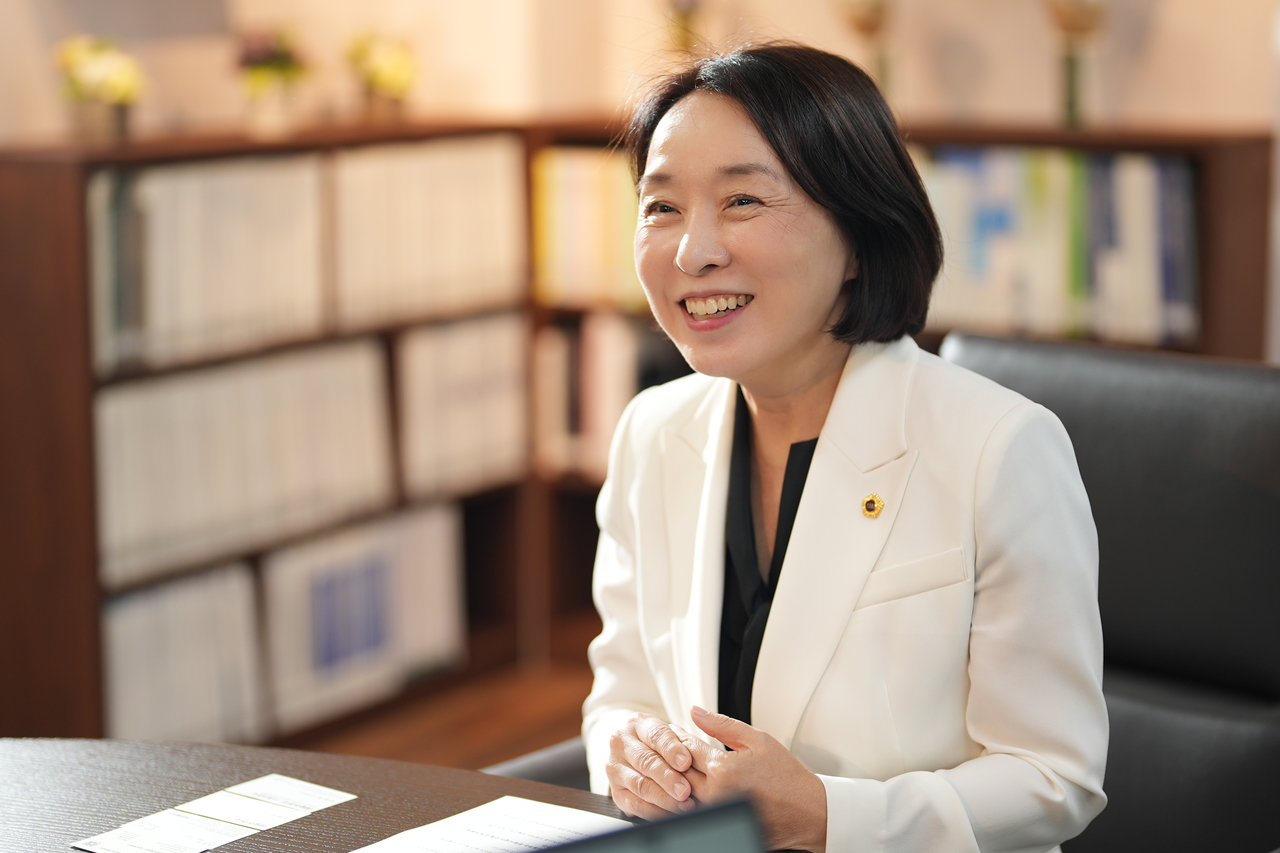
Apgujeong 428 as a cultural hub; school sports facilities to be normalized
The centerpiece of Min's local legislative agenda is the Apgujeong 428 public parking lot near Hyundai Department Store's Apgujeong flagship. The site is currently zoned for park and parking use but in practice functions as an asphalt lot with no green space.
The Apgujeong and Cheongdam area is one of Seoul's premier cultural commercial districts, dense with fashion boutiques, beauty businesses and galleries, yet it is relatively short on public art museums and large cultural facilities within walking distance for residents. Min said she is working with the Seoul Metropolitan Government to review urban planning and park-related procedures and project methods, with the aim of transforming the site into a public cultural space combining a forest park and an art museum.
Min said it is worth reconsidering whether it is appropriate to keep using the Apgujeong 428 site as nothing more than an asphalt parking lot. She said she wants to develop it into a cultural space where forest and art museum coexist, return it to residents, and elevate both the cultural identity of Apgujeong and Cheongdam and the city's overall quality.
On community sports, Min said the priority before building new facilities should be fixing the management systems of existing ones so residents can use them reliably. She cited the swimming pool at Singu Elementary School as a prime example — it has been shut down for an extended period, leaving students and residents unable to use it.
Min said school multi-use sports facilities suffer from unclear divisions of responsibility and authority among education offices, schools, autonomous districts and private operators, meaning that when disputes arise, facilities can remain closed for long stretches. She said she plans to discuss with the education office ways to review the varying management arrangements at individual schools and establish a stable oversight system, including the option of entrusting management to a specialized public institution.
She is also reviewing revisions to relevant ordinances and regulations to prevent harm to users from the private operator selection process, long-term membership sales and operator closures. Ensuring that already-built facilities are available for normal use by students and residents, she said, must come before building new ones — that is the top priority for community sports policy.
Alongside these efforts, Min said she will continue to coordinate with relevant Seoul Metropolitan Government departments and committees on other local issues: underground utility relocation in Cheongdam-dong, development of the site vacated by Cheongdam High School's relocation, inclusion of a Cheongdam Station stop on the Wirye-Sinsa line, and the creation of a cultural library at Dosan Park.
Min said her goal is legislative work that goes beyond raising problems to finding solutions and translating them into changes in policy and budgets. Rather than making many promises, she said she aims to be a lawmaker who sees through what she starts until results are delivered — and who earns citizens' trust through action and outcomes, not words.
7toy7@heraldcorp.com