Rulings cover semiconductor cooling gas pressure regulators, fiberglass products
Korea Customs Service has established new tariff classification standards covering items ranging from semiconductor equipment to fiberglass products, aiming to prevent classification disputes and speed up customs clearance.
The agency announced Monday that its fifth Tariff Classification Committee of 2026 had decided on nine classification rulings, with an amended notice on tariff classification changes for import and export goods published in the official gazette the same day.
The Tariff Classification Committee makes final decisions on tariff classifications — the fundamental factor in determining duty rates and country of origin for imported goods. It has operated since 1982 and is composed of private-sector experts and civil servants from relevant central government agencies.
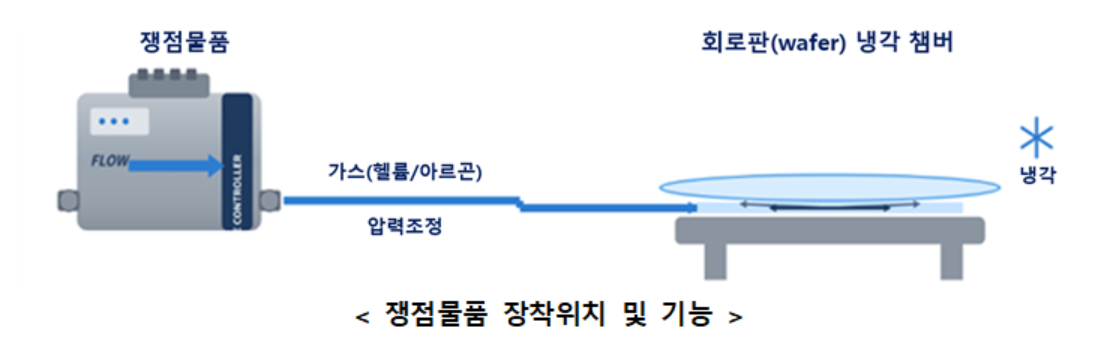
In one of the key rulings, the committee classified a device that automatically regulates gas pressure in semiconductor manufacturing processes as a "manostat" (automatic pressure regulator, HS code 9032.20-0000, WTO bound rate 0%), rather than as an automatic flow controller (HS code 9032.89-4091, WTO bound rate 3%).
The item in question contains both a pressure sensor and a flow sensor. However, the flow sensor is used only to monitor whether the cooling system is functioning properly by measuring gas flow, while the pressure sensor plays the core role of measuring and automatically adjusting gas pressure to the appropriate level. The committee determined that the device's primary function is pressure regulation rather than flow control, and classified it accordingly as a manostat. The ruling illustrates that even when a single product contains multiple types of sensors, classification must be based on a comprehensive assessment of how the device operates and what its primary function actually is — not simply on the number or type of sensors present. The agency said the decision is expected to help prevent classification disputes in the semiconductor equipment industry and support faster customs clearance.
The committee also reviewed how to classify a fiberglass sheet made by cutting mechanically drawn long glass fibers into 5- to 10-centimeter lengths, randomly arranging and layering them, and bonding them using needle punching — a process in which needles interlock the fibers. The question was whether the product should fall under mechanically bonded fiberglass mat (HS code 7019.14-0000, basic duty rate 8%) or mechanically bonded fiberglass fabric (HS code 7019.69-2000, basic duty rate 8%).
Glass wool — produced by fiberizing molten glass through centrifugal spinning into a voluminous form — was excluded from consideration because its manufacturing method, bonding method and final form differ from those of the product under review.
The committee ruled that the product meets the HS Explanatory Notes' description of a "mechanically bonded fiberglass mat," based on its manufacturing process (mechanical drawing), fiber arrangement (random layering) and bonding method (needle punching), as well as its product characteristics, and classified it under HS code 7019.14-0000.
The ruling demonstrates that products with similar raw materials and appearance can be classified under different tariff codes depending on their manufacturing process, bonding method and final product characteristics. The agency said the decision provides more concrete guidance on the factors companies should consider when determining tariff classifications.
The committee also classified sheets made from glass wool as glass wool products (HS code 7019.80-9000, basic duty rate 8%) rather than plain glass wool (HS code 7019.80-1000, basic duty rate 8%). The agency noted that while glass wool and glass wool products were previously classified under the same code, a 2022 revision separated them into distinct categories, and urged companies to take particular care when filing import and export declarations.
Korea Customs Service said it will continue to develop rational and consistent classification standards for a wide range of goods — including emerging industries and advanced materials — through the Tariff Classification Committee, with the goal of improving customs convenience for businesses and enabling Korean companies to focus on international trade without uncertainty over tariff classifications.
Noh Ji-seon, head of the agency's Tax Base Review Division, urged exporters and importers to make active use of the advance tariff classification ruling system, which is also in operation to help resolve classification uncertainty.
kwonhl@heraldcorp.com