Cosmecca commits 200b won to Ochang, exceeding book value of existing domestic production lines
Kolmar Korea's domestic cosmetics utilization rate hits 81.1%; signs deal for 173.3b won Sejong plant
Cosmax pours additional 60.5b won into Pyeongtaek, produced 389m units domestically in H1
Competition among South Korea's three original design manufacturing, or ODM, cosmetics makers to expand production capacity is intensifying as global demand for K-beauty products surges. Cosmecca Korea has joined Cosmax and Kolmar Korea in investing in domestic production, committing 200 billion won ($149 million) to a new manufacturing base. South Korea's cosmetics exports already hit a record $7 billion in the first half of this year. The scale-up race reflects the ODM makers' push to secure production capacity ahead of a rapid rise in cosmetics orders.
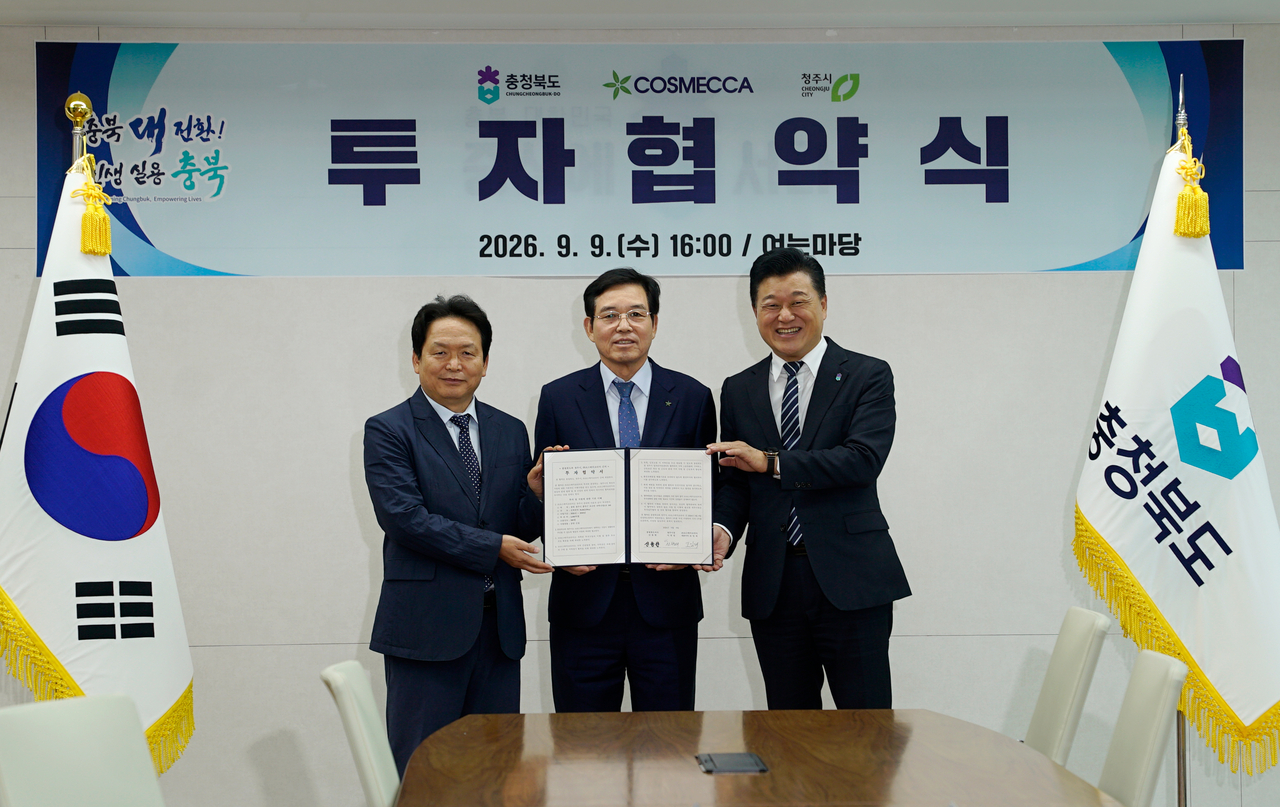
According to DART and other disclosures Friday, Cosmecca Korea, the country's third-largest ODM cosmetics maker, announced Sept. 9 that it had decided on a new facility investment worth 136 billion won to meet rising cosmetics demand. The company will invest an additional 136 billion won in production equipment, following its June decision to acquire the land and buildings of its Ochang plant in Cheongju for 64 billion won. The total investment in the Ochang production base comes to 200 billion won.
Cosmecca Korea plans to build a skin care production plant spanning roughly 50,000 square meters in the Ochang Science Industrial Complex in Cheongju. Construction will begin this month, with the first phase of operations set to start in 2027 and equipment to be expanded in stages through 2030. The company also plans to adopt an AI-driven production system and hire 500 new employees.
According to Cosmecca Korea's semiannual report as of the end of June, the book value of the company's production equipment stood at 189.3 billion won. The total 200 billion won earmarked for the Ochang base therefore exceeds the entire book value of the company's existing domestic production equipment as of the first half's end. Cosmecca Korea's production capacity in Korea currently stands at about 216.69 million units of basic cosmetics and 48.15 million units of color cosmetics, for a combined total of about 260 million units.
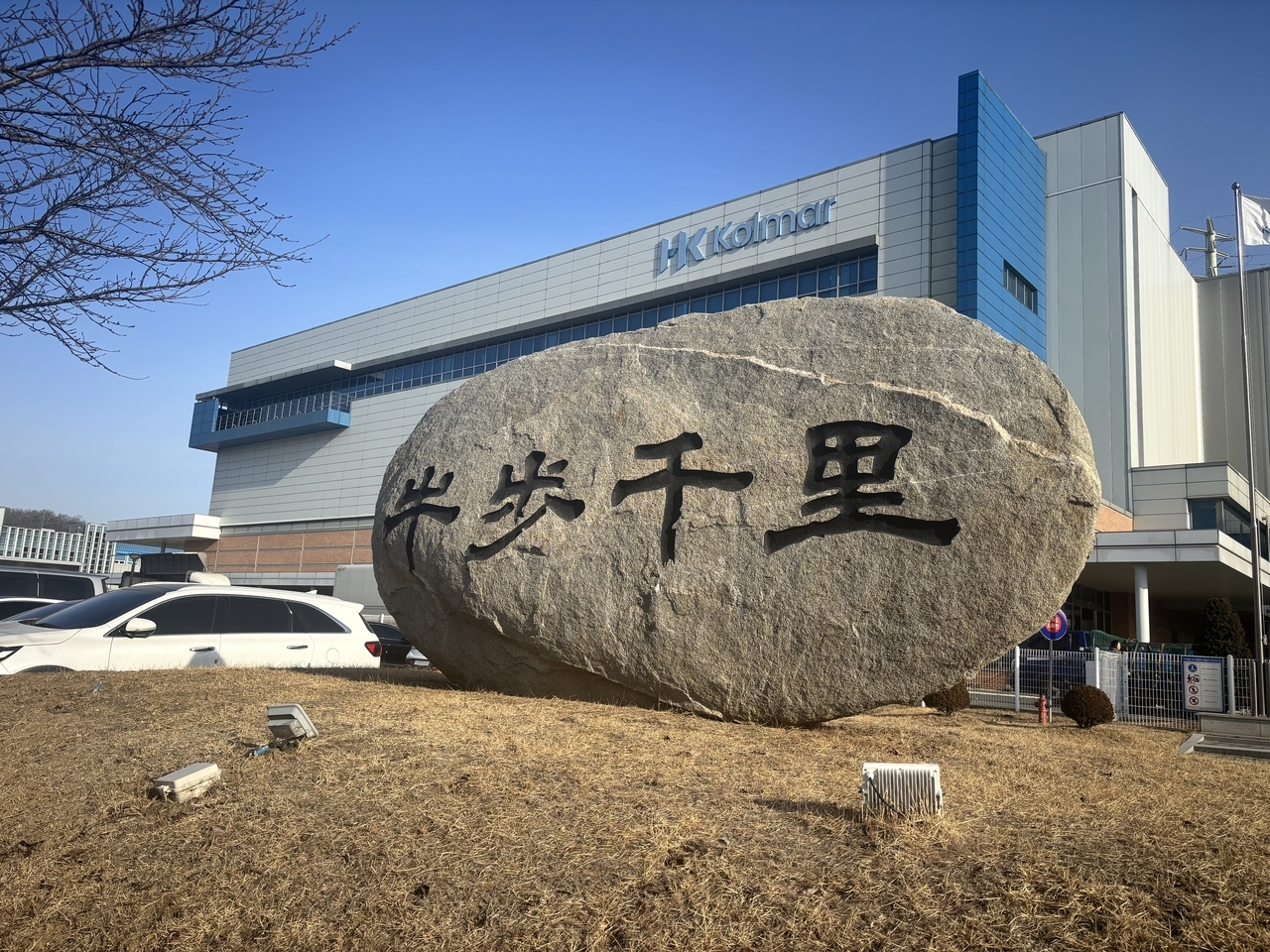
Kolmar Korea has also unveiled plans to expand its domestic production base. The company signed an investment agreement with Sejong city in March to relocate its Beijing plant to Korea and build a basic cosmetics production plant in the Jeonui Industrial Complex in Sejong. Sejong city said at the time that the investment would total 173.3 billion won, with production facilities to be built on a 9,851-square-meter site in the Jeonui complex by 2028. Kolmar Korea purchased a new plant site right next to its existing Sejong plant, and expansion work on the current plant is underway.
Kolmar Korea's domestic production capacity has expanded rapidly. Its domestic cosmetics production capacity grew from 557.82 million units in 2024 to 632.47 million units last year. In the first half of this year, the company confirmed production capacity of 367.51 million units. Kolmar Korea's domestic cosmetics production facilities are spread across Sejong, Jeonui and Jeondong, as well as Bucheon and Incheon.
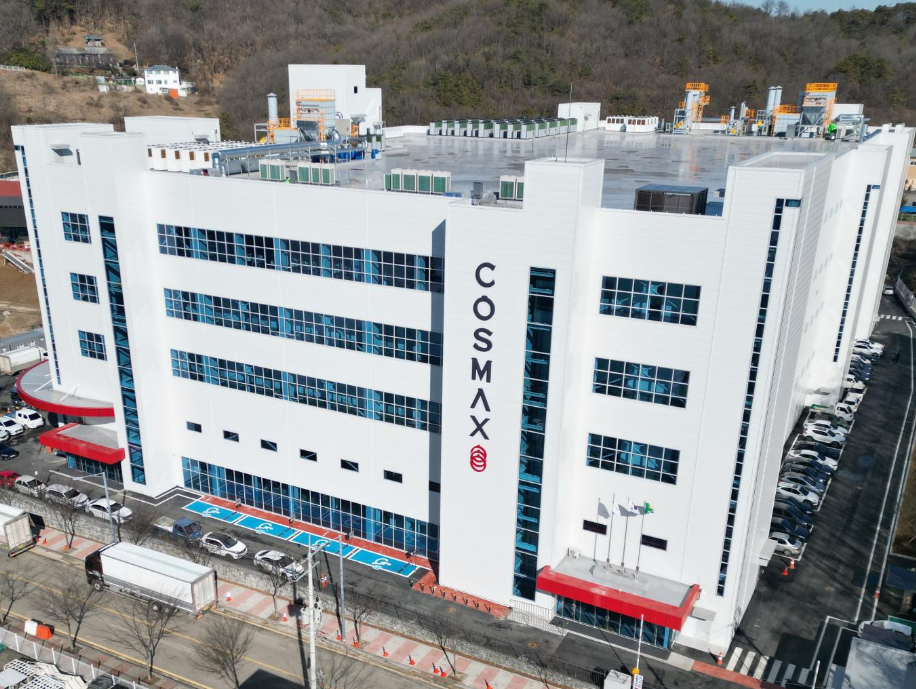
Cosmax also decided in May to invest an additional 60.5 billion won in its Pyeongtaek production base. The project involves expanding an existing plant in the Goryeom Industrial Complex in Pyeongtaek, Gyeonggi Province, with the investment equivalent to 9.9 percent of the company's equity capital. Construction began in June and is scheduled to run through late next month. The expansion targets Cosmax's Pyeongtaek Plant No. 1, which produces skin care and other products.
Cosmax has been expanding production capacity by adding production lines to existing idle space. The company's global annual production capacity stands at around 3.5 billion units, and it is pursuing plans to expand that to about 4 billion units, including through the operation of new overseas plants. Once the additional capacity from the Pyeongtaek expansion is factored in, the company's production capacity is expected to rise significantly.
Behind the ODM makers' continued investment in production facilities lies the expansion of K-beauty exports. According to the Ministry of Food and Drug Safety, South Korea's cosmetics exports totaled $7 billion in the first half of this year, up 27.3 percent from a year earlier — the highest first-half figure on record. Last year's full-year cosmetics exports reached a record $11.4 billion, and this year's exports already hit $7 billion in just the first six months.
Export destinations are also diversifying. In the first half of this year, exports to the United States reached $1.45 billion, making it the top export destination, followed by China with $1.01 billion and Japan with $580 million. Unlike in the past, when China accounted for a large share of exports, K-beauty's export markets have spread across the US, Europe and Japan, reducing the risk for ODM makers of order fluctuations tied to economic changes in any single region.
The growth of small and medium-sized enterprises and indie brands is even more directly tied to the ODM industry. According to the Ministry of SMEs and Startups, cosmetics exports by small and medium-sized enterprises rose 30.7 percent from a year earlier to a record $5.07 billion in the first half of this year. Such companies accounted for more than 70 percent of the $7 billion in total cosmetics exports. As overseas sales grow for small and indie brands that lack their own large-scale production facilities, order volumes for the ODM makers that handle their product development and manufacturing rise in tandem.
"Indie brands handle marketing and overseas market development, while ODM companies support them by manufacturing and supplying the products," an industry official said. "It has only been a few years since K-beauty began significantly expanding its global footprint. Korea's role is likely to draw even greater attention going forward in a beauty market increasingly built on technological capability."
hong@heraldcorp.com