Two years since ownership dispute began in September 2024
World's top zinc, lead producer makes over 20 types of nonferrous metals
Supplies over 60% of Korea's semiconductor-grade sulfuric acid demand
Eyes 150,000-ton copper capacity by 2028 to meet AI-driven demand
Recycles e-waste into eco-friendly copper, then copper foil
H1 operating profit of 1.3 trillion won already tops last year's full-year total
Chairman Choi Yun-beom expands investment in advanced materials

On Sept. 13, 2024, a tender offer launched by MBK Partners and Young Poong triggered a battle for control of Korea Zinc. Over the past two years, Korea Zinc has rapidly expanded its business under Chairman Choi Yun-beom's leadership despite internal and external uncertainty.
Under Choi, who took office at the end of 2022, Korea Zinc has built on half a century of smelting expertise to become a company that underpins Korea's manufacturing base, spanning steel, semiconductors, batteries and AI. By expanding into semiconductor-grade sulfuric acid, eco-friendly copper and copper foil, the company is transforming from a nonferrous metal smelter into what industry watchers describe as a pillar of "industrial sovereignty."
According to industry sources Friday, Korea Zinc produces more than 1.2 million tons a year of over 20 kinds of nonferrous metals and critical minerals, including base metals such as zinc, lead and copper; precious metals such as gold and silver; various rare metals; and semiconductor-grade sulfuric acid.
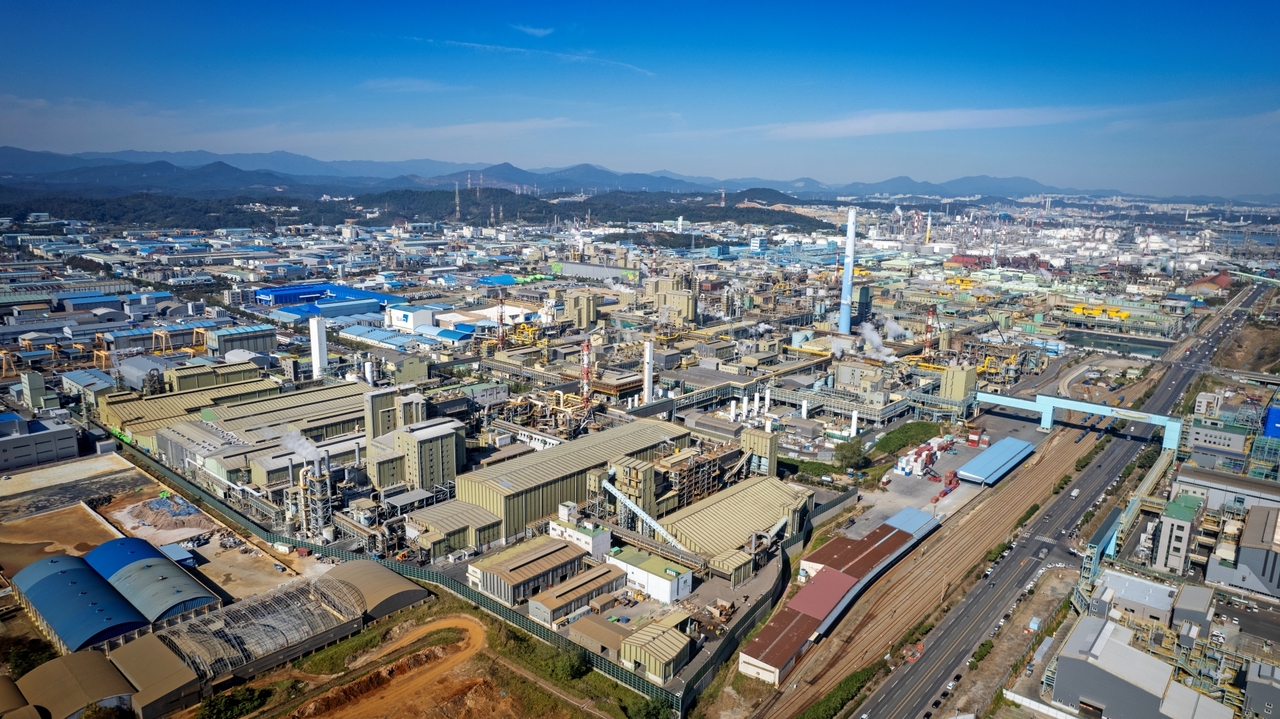
Last year, Korea Zinc held a 6.2 percent share of the global zinc market and 9.0 percent of the global lead market, ranking first in the world in both. The Onsan smelter in Ulsan alone produced 610,000 tons of zinc and 414,000 tons of lead last year. As an integrated smelter that produces not only zinc and lead but also silver, copper, sulfuric acid and other metals and materials at a single site, it runs around the clock in continuous 24-hour operation.
44 years of profit: smelting know-how that grew from zinc to '20 metals'
Underpinning this global competitiveness is smelting technology built up over nearly half a century. Korea Zinc has posted an annual operating profit every year for 44 consecutive years since 1982. Even narrowing the scope to the period of regular quarterly earnings disclosures since 2000, the company has logged 106 consecutive quarters of operating profit — an unusual streak given how sensitive the smelting business is to external variables such as raw material prices, exchange rates and smelting fees.
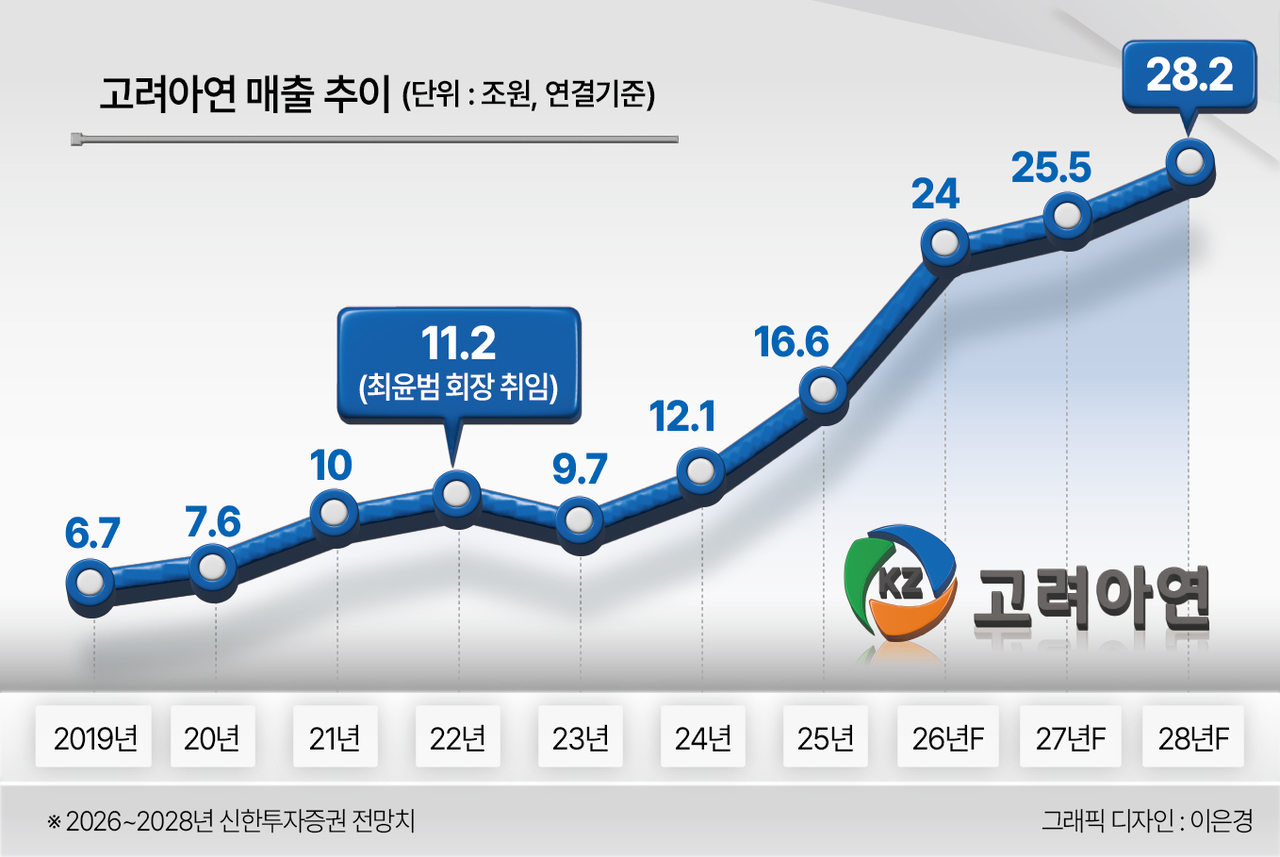
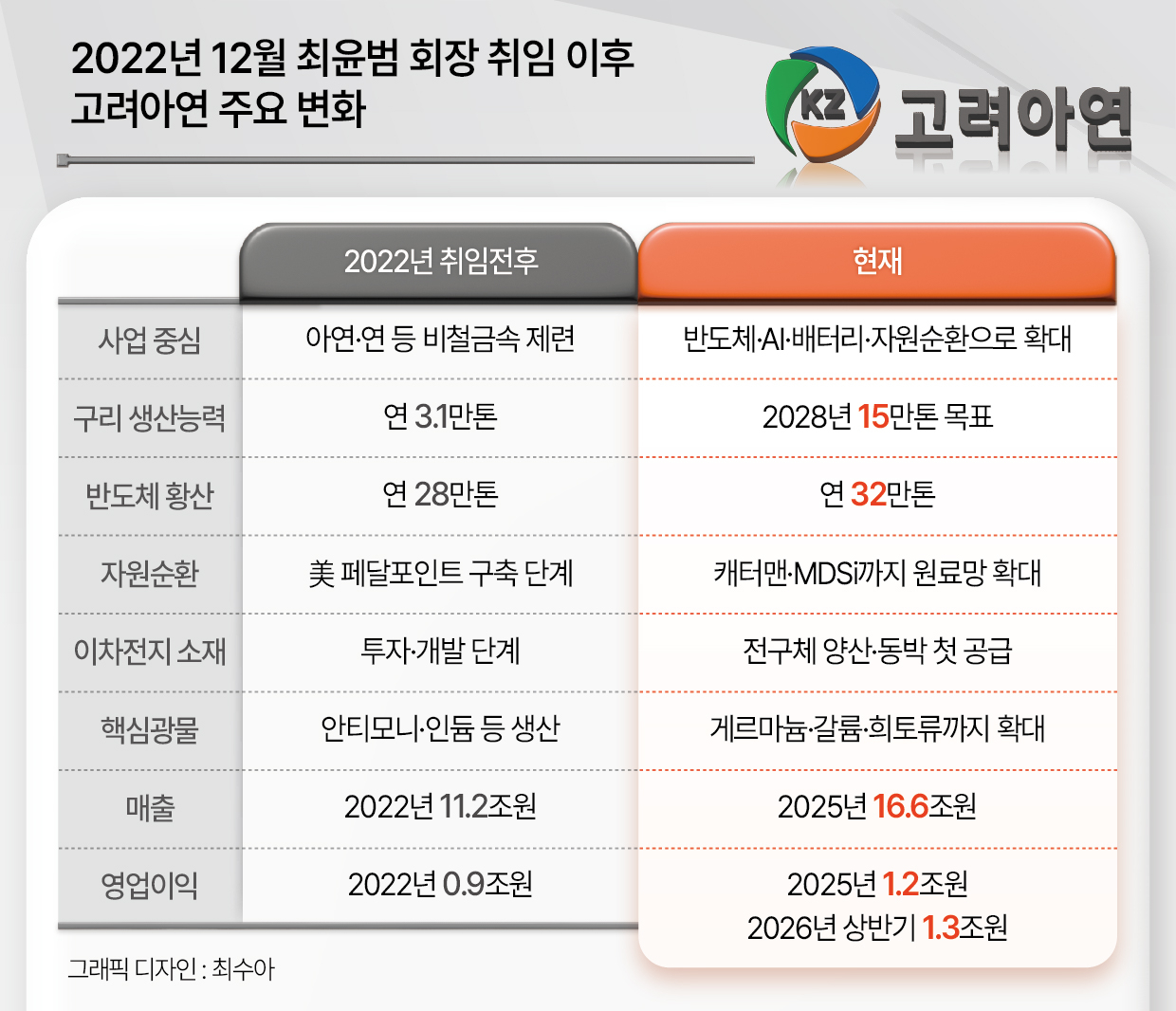
The scale of its earnings has also grown recently. Last year, Korea Zinc posted consolidated sales of 16.59 trillion won ($12.4 billion) and operating profit of 1.23 trillion won, both all-time highs. In the first half of this year, sales reached 12.44 trillion won and operating profit 1.33 trillion won, already surpassing last year's full-year operating profit in just six months.

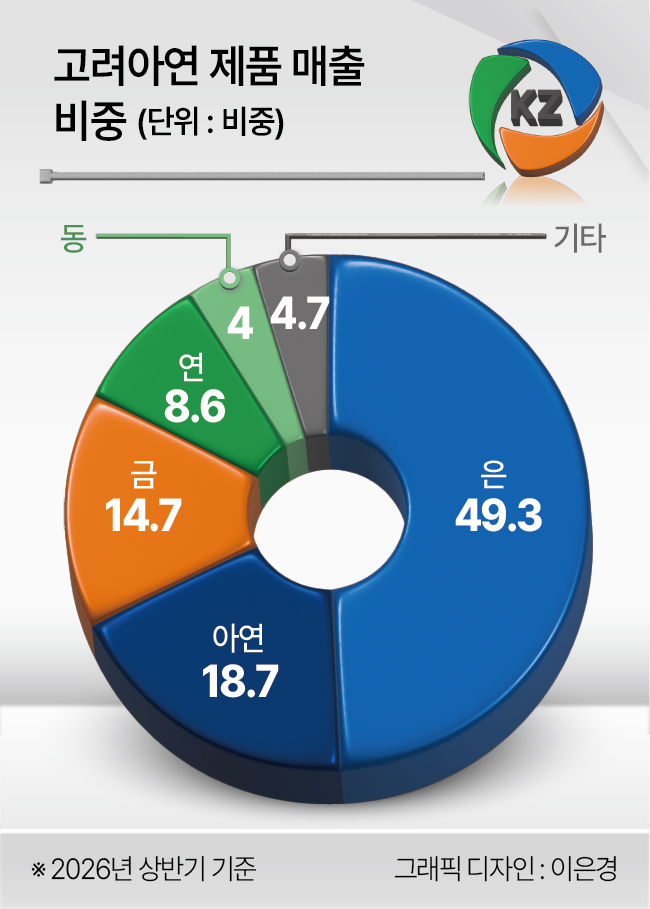
Despite its name, Korea Zinc's revenue is no longer concentrated in zinc alone. In the first half of this year, on a standalone basis, silver accounted for 4.11 trillion won, or 49.3 percent, of the company's 8.34 trillion won in product sales. Zinc brought in 1.56 trillion won and lead 717.2 billion won. Technology that recovers precious metals embedded in zinc and lead ore during smelting is driving both product diversification and revenue growth at the same time.
In the past, a smelter's competitiveness was determined by how much zinc and lead it could produce efficiently. Now, the new competitive edge lies in how much "hidden metal" can be extracted during the smelting process. Korea Zinc recovers a wide range of metals from a single process by jointly treating zinc and lead concentrate, smelting byproducts and recycled raw materials.
Since late 2024, the company has stepped up research and development aimed at raising recovery rates for rare metals, with the goal of boosting profitability by lifting item-by-item recovery rates by 20 to 30 percent or more. The value of this strategy has grown further amid China's export controls on critical minerals.
Korea Zinc also makes the sulfuric acid that cleans semiconductor wafers
Korea Zinc's products have found their way deep into advanced manufacturing lines beyond the steel industry. A prime example is its ultra-high-purity semiconductor-grade sulfuric acid.
Semiconductor-grade sulfuric acid is used in cleaning processes that remove organic residue and impurities from wafer surfaces. As semiconductor processes become finer, even trace contaminants can hurt yield and quality, making the purity and consistency of materials critical.
Korea Zinc refines sulfur dioxide generated during zinc and lead smelting to produce semiconductor-grade sulfuric acid with a purity exceeding 99.9999 percent, turning a smelting byproduct into a high-value-added semiconductor material.
Last month, the No. 20 and No. 21 semiconductor-grade sulfuric acid production lines at the Onsan smelter came online, raising annual production capacity from 280,000 tons to 320,000 tons. Korea Zinc now supplies more than 60 percent of Korea's semiconductor-grade sulfuric acid demand, with about 95 percent of its output going to major domestic semiconductor manufacturers. The company plans to eventually expand capacity to 500,000 tons a year.
A byproduct of zinc smelting has thus been transformed into a key material underpinning Korea's semiconductor production.
AI-fueled 'copper war': Korea Zinc to expand capacity fivefold
Copper is rapidly gaining importance in the AI era as well. AI data centers require enormous amounts of electricity, and delivering it reliably requires large quantities of copper for transmission networks, transformers and cables. Competition to secure copper is intensifying further as demand grows from electric vehicles, energy storage systems and the expansion of renewable energy.
Korea Zinc is expanding its copper business accordingly. The company plans to increase its copper production capacity roughly fivefold, from just over 30,000 tons a year currently to 150,000 tons by 2028.
The production expansion is expected to be reflected fully in earnings. Shinhan Investment projected Korea Zinc's copper sales would more than double this year, from 465 billion won last year to 1.02 trillion won, and rise further to 1.37 trillion won next year. The brokerage said growing copper demand driven by AI data centers and power grid expansion could become a new revenue source worth trillions of won.
Notably, the copper Korea Zinc produces is "eco-friendly copper" made entirely from recycled raw materials — such as electronic scrap and smelting byproducts — rather than newly mined concentrate. The company recovers metals from discarded electronics and aging IT equipment and returns them to industrial use, effectively treating cities as another kind of "mine."
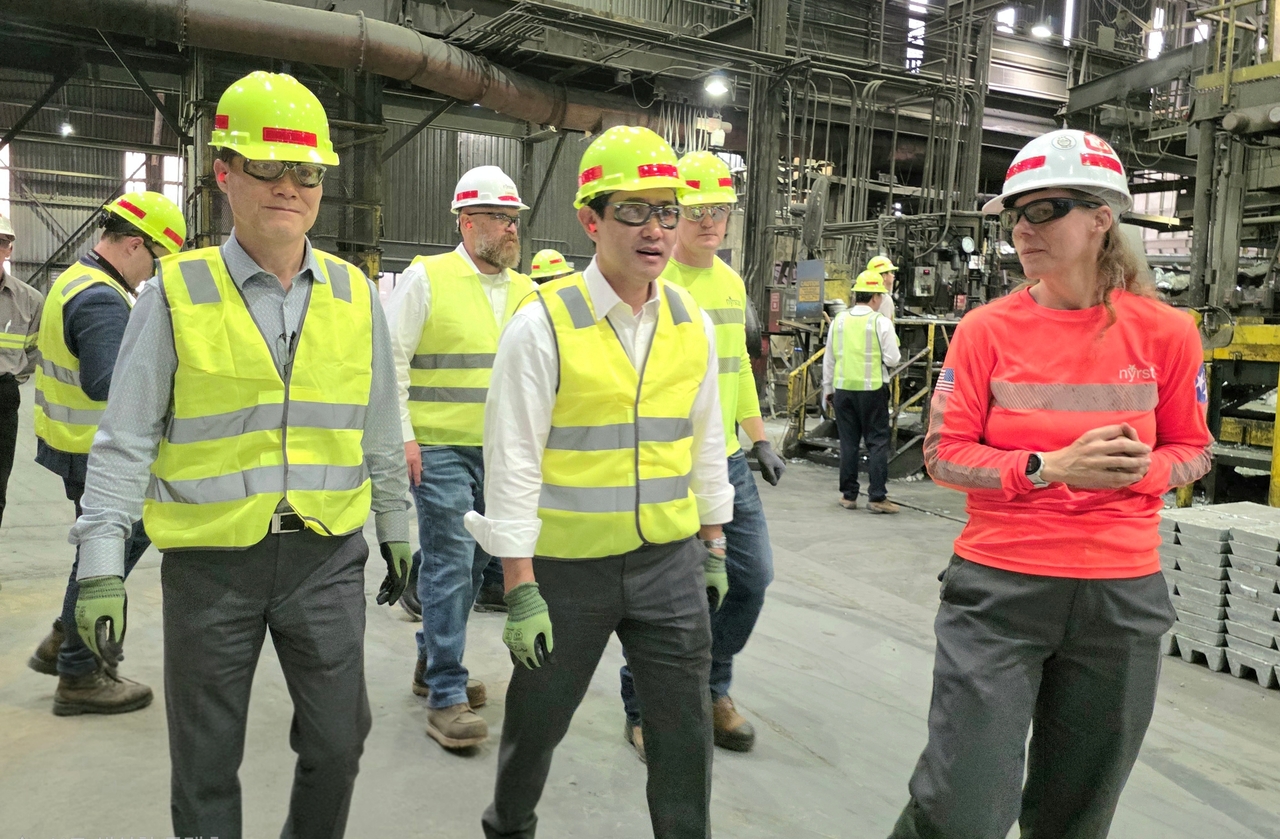
Its raw material network extends overseas as well. Its US resource-recycling subsidiary PedalPoint collects and processes electronic waste to secure secondary raw materials containing copper and other metals. PedalPoint's subsidiary Catterman holds a network of more than 300 scrap suppliers across North America, South America, Asia and Europe. Korea Zinc has also broadened its raw material sourcing by acquiring MDSi, which processes IT assets such as data centers and telecommunications equipment.
From e-waste to battery copper foil: the 'metal cycle' becomes reality
The recovered copper feeds into the battery industry as well.
Korea Zinc subsidiary K-JAM began supplying battery-grade copper foil to a global battery customer for the first time in June. Copper foil, made by processing copper into sheets thinner than a human hair, serves as the current collector that gathers and transmits electricity in lithium-ion battery anodes. The supply deal is expected to generate up to 40 billion won in sales.
The key lies in the chain connecting raw materials to final products. PedalPoint in the US secures secondary raw materials from electronic waste, the Onsan smelter turns them into eco-friendly copper, and K-JAM processes the copper into battery-grade copper foil. This resource-recycling value chain, which then flows back into the global battery supply chain, has begun translating into actual product supply.
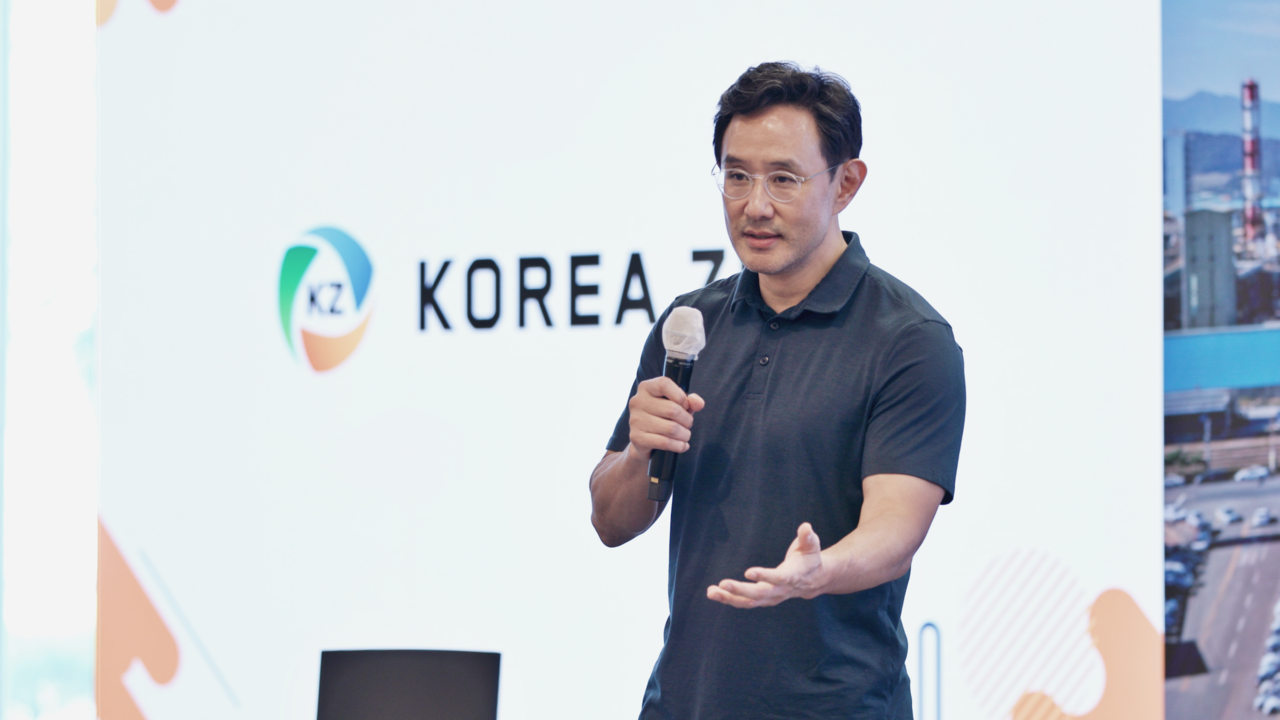
Under Choi Yun-beom, a faster transformation into an advanced materials company
At the center of this expansion is Korea Zinc Chairman Choi Yun-beom. Since taking office at the end of 2022, Choi has pushed the company beyond its traditional zinc- and lead-focused smelting strengths, championing a "Troika Drive" strategy built around resource recycling, secondary battery materials and renewable energy.
Since then, Korea Zinc has continued investing in expanding eco-friendly copper capacity, battery copper foil and semiconductor-grade sulfuric acid scale-ups, linking its existing smelting technology to advanced industrial materials businesses. Beyond simply adding new product lines, the company has built a structure that recycles smelting byproducts and e-waste back into raw materials to raise added value — a change that stands out under Choi's leadership.
Building on its existing strength as the world's top zinc and lead producer, Korea Zinc is shifting its center of gravity from an integrated smelter to a materials company spanning semiconductors, AI and batteries, industry watchers say.
Choi is also continuing investments to strengthen the company's long-term technological competitiveness. Korea Zinc is building a new R&D center at a cost of about 149.1 billion won to expand the research capacity of its existing laboratories. Through the center, the company aims to upgrade its existing smelting technology while broadening its research base in precious-metal recovery and advanced materials.
kwater@heraldcorp.com