Expected to hash out details with Lutnick, others; set to brief National Assembly around Sept. 17
Losses in one project can no longer be offset by gains in another, marking retreat from 'risk-sharing' structure
Expert says Korea failed to fully leverage its Korea-US FTA status as negotiating lever
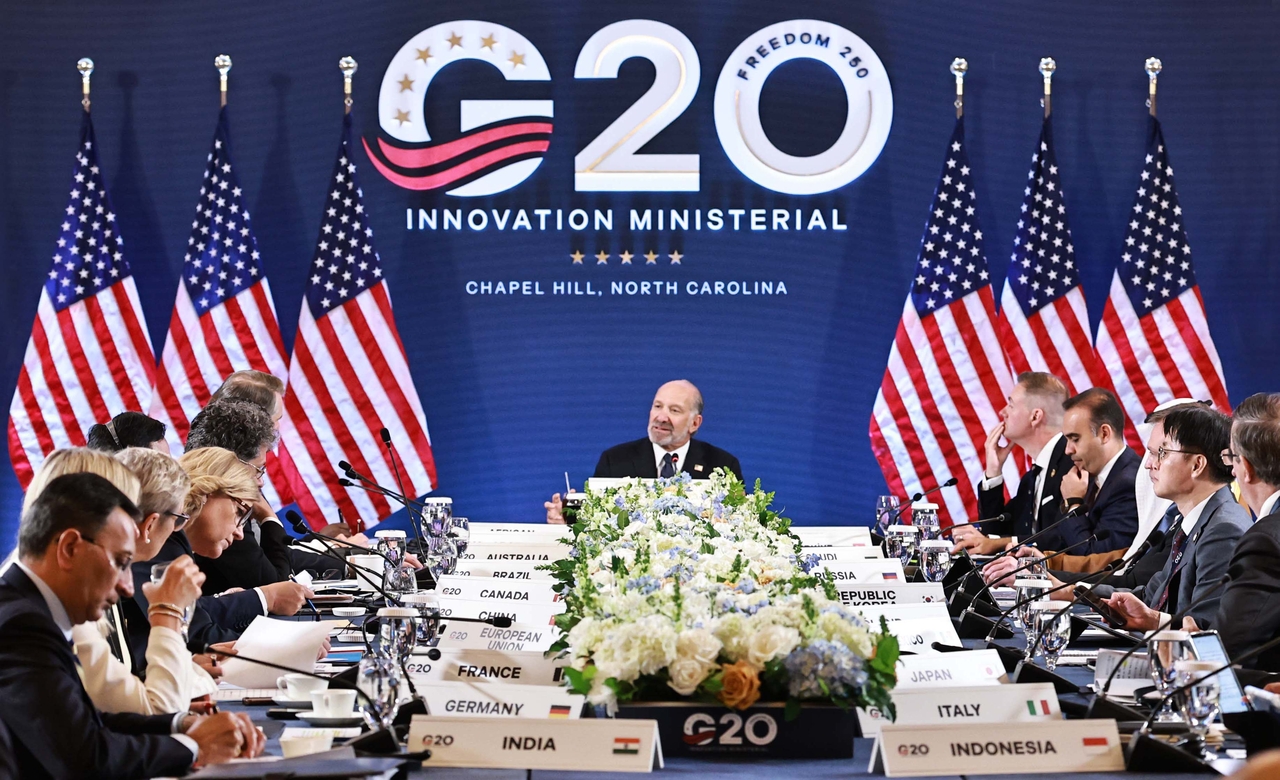
Minister of Trade, Industry and Energy Kim Jung-kwan has traveled to the United States for last-minute coordination ahead of the announcement of Korea's first investment project. The project is a follow-up measure to the Korea-US trade negotiations. Concerns over the risks of investing in the US are growing, however, after it emerged that the upper-tier "investment special purpose company," or SPC, structure has effectively collapsed. Korean officials had hoped the structure would serve as a safeguard for recouping invested funds. Some observers warn that if the projects underperform, it could trigger accountability debates, including audits or investigations, down the road.
According to the Ministry of Trade, Industry and Energy on Thursday, Kim departed for the United States on Wednesday (local time). He had been traveling from France to Belgium as part of an overseas trip. He is expected to remain in the US through Saturday, meeting with US Commerce Secretary Howard Lutnick and other US officials to continue coordinating on the investment plan.
The government must still finalize details including the specific investment destination and the size and timing of the first remittance. The leading candidate for the first project is a roughly $22 billion combined-cycle gas power plant under construction in Encinal, Texas. Follow-up projects under consideration reportedly include the construction of eight large nuclear power plants and an LNG project in Alaska.
The US side has reportedly proposed allocating $120 billion of a $200 billion strategic investment package toward building the eight nuclear power plants. Some of these were reportedly to use Korea's APR1400 reactor design. The Ministry of Trade, Industry and Energy, however, said this was "not true." It added that negotiations between the two countries are still ongoing and that no specific details have been finalized.
After returning home, Kim is expected to brief the National Assembly on the first US investment project around Sept. 17. He is set to formally sign the memorandum of understanding as early as Sept. 18.
The key issue is how to share investment risk. In particular, the upper-tier investment SPC structure — one of the safeguards Korea had expected would help it recoup its investment funds — reportedly fell through during recent negotiations.
Under the memorandum of understanding and joint fact sheet the two countries agreed to on Nov. 14 last year, the United States was to establish the upper-tier investment SPC. Korea would channel its funds into the SPC, according to Article 13. The agreement also stipulated that the United States would distribute all free cash flow generated from the investments in accordance with the memorandum. Each project-level SPC would in turn distribute funds to the investment SPC, under Article 14.
Under this so-called "umbrella SPC" structure, even if one project incurred losses, profits from another project could still be used to repay the principal and interest on the overall investment. This helped diversify risk.
In recent negotiations, however, the US side is understood to have accepted an alternative approach that settles profits and losses separately for each project. Under this structure, funding would still flow through the upper-tier investment SPC, but the actual distribution of profits and burden of losses would be handled independently by each project-level SPC. Observers note that this could make it harder to offset gains and losses across projects, diminishing the risk-diversification effect originally envisioned.
A ruling-party official said, "The Korea-US memorandum of understanding called for diversifying investment risk through an umbrella SPC structure, but at the Korea-US Strategic Investment Steering Committee meeting on Monday, it was reportedly decided to settle profits on a project-by-project SPC basis instead."
The schedule for the first fund transfer is also drawing scrutiny. The government is pushing to send more than $2.2 billion for its first US investment payment within this month. But the memorandum of understanding stipulates that funds cannot be remitted until at least 45 business days after Korea receives notice of the investment destination from the United States. The remittance schedule appears to have taken shape before the domestic investment review process has even been completed.
This has fueled concerns that, with the US midterm elections approaching, the Korean government is under pressure to speed up the announcement and transfer of investment funds. Critics say Seoul is being pulled along, in effect, by Washington's push for greater investment.
A trade expert said, "The Korea-US investment negotiations arguably got off on the wrong foot from the start." The expert added that Korea, as a party to the Korea-US Free Trade Agreement, failed to fully leverage its more favorable status compared with Japan or the EU as a bargaining chip.
"Had Korea negotiated the way the EU and Taiwan did, allowing companies themselves to make the US investments, the government would have faced less burden in assessing the feasibility of each individual project, and there would have been less overall controversy," the expert added. "Korea has also ended up in a relatively more defensive position than other countries when it comes to investment terms and project selection."
oskymoon@heraldcorp.com