Agricultural Product Price Stabilization Program to take full effect next year, starting with garlic and onions
Farms cultivating at least 10 ares eligible, a wider scope than the previous vegetable price stabilization system
Standard prices set using full management costs and imputed labor costs, with crops added gradually
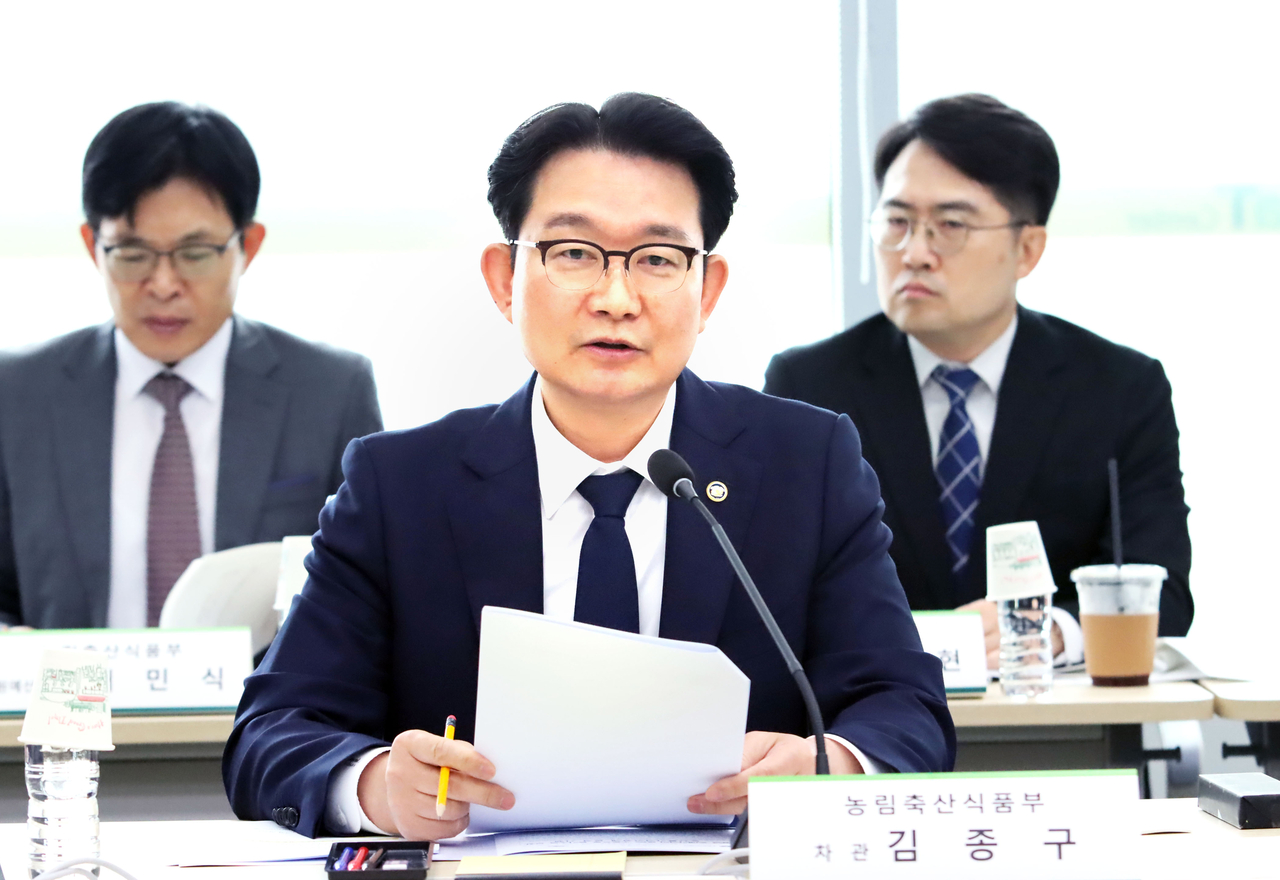
Starting next year, the government will guarantee farmers up to 80 percent of the average wholesale price for garlic and onions if prices drop sharply. This follows the full rollout of the Agricultural Product Price Stabilization Program. The program will begin with garlic and onions before gradually expanding to cover more crops.
The Ministry of Agriculture, Food and Rural Affairs held the first Agricultural Product Price Stabilization Deliberation Committee meeting Thursday at the aT Center in Yangjae, Seoul. Deputy Minister Kim Jong-goo chaired the meeting, which reviewed detailed operating plans for the program, including which crops it would cover and how standard prices would be calculated.
Under the program, the government steps in with preemptive supply and demand management. If the average annual price of an agricultural product still falls below a predetermined standard price, the government covers all or part of the difference. The system is based on the Act on the Distribution and Price Stabilization of Agricultural and Fishery Products, which was amended in August 2025 and took effect Aug. 27, 2026.
Garlic and onions will be the first crops covered. The government plans to expand the list gradually. It will weigh each crop's impact on the public diet, how well-developed its supply and demand management system is, and whether reliable statistics on production costs are available. Garlic and onions were chosen first because their output and prices fluctuate widely depending on harvest conditions.
However, additional crops could be added later. Committee members representing producer groups called Thursday for expanding the list of crops covered this year. That prompted the government to seek additional funding during the National Assembly's review of next year's budget. The committee plans to reconvene before the end of the year, depending on the outcome of that budget process.
The standard price is the threshold that triggers government support once market prices fall below it. It will be set by adding the full cost of farm management plus all or part of imputed labor costs. The total will be calibrated so it equals 80 percent of the average wholesale price. However, for crops that have chronically suffered sharp price swings due to persistent supply and demand instability, the 80 percent guarantee will be phased in gradually. This will occur alongside measures such as managing cultivation area and per-unit output.
The new program offers significantly broader protection and coverage than the existing vegetable price stabilization system. That earlier system covered only up to 20 percent of a price decline and offered no protection once prices fell below 60 percent of the average wholesale price. The new program sets no such lower limit, guaranteeing support up to 80 percent of the average wholesale price.
Instead of being limited to farms that had joined the vegetable price stabilization system, any farm cultivating at least 10 ares (1,000 square meters) of the same crop will qualify. Eligible farmers or farming corporations must have registered as an agricultural business entity or filed a cultivation report.
The government will announce standard prices each year after committee review. This will happen once the Ministry of Statistics or the Rural Development Administration releases that year's production cost statistics for the relevant crops. The average price used to calculate actual payouts will be based on harvest-season prices and will reflect prices across all grades — top, middle and lower quality.
In exchange for the price guarantee, farms will be required to take part in supply and demand management. Farms seeking support must register or update their agricultural business entity status at planting or transplanting time to report their actual cultivation area. Farms that fail to pay into self-help fund organizations will see their first-year payouts cut by 20 percent, with the deduction rate rising in subsequent years.
Local governments will also be held accountable. Those that fail to carry out legally mandated supply and demand plans, such as adjusting cultivation areas, will receive reduced support for stable production and supply projects. They will also see smaller allocations of the program's budget.
The program will also prevent overlapping compensation with income stabilization insurance. If a farm receiving payouts under the new program also received a payout from income stabilization insurance, the insurance amount will be deducted from its price stabilization payment.
The ministry plans to finalize the crops and compensation ratios reviewed Thursday through future public notices. It also plans to hold regional briefing sessions through the end of the year to explain farmers' obligations and the procedures for implementing the program.
"The Agricultural Product Price Stabilization Program is a key national policy task that will let farmers engage in agriculture with stability, free from anxiety over falling prices," Deputy Minister Kim Jong-goo said. "We will operate the price stabilization system so that it not only stabilizes farm management but also encourages farmers to take part in preemptive supply and demand management, ultimately leading to more stable agricultural supply, demand and prices."
adastra@heraldcorp.com