A physical theater master who deconstructs classics and transcends the limits of language
Play "The Chair Mender" opens Sept. 18
In an age when AI answers everything, the theater remains a space for thought
"The Chair Mender," which endures a harsh, wretched reality through the fantasy of a chandelier; "The Lower Depths," which strips away the shackles of language to embody poetry written with the body; "A Five-Minute Proposal," which unearths the strata of the unconscious that Chekhov buried in silence ... .
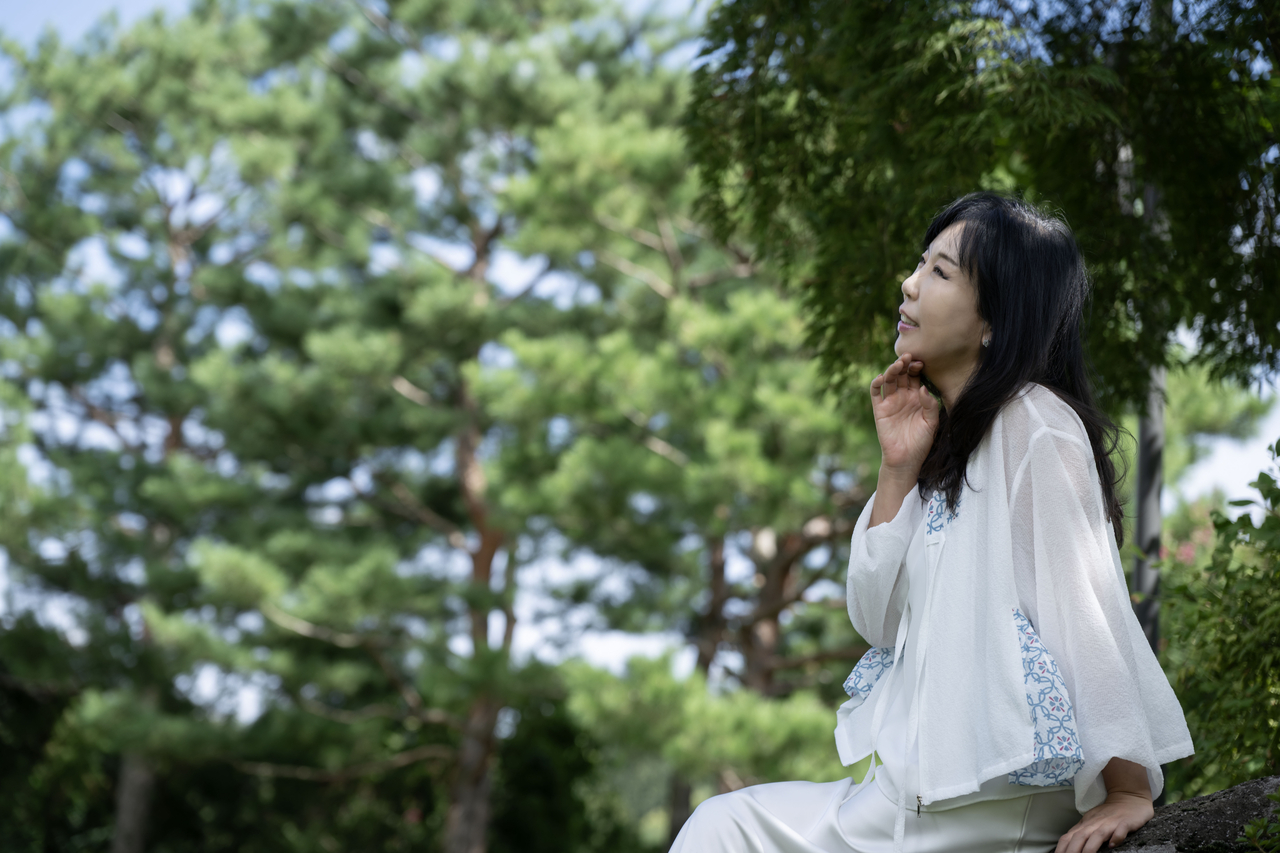
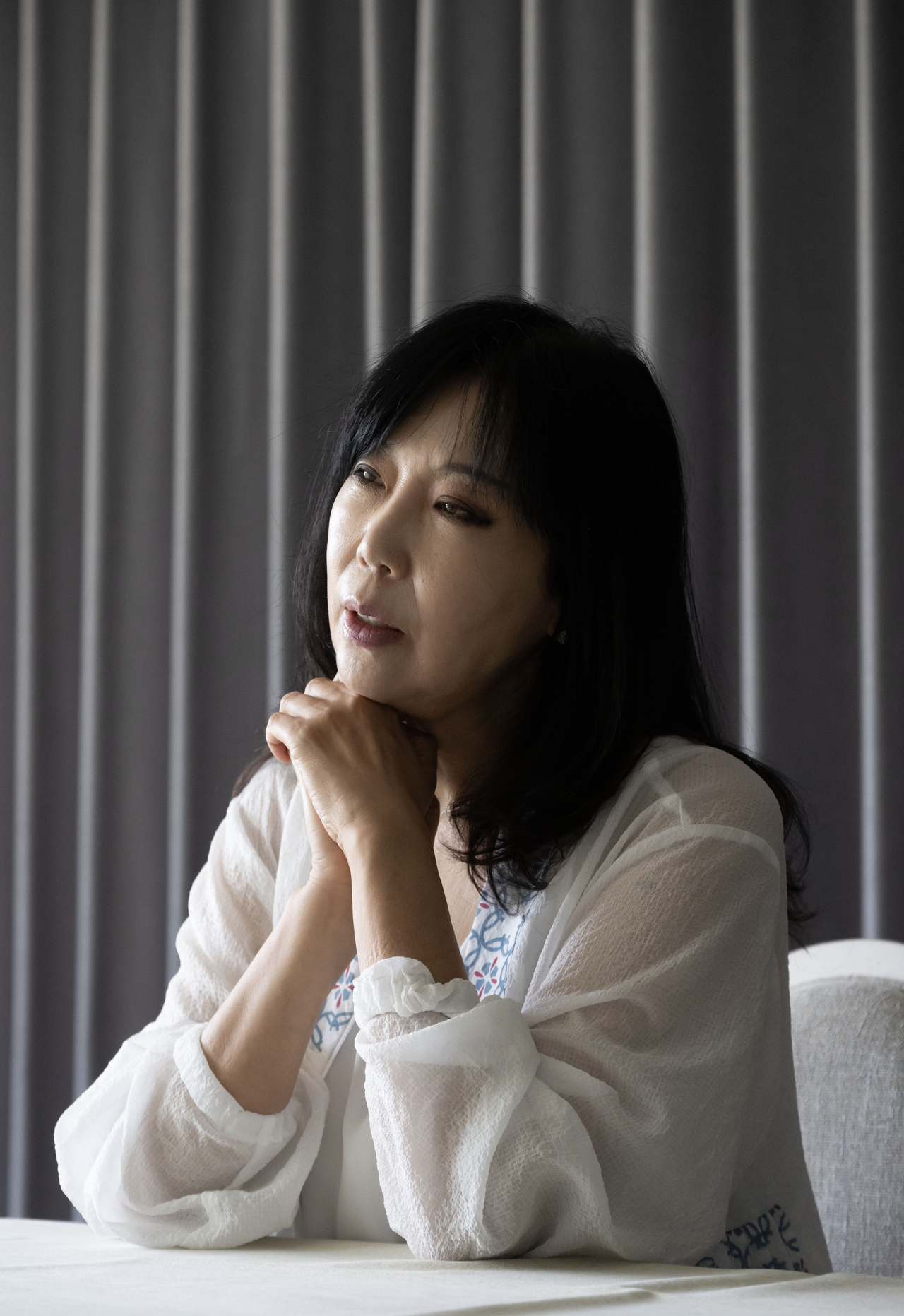
Director Song Hyun-ok, 65, who draws up the depths beneath the printed word onstage, goes by many titles: English literature scholar, theater critic, dramaturge, university professor, pioneer of "physical theater." Yet the most powerful title attached to her name remains "Oh Se-hoon's wife," or "the mayor's wife," Song Hyun-ok.
Since entering the performing arts world as a theater critic in 1989, she has been a teacher nurturing younger talent. She has also been a creator who deconstructed the stage through language and context, and one who never hesitated to try something new. She now returns with her signature repertoire piece "The Chair Mender" (Sept. 18-20, Naru Art Center). The production, which she says "takes years to stage again because of its large cast and heavy physical movement," returns to audiences two years after its 2024 national tour.
Song Hyun-ok, artistic director of theater company Mulgyeol, sat down for an interview ahead of the opening at the Seoul mayor's official residence in Yongsan-gu. Despite the sudden setback of a facial fracture suffered by her daughter and the play's lead actor, Oh Ju-won, she remained composed. "We already have plans A, B and C in place," she said. "Live theater always throws up variables, but I trust in the actor's strong will and sincerity."
A chandelier pours over a wretched daily life... was that woman happy?
For more than half a century, the woman who mended broken chairs carried her life in her hands. Every wrinkle between her knuckles holds a memory. At 14, on her first visit to a pharmacy, she encountered the pharmacist's son. Before the girl's eyes, a world as radiant as the glass jars of pills spreads open.
"At that moment, a chandelier descends onto the stage. It's a fantasy world far removed from reality. Dreaming of fantasy in life is a trait unique to humans. Perhaps that fantasy was the driving force that let people without hope -- those living hard, marginalized lives -- endure."
The production, adapted from Guy de Maupassant's short story "La Rempailleuse" ("The Chair Mender"), bears Song's signature touch. She has always searched for "the human being of today" within the classics. In "A Doll's House," she portrayed modern people living according to society's demands as dolls. In "Oedipus" and "Hamlet, Son of a Woman," she crossed a masculine worldview that chases truth with a feminine worldview that embraces the natural order. "Classics carry a power to overcome time, one that transcends era and nation," she stressed.
"At the root of the power to overcome time -- a frightening and fearsome presence -- lies the human being. Universal human nature, the way our inner minds work, and the dynamics of relationships never change. When you dress a classic's foundation in contemporary clothing and reflect today's concerns through it, the resonance the classic teaches us is powerful."
This production drops the audience vote on approval or disapproval that was part of its premiere and instead compresses that exchange into a debate among the actors onstage, preserving the fluidity of the stage aesthetic. The decisive change lies in the ending. The man who was the object of the woman's 55-year unrequited love is placed at the edge of the stage, overturning the narrator. It is the biggest departure from Maupassant's original.
"The man appears and asks back, 'Is what you saw the only truth?' He grows angry, yet glances at his wife standing beside him and stares out the window. Outside the window stands a 17-year-old girl, standing in the snow. Truth changes depending on the frame. I wanted to break apart a single point of view."
"The Chair Mender" is a work Song has long held close. Though she has staged countless productions, she never let herself feel emotionally attached to the characters, believing that "a director must remain free of emotion to attempt something neutral." But this year, as she prepares to restage "The Chair Mender," she says her heart has changed.
!["The Chair Mender" [Courtesy of theater company Mulgyeol]](https://wimg.heraldcorp.com/news/cms/2026/09/10/news-p.v1.20260910.09184d9d4d0f41a698af8b9b14014f80_P1.png)
"I've come to feel something for this woman. I think it's because I've gotten older. Onstage, the actors move slowly to embody the passage of time. It shows a woman's life aging -- from a girl, to a middle-aged woman, to an old woman. That scene brings me to tears. I suppose I feel for her because I, too, am growing older. (Laughs)"
Physical theater, once branded 'heresy,' is now the mainstream
"Is this dance or theater?"
Genre-bending is now the mainstream, but the mood was different a decade or so ago. When a reinterpreted staging of Maxim Gorky's "The Lower Depths" opened in 2008, the theater world was thrown into an uproar. A modest "half-step" beyond convention would have sufficed, but Song's leap of "three or four steps" was branded "heresy" -- which is why she is called a "pioneer of physical theater."
Her career did not begin with physical theater. A graduate of Korea University's English department who earned a doctorate researching Harold Pinter, she explored the "extremities of language" before turning to the body as a "meta-language" that transcends all language. Growing up in the studio of her late father, sculptor Song Young-soo -- a pioneering first-generation figure in Korean steel sculpture -- also shaped her sensibility.
"I came to feel that language alone wasn't enough. Maybe because I spent my childhood among abstract sculpture, I never liked explaining things in exhaustive detail. Words can express things, but I believe the most truthful language is the body's language, which emerges spontaneously. Like poetry, I wanted to erase direct statement and bring metaphorical gestures onto the stage."

Starting with "The Lower Depths" in 2008, she began presenting full-fledged physical theater, but domestic audiences responded with complaints that it was "obscure and difficult." The breakthrough, however, came from abroad -- when she staged the production in Russia in 2008 at the invitation of the Shchepkin and Shchukin theater schools and the Gorky Institute of World Literature in Moscow.
Russian scholars and artists who watched "The Lower Depths" and "A Five-Minute Proposal" rose to their feet, applauding through tears. An elderly professor who said he had devoted 30 years solely to Chekhov approached her, grasped her hands and said, "This was the first time I ever considered the strata of the unconscious buried beneath Chekhov's text." Song wept then, washing away years of regret.
"A local theater director's remark -- 'everything an actor does onstage is acting' -- washed away the disappointment and frustration I had felt in the Korean theater world. It was the moment I gained confidence in what I do."
Theater written with the body reflects her artistic philosophy. "The value of language as a vessel for thought deserves respect, but the language of the body allows for intuitive communication among people," she said, adding that it evokes a wide range of emotions and ideas.
!["The Chair Mender" [Courtesy of theater company Mulgyeol]](https://wimg.heraldcorp.com/news/cms/2026/09/10/news-p.v1.20260910.8e70aef29eef42c2b9ac88f8ae6309b7_P1.png)
"These days, we've entered an era when people no longer think for themselves. Ask AI anything, and an answer comes right away. For people today, the theater's duty is to give them time to think -- to create a space where they can reason and feel things for themselves."
In her next work, too, Song poses questions. She is preparing a new creative piece, "Minority Opinion," inspired by the experience of an acquaintance who worked in the UN's human rights field. The play traces how individual memory becomes collective memory, how memory shapes history, and probes the gaps in how each group and nation strategically constructs its own memory.
Once a shackle, 'Oh Se-hoon's wife' is now just her circumstance
Though she has charted her own course with integrity, the frame of "Oh Se-hoon's wife" has always hung over her name. In her younger days, this label caught in her heart like a stumbling stone -- a shadow that threatened to swallow her independent existence as an artist.
"In the past, even in articles about my own work, I used to plead with reporters to please remove the label 'Oh Se-hoon's wife.' No matter what production I staged, the shell of being a politician's wife would cover up its essence. Back then, it felt like a shackle I couldn't escape."
Now, she remains composed and detached, no matter what label is attached to her. That shift likely stems from an inner upheaval she underwent after leaving the classroom she had kept for 40 years this past February. As she ran her hand over her desk before leaving her office for the last time, she felt as if she were rehearsing the end of her life. "As I stepped out of my office, it suddenly struck me that I would have no regrets even if I died right then, and my heart grew lighter," she recalled.
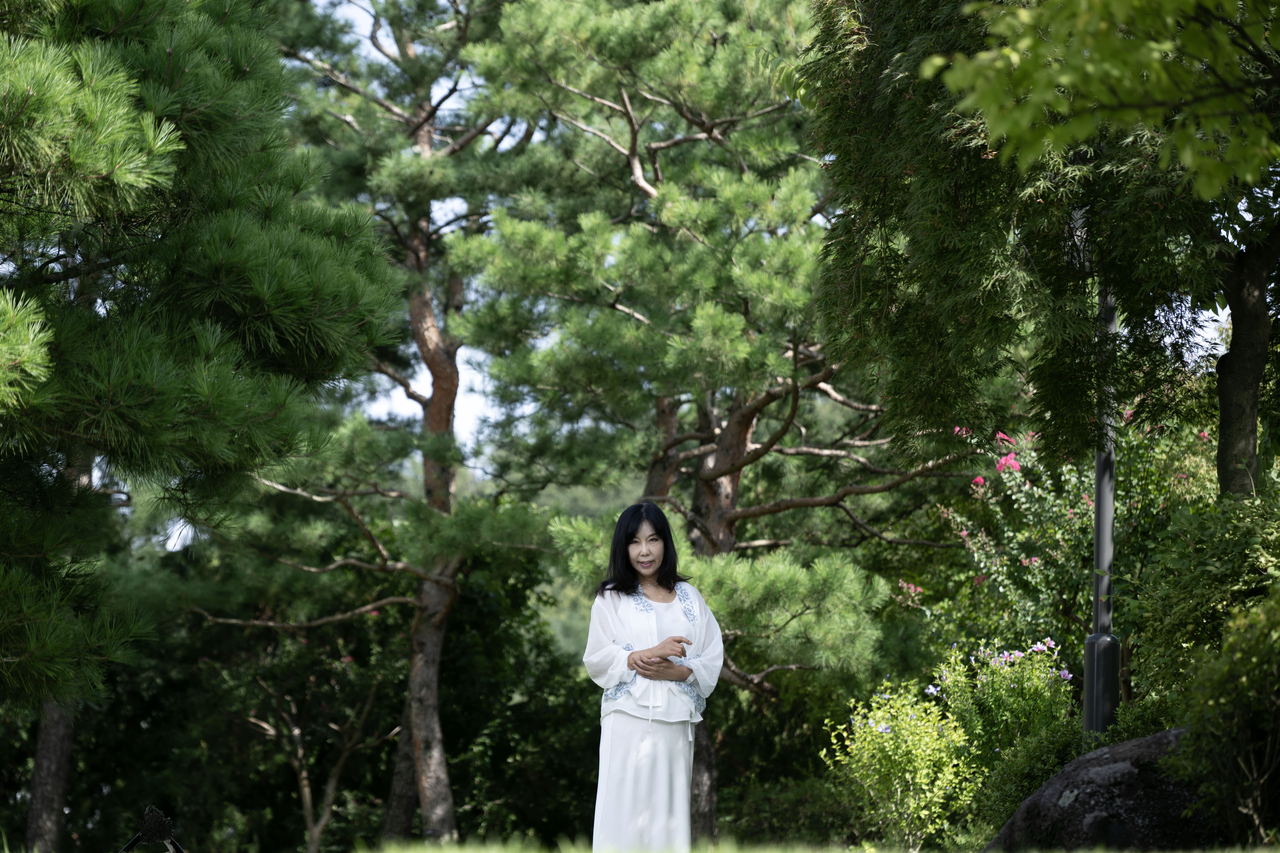
"It's the same with 'Oh Se-hoon's wife' or 'the politician's wife.' It used to be a shackle, but now I simply accept it as one circumstance given to me. That my husband receives the public's love and support is something I'm endlessly grateful for. As a family member, my denying it wouldn't change anything, and I have no reason to be swayed by that circumstance. When the production team included the phrase 'Oh Se-hoon's wife' in introducing this show, I just laughed and thought, 'What does it matter either way.'"
During her school days, eight characters were always written on the front page of her notebook: "extraordinariness within the ordinary." Having spent sleepless nights honing such an extraordinary artistic spirit, she now lets herself be carried by the natural flow of life.
"Leading with intuition rather than planning has always been both my strength and my weakness. Now, I want to trust my intuition and drift along like water. Let's live without being too happy or too sad -- I think that's the kind of person I am, someone who lived and passed like flowing water."
shee@heraldcorp.com