- Cooperation spans plant science, synthetic biology and quantum-computing drug development
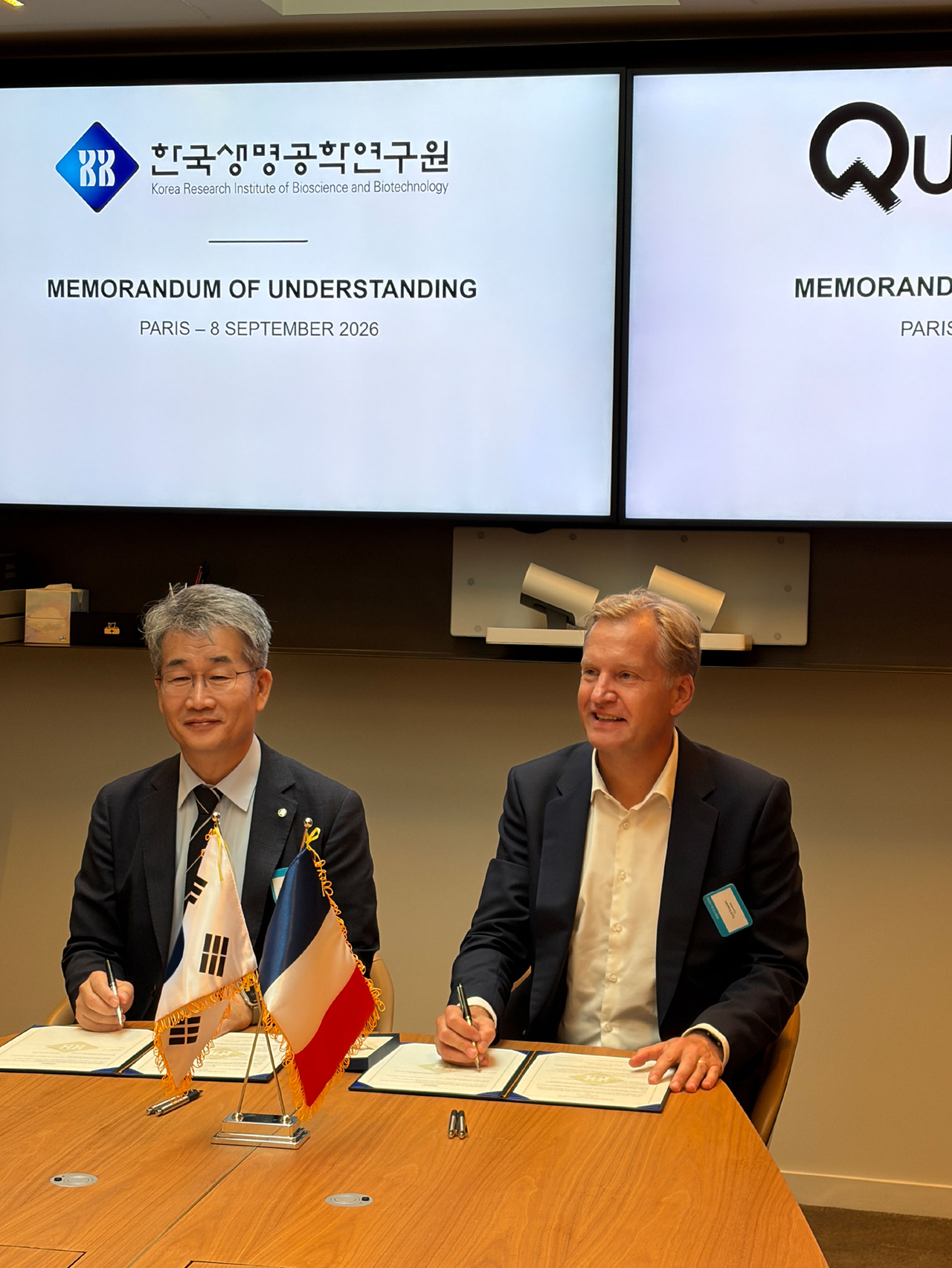
The Korea Research Institute of Bioscience and Biotechnology, known as KRIBB, is teaming up with French research institutes, universities and a deep tech company. The partnership will launch a wide-ranging joint research program spanning plant science, biotechnology and quantum computing. KRIBB is particularly focused on applying quantum computing to drug development, aiming to shorten the time and cost typically needed to identify new drug candidates. This process usually takes more than 10 years.
KRIBB signed separate MOUs with the Institute of Plant Sciences Paris-Saclay, the National Institute of Applied Sciences Toulouse and photonic quantum computing company Quandela in Paris on Monday and Tuesday, the institute said Thursday.
The agreements were reached to coincide with the president's state visit to France. KRIBB plans to build a multilayered international research network linking institutes, universities and deep tech companies across plant science, biotechnology and bio-quantum technology.
With the Institute of Plant Sciences Paris-Saclay, known as IPS2, KRIBB will expand cooperation centered on AI-based functional genomics research. KRIBB is currently conducting joint research with Seoul National University to identify the functions of non-coding RNA in plants resistant to drought and high temperatures.
The partnership with IPS2 grew out of the first KRIBB Overseas Scientific Advisory Committee meeting, held in May.
With the National Institute of Applied Sciences Toulouse, known as INSA Toulouse, KRIBB will pursue joint research in life sciences and biotechnology along with exchanges of researchers and students. The university's Toulouse Biotechnology Institute has more than 40 years of research experience in enzyme engineering and synthetic biology. It previously worked with French company Carbios to commercialize a biodegradable enzyme for PET bottles.
Quandela is a photonic quantum computing company founded in 2017, built on research from the French National Centre for Scientific Research and Paris-Saclay University. In 2023, it became the first in Europe to operate a commercial production facility for photonic quantum computers.
KRIBB and Quandela will work together to combine AI and quantum computing in biotechnology research. The goal is to reduce the time and cost involved in identifying new drug candidates, a process that on average takes more than 10 years.
"Plant science, biotechnology and quantum technology are different fields, but all are key pillars of the future bio industry," said Kwon Seok-yoon, president of KRIBB. "I hope this agreement becomes a turning point that leads to concrete joint research results."
nbgkoo@heraldcorp.com