'Joint growth of elite and community sports' ... aiming for men's, women's gold at LA Olympics
Targets 20,000 judo practitioners, 1,000 gyms by 2028
Checking competitiveness at Aichi-Nagoya Asian Games ... building total management system for national team
Linking schools and local gyms to discover young talent ... to host international coaches' academy in 2027
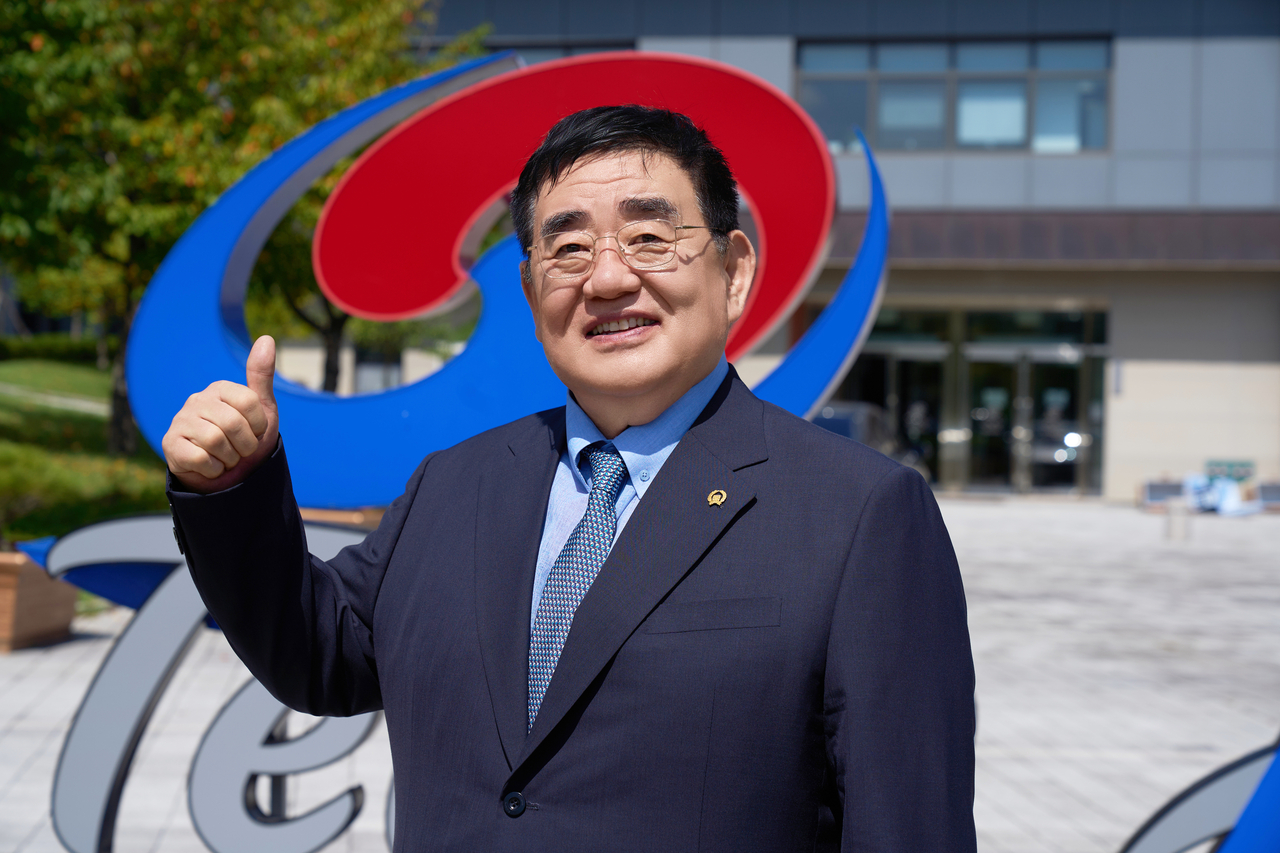
Cho Yong-cheol, president of the Korean Judo Association, has set "joint growth of elite and community sports" as a core task for a fresh leap forward for Korean judo. His plan is to break from the existing focus on national team performance alone and instead link youth talent discovery, expanding the base of amateur enthusiasts, protecting athletes' human rights, post-retirement career support, and international sports diplomacy into a single virtuous cycle.
Cho has set six management goals: winning gold medals in both the men's and women's competitions at the 2028 Los Angeles Olympics, growing the judo community to 20,000 people, expanding the number of gyms to 1,000, achieving 50 percent financial self-sufficiency for the association, establishing a "clean judo" image, and achieving zero safety accidents in sports. He is also pursuing six policies and 18 action tasks to support these goals.
In an interview held Tuesday at the Korean Judo Association's headquarters, Cho said, "Rather than putting forward any single project, my role as president is to create an environment where athletes can focus on training and where coaches and referees can exercise their expertise." He added, "I will complete the six management goals and 18 action tasks within my term to make judo a sport loved by the public."
Aichi-Nagoya Asian Games: a checkpoint on the road to the LA Olympics
The first test facing Korean judo is the 2026 Aichi-Nagoya Asian Games. Over the past two years, the Korean Judo Association has carried out a bold generational shift, boosting the performance of its newly formed national team through overseas training camps, dispatches to international competitions, partner-athlete arrangements, and the provision of sponsored equipment.
The association is analyzing each athlete's international competition results and world rankings while closely studying the technique types of major rivals. It plans to strengthen training and competitive experience tailored to each weight class, confirm the team's international competitiveness at the Asian Games, and then immediately shift into preparations for the LA Olympics.
"The Aichi-Nagoya Asian Games is a stage to check the current level of the national team and a starting point toward the 2028 LA Olympics," Cho said. "We will do everything we can so that the national anthem rings out in Nagoya as many times as possible."
The association is also changing how it manages the national team, moving beyond a focus on technique and physical conditioning alone. It is building a "national team total management system" that treats injury prevention and recovery, weight control, and psychological support as part of athletic performance. The strategy is to secure a deep pool of athletes — with current national team members and next-generation prospects competing in healthy rivalry — to move closer to the goal of winning gold in both the men's and women's Olympic events.
Beyond school teams to local gyms: widening the path to discover athletes
Judo for everyone, for life: lowering barriers to community sports
The declining school-age population and the shrinking number of school athletic teams are structural problems Korean judo must solve. The Korean Judo Association plans to move beyond the existing system of discovering athletes solely through school teams and expand a development model that links school sports clubs, local judo gyms and public sports facilities.
After breaking down the barrier between elite and amateur athletes at the elementary school level in 2021, the association has now expanded its integrated competition system to the middle school level as well. It is strengthening step-by-step support so that promising young athletes discovered through this system can grow from youth prospects through junior national team status and ultimately to the senior national team.
"The era of relying solely on school teams is over," Cho said. "We need to create a structure in which school sports clubs, local judo gyms and public sports facilities all participate together to discover talented children and systematically nurture their growth."
Rather than rapidly increasing the number of athletes in the short term, the focus is on creating conditions that allow children and teenagers to enjoy judo and train over the long term. The association is also pursuing a safe training environment, guaranteed access to education, transparent athlete selection, and career education so that parents can entrust their children with confidence.
Promoting community sports is another major pillar. The association is expanding judo beyond an elite sport measured only by competitive results into a lifestyle sport where people can also learn courtesy, self-discipline, self-defense and physical fitness.
The association is preparing a standardized, safety-focused curriculum that accounts for age, gender and training goals, and is increasing tailored programs for women, office workers, middle-aged and older adults, and families, not just children and teenagers. It is also promoting amateur competitions while improving the fairness and transparency of the belt-promotion process so that practitioners feel a genuine sense of achievement.
The Korean Judo Association currently holds six national community sports competitions each year. It also runs a program that gives outstanding amateur athletes the chance to observe international competitions. Going forward, the association plans to strengthen cooperation with regional judo associations and introduce a gym certification system and school-gym partnership programs to broaden opportunities to encounter judo in everyday life.
Cho believes that as the community sports population grows, the foundation for discovering talented athletes will expand, which in turn will strengthen the national team's competitiveness. He aims to build an ecosystem that organically links schools, local judo gyms and provincial and municipal judo associations so that elite sports and community sports can grow together.
Zero tolerance for human rights violations: institutionalizing safety and career support
Korea to host international coaches' academy in 2027
The association applies a zero-tolerance principle to athletes' human rights and safety. When violence, bullying, sexual violence or other human rights violations are confirmed, it will impose strict disciplinary action in accordance with relevant regulations and is reorganizing its complaint system so victims can seek counseling or file reports without fear of retaliation.
The association will also systematize injury prevention, emergency response, and return-to-training standards after treatment. It plans to make insurance coverage mandatory for athletes training at schools and gyms and to supplement institutional safeguards so that only qualified coaches oversee training. As the number of judo gyms has recently increased, concerns about safety accidents and human rights violations have also grown, and the association intends to reduce blind spots by strengthening its certification system and coach management.
The association is also putting effort into supporting the social transition of retired athletes. It will first actively promote participation in support programs run by the Korean Sport & Olympic Committee, and plans to benchmark related systems to develop its own career program specific to judo. It is also exploring career transition models that allow retired athletes to move not only into coaching and refereeing but also into administration, education, and the sports industry.
The association is also expanding sports diplomacy to raise Korean judo's international influence. The Korean Judo Association has more than 100 international referees and has consistently produced successful candidates in international referee examinations.
However, hosting major International Judo Federation events such as the World Championships, Grand Slams and Grand Prix events in Korea faces practical difficulties because of the large budgets required. As an alternative, the association plans to host Asia-region competitions, international training camps, and coach and referee education programs to help athletes and coaches gain high-level experience.
As a first result, Korea will host the International Judo Federation's coaches' academy in 2027. The association will also expand exchanges with the Judo Union of Asia and judo organizations from other countries, and systematically train administrators, referees and professionals who can go on to work in international organizations.
Rather than one-off visits or events, the plan is to build long-term relationships of trust through continued joint training between countries, coach training, and youth exchanges. The goal is to strengthen athletic performance, administrative capacity and international networks together to raise Korea's voice within the global judo community.
The change Cho most wants to achieve during his term is to make the association "an organization trusted by judo practitioners." He believes the association's duty extends beyond international competition results to ensuring the next generation can naturally take up judo and that athletes and coaches can grow in a fair environment.
The association will establish fair and transparent administration and actively reflect voices from the field in its operations. To resolve complaints and distrust, it also plans to expand communication channels with regional judo associations, coaches, athletes and parents.
"The future of Korean judo is to become a stage where athletes can achieve their dreams, a workplace where coaches feel pride, and a familiar sport through which the public can build both health and character," Cho said. "I will continue to communicate constantly with those on the ground and show change through action rather than words."
7toy7@heraldcorp.com