Yeongjong-gu, Geomdan-gu launched as independent districts, but new office buildings remain in limbo
Geomdan-gu needs about 200 billion won, Yeongjong-gu about 100 billion won — funding is the sticking point
State funding of 62.6 billion won excluded entirely from national budget
'Did Incheon rush the overhaul without a funding plan?' critics ask
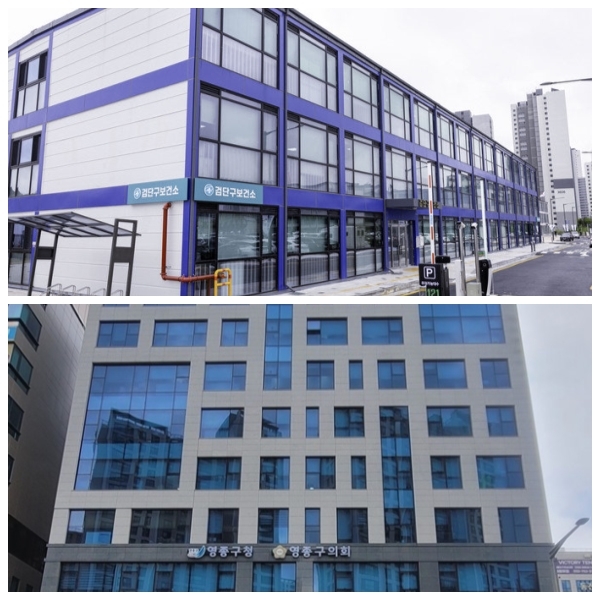
Under an administrative overhaul pursued by the eighth-term Incheon city government, Yeongjong-gu and Geomdan-gu launched as new districts in July. Securing funding for new district office buildings — key infrastructure for the newly created districts — has proven difficult, leaving the task as unfinished business for the ninth-term city government.
Making matters worse, the ninth-term Incheon city government recently requested 62.6 billion won ($46.7 million) in state funding tied to the new districts, but the entire amount was left out of next year's government budget proposal. That raises the likelihood that Incheon and the new districts themselves will have to shoulder the financial burden.
Incheon had planned to secure 62.6 billion won — about a quarter of the construction cost for the two new office buildings — and direct it toward infrastructure in the new districts, including roads, sports facilities and cultural facilities. The focus was on Geomdan-gu and Yeongjong-gu, which urgently need new headquarters and lack resident amenities.
The central government rejected Incheon's request, citing the absence of any precedent for providing state funding for basic local government office buildings or resident infrastructure.
Critics say the eighth-term city government, which originally planned to reorganize the region's administrative structure from two counties and eight districts to two counties and nine districts, pushed ahead with the overhaul without reaching a concrete agreement on the scope and method of financial support.
Geomdan-gu has picked a site, but the 200 billion won question remains
Geomdan-gu has put to rest, for now, the controversy over its new office site. The district settled on Business Site 14 near 688 Bullo-dong as the location for its new headquarters and plans to commission a feasibility study under the Local Finance Act this month.
Geomdan-gu, which will use its temporary office until December 2031, now faces a funding problem. The cost of building its new headquarters is estimated at roughly 200 billion won.
Even before it officially opened, Geomdan-gu had asked Incheon for city funding to build its new headquarters, but no concrete funding plan has been finalized.
The district has resolved its first challenge — where to build the new headquarters — but a bigger question remains: who will pay how much to build it.
Yeongjong-gu faces a similarly difficult situation. Since launching on July 1, the district has been operating out of eight leased floors in a private building in Jungsan-dong as its temporary office, under a lease running through December 2030.
Yeongjong-gu plans to build its new headquarters on a site in Unnam-dong before the temporary office lease expires. Administrative procedures are already underway, including a feasibility study costing 150 million won.
Securing the temporary office itself is expected to cost about 1.9 billion won. Yeongjong-gu faces substantial costs just to operate its temporary headquarters, even before construction of a permanent one begins.
Yeongjong-gu started in a temporary office — and a permanent one remains a distant prospect
Although Yeongjong-gu has officially launched, it will take considerable time before residents have the full-fledged district office they expect.
That is why some argue it is too simple to describe the situation as merely "delayed construction."
The overhaul of Incheon's administrative structure was launched in 2022 under the eighth-term city government. After gathering resident input and gaining local council approval, related legislation passed the National Assembly in 2024, finalizing the plan. Yeongjong-gu, Geomdan-gu, Jemulpo-gu and Seohae-gu then launched on July 1.
The goal of the overhaul was to resolve the mismatch between residents' actual living areas and administrative boundaries, and to respond to growing administrative demand.
But creating new districts requires more than just redrawing administrative boundaries.
Getting a new administrative system up and running requires enormous upfront costs — for office buildings, organizational structure, personnel, information systems and resident facilities.
In practice, Incheon has been preparing to secure temporary offices for Yeongjong-gu and Geomdan-gu since 2025, and has said that building the new headquarters would require a mid- to long-term timeline.
Even so, the funding issue resurfaced after the launch, once the entire 62.6 billion won in state funding was excluded from the budget.
Geomdan-gu's new headquarters alone is expected to cost about 200 billion won, and Yeongjong-gu's more than 100 billion won. The financial burden is far from trivial for the new districts to bear on their own.
That said, it is too early to call the administrative overhaul a failure.
There is a clear policy rationale for splitting off Geomdan, where the population has surged, into its own district, and for building an independent administrative system for Yeongjong, where the mismatch between the existing administrative boundary and residents' actual living area was significant.
"Administrative boundaries are drawn — but offices and funding start from here?"
The question is not whether the overhaul was necessary, but how thoroughly the financial planning was prepared to actually put it into practice.
The central government has already signaled reluctance to provide state funding for office construction. That makes it hard to avoid the criticism that Incheon should have negotiated more concretely with the central government over cost-sharing from the very start of the overhaul.
If the eighth-term Incheon city government created the broad framework for the administrative overhaul, calls are growing that the ninth-term city government must now shoulder much of the follow-up responsibility.
Even after the new districts launched, began operating out of temporary offices and settled on sites for their new headquarters, they still must come up with construction costs running into the hundreds of billions of won.
The administrative boundaries were successfully drawn, but the funding and headquarters needed to make those boundaries function have been pushed to the next administration.
Whether the administrative overhaul ultimately succeeds will depend not on the launch ceremonies for the new districts, but on how convenient the administrative services residents actually receive turn out to be, and whether the new districts establish themselves as financially sustainable units going forward.
That is why critics say Incheon and the central government need to offer a mid- to long-term solution now — on how to share the new districts' initial financial burden and how to fund construction of their new headquarters.
gilbert@heraldcorp.com