2026 Korea Herald HIT Forum held
JPMorgan's Trevis leads panel discussion
'Better to be a big fish in a small pond than a small fish in a big pond'
Institutional investors put money into Korea as part of emerging-market strategy
Developed-market status would pit Korea against US, Europe for capital
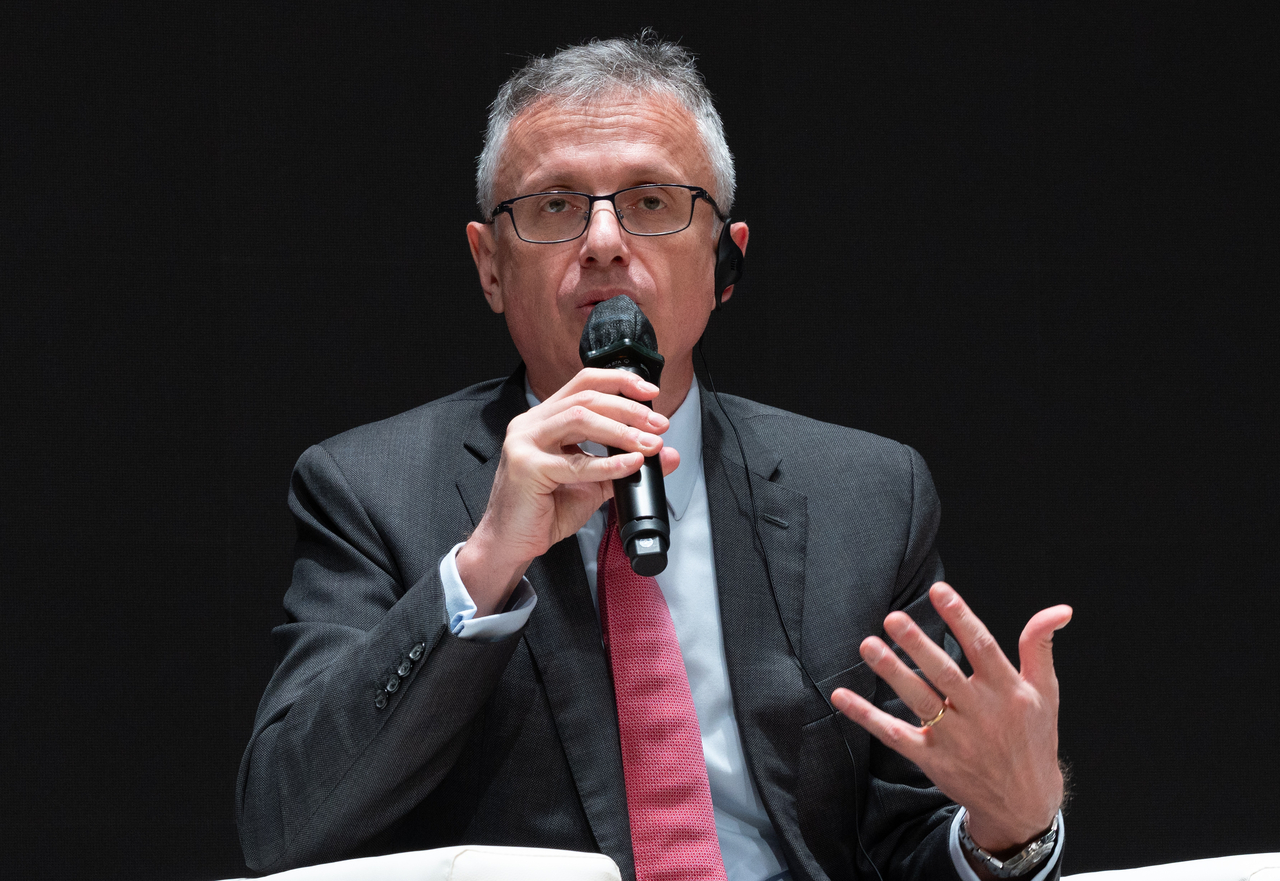
Korea's push for MSCI (Morgan Stanley Capital International) developed-market status could end up costing the country more than it gains, industry experts warned, even if the reclassification eventually goes through.
The 2026 Korea Herald HIT Forum was held at the Korea Chamber of Commerce and Industry's international conference hall in Jung-gu, Seoul, on Tuesday. There, global asset management figures cautioned that losing emerging-market status could actually weaken Korea's presence in global investment portfolios.
"From an investability standpoint, Korea's move from 'emerging' to 'developed' status may not necessarily be a good thing," Alexander Trevis, managing director at JPMorgan Asset Management, said during a panel discussion titled "Can Korea Become a Key Destination for Global Capital?"
Korea has long pushed for inclusion in the MSCI developed-market index as part of efforts to align its market infrastructure with global standards and improve access for foreign investors.
The country had hoped to be added to MSCI's watchlist for developed-market status in late June, a required first step, but the bid ultimately failed. A country must remain on the watchlist for at least a year before it can be formally reclassified. The government is now expected to intensify policy reforms with the aim of securing a spot on the watchlist by June 2027. It aims to achieve formal inclusion in the developed-market index by 2028.
MSCI classifies countries' stock markets as developed, emerging or frontier based on factors including economic development, market size and liquidity, and investor accessibility.
Trevis noted that many institutional investors currently put money into Korea as part of a broader "global emerging markets" strategy.
"If Korea is reclassified as a developed market, its stock market would have to compete for investor attention and capital with the much larger US and European markets," Trevis said. "Wouldn't it be better to remain one of the biggest fish in a small pond, rather than become a small fish in a huge pond?"
Trevis also said the binary framing of "emerging" versus "developed" markets was itself "not healthy."
Trevis, a Briton who has lived in Asia for 30 years, drew on personal experience to make his point. "When I go back to the UK, the subway barely works, and you can get your phone snatched if you pull it out carelessly on the street," he said. "Yet the UK is called a 'developed' country, while in Korea, you can leave your bag or phone at a cafe table and step away, and no one will touch it -- the country's social infrastructure and safety are already at a 'developed' level."

Frank Benzimra, head of Asia equity strategy at Societe Generale, said his firm had simulated what would happen if MSCI moved Korea from emerging- to developed-market status. "All else being equal, the result showed a certain level of capital outflow, which runs counter to the conventional expectation inside and outside the market," he said.
Benzimra pointed to low liquidity and high volatility as obstacles to Korea's transition to developed-market status. "Despite the large number of companies listed in Korea, it remains questionable how many of them actually have sufficient liquidity," he said.
"Since the Kospi's sharp rally, volatility has actually increased, so Korea needs to show more stability in its exchange rate and stock market," Benzimra added. "The debt management and liquidity capabilities of listed companies also need to be examined together."
However, Benzimra said the Kospi's rally this year, which pushed the index past the 9,000 mark, was "the most surprising performance I have seen since I started working in finance." He added that this points to significant room for further market improvement.
"I have never seen a case where earnings and returns improve this dramatically at the same time," Benzimra said. "The way pricing works in the Korean market has fundamentally changed, and from a financial and equity investment standpoint, the re-rating premium is an extremely important factor."
Citing Japan, where clear re-rating signals have been evident over the past two years as the market undergoes reassessment, Benzimra pointed to similar prospects for Korea. "There is a strong chance a similar re-rating could take place in the Korean market as well, and I expect that trend to actually materialize going forward," he said.
jiyun@heraldcorp.com