Presents business status at Citi Global TMT Conference
'AI investment still at very early stage': demand for AI chips remains strong
Orders for Helios, powered by Samsung's HBM4, exceed expectations
'HBM supply is very tight, working to secure it'
Considers foundry diversification: 'will review every supplier's technology'
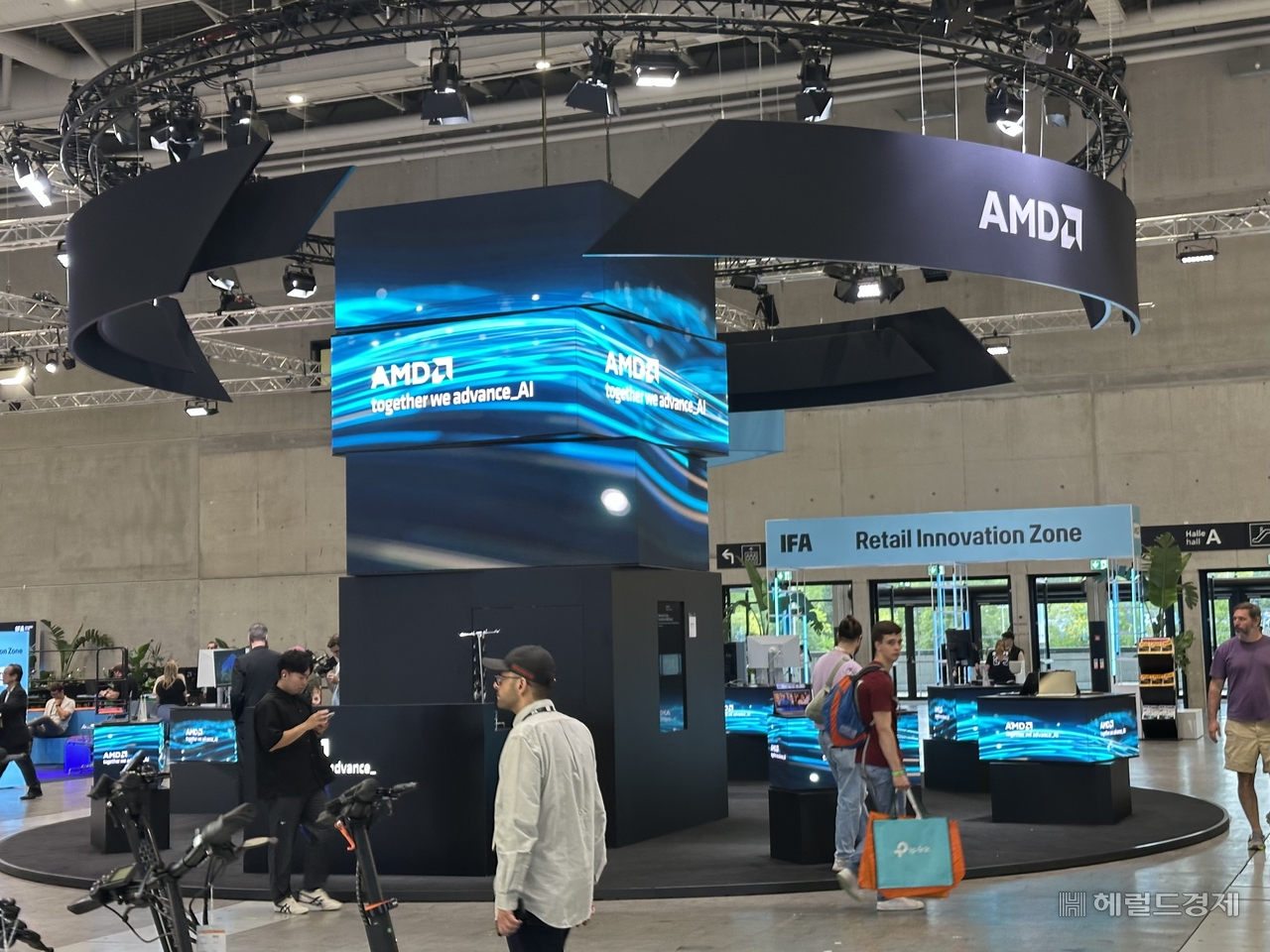
AMD, the world's second-largest AI accelerator maker after Nvidia, has warned of a shortage of high-bandwidth memory (HBM). The company is preparing to ramp up production of its latest AI accelerator, the MI450 series, starting next month.
The MI450 series, equipped with Samsung Electronics' sixth-generation HBM4, is expected to drive AMD's earnings growth next year. However, securing enough HBM and other memory chips to support its performance remains the key challenge. With demand for HBM still running strong, Samsung Electronics is expected to retain the upper hand in price negotiations.
AMD, which produces its AI accelerators and central processing units in partnership with Taiwanese foundry TSMC, drew a line on the possibility of using Intel Foundry, citing quality and advanced packaging capabilities.
According to industry sources, Jean Hu, AMD's senior vice president, spoke at the 2026 Global TMT Conference hosted by Citigroup on Tuesday (local time). She said the AI super investment cycle "is still at the very beginning" and that demand for AMD's products would remain strong.
Helios, the next-generation AI infrastructure platform that AMD positions as a rival to Nvidia's AI superchip Vera Rubin, officially began mass production in July. Hu expressed confidence that Helios sales would surge in the fourth quarter and keep growing into 2027.
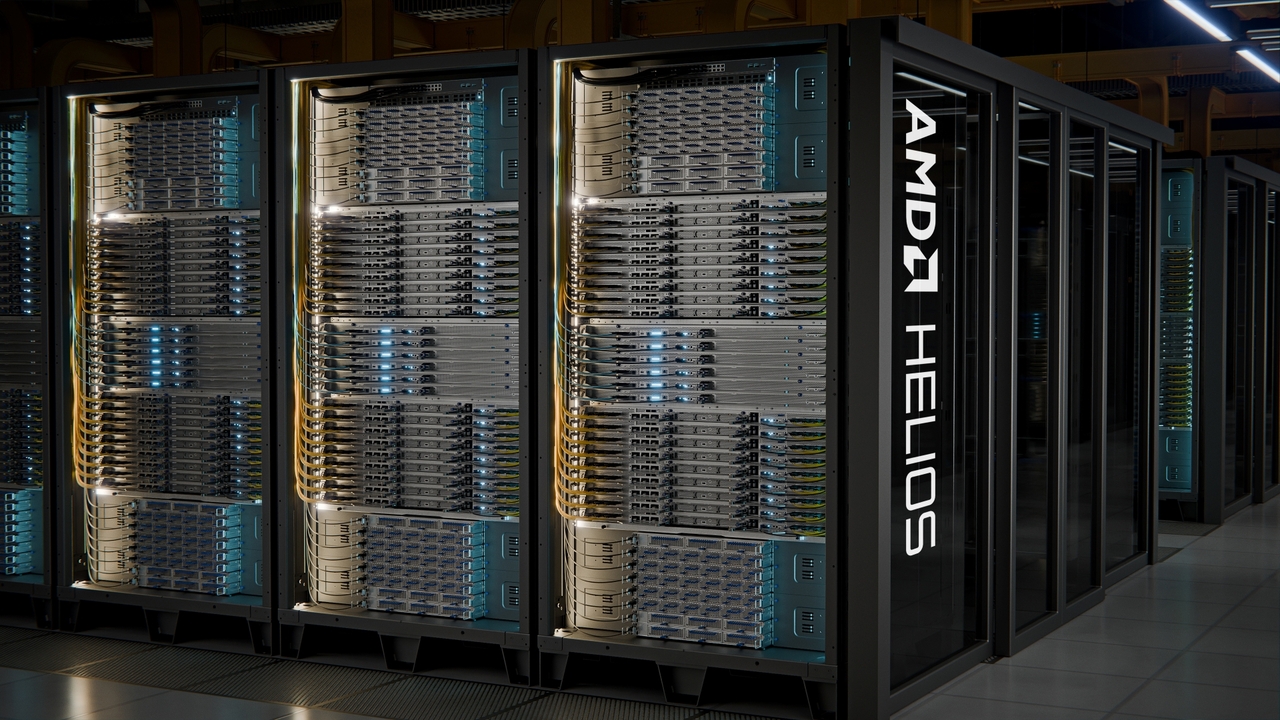
Helios, equipped with AMD's new AI accelerator MI455X, requires 432 gigabytes of HBM4 — 50 percent more capacity than Nvidia's Vera Rubin.
"Orders for Helios in 2027 have exceeded our original expectations," Hu said. "We need to expand supply, but the supply of components such as HBM and semiconductor substrates is very tight, and there are also constraints on advanced packaging capacity."
She added that AMD was working with all its partners to secure the various components it needs.
With Samsung Electronics supplying HBM4 for the MI455X, AMD's push to expand Helios sales is expected to further intensify the HBM supply crunch, observers say.
Hu said even AMD's older AI accelerator, the MI350, which uses fifth-generation 12-layer HBM3E, was still seeing strong demand.
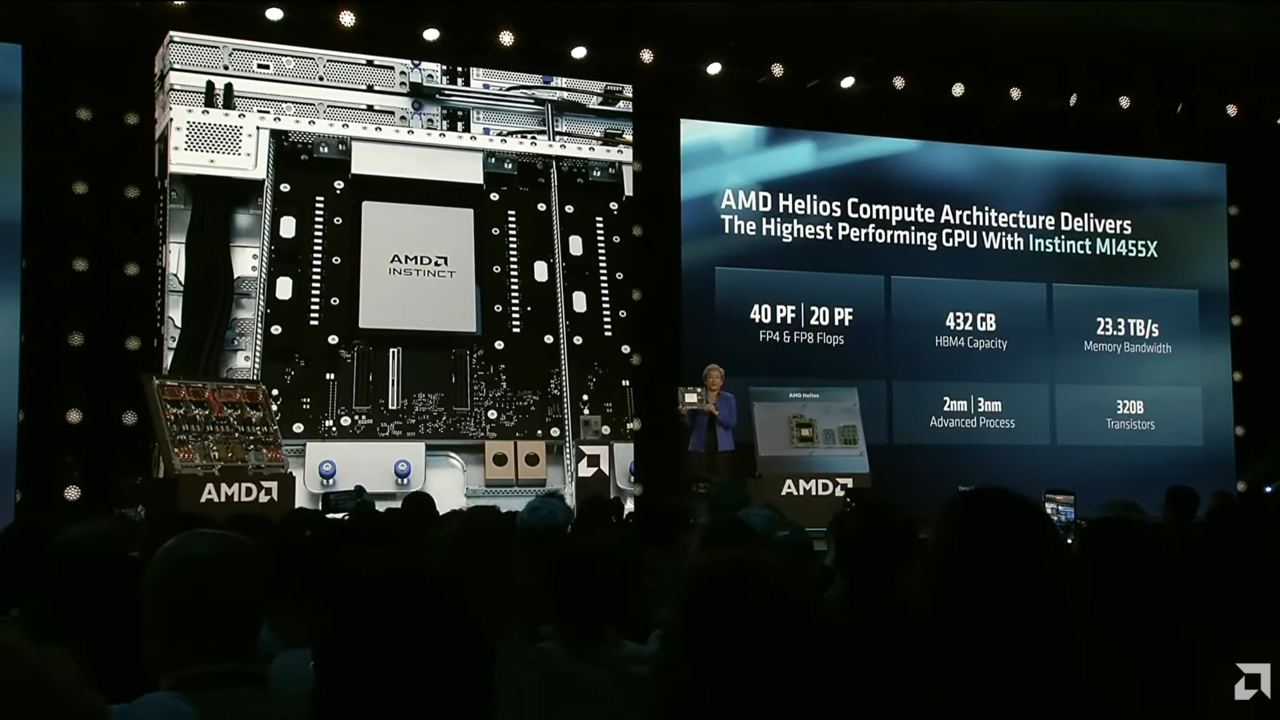
AMD signaled a somewhat negative stance toward outsourcing future production to Intel Foundry. Currently, all of AMD's products, including its latest CPU, Venice, and its AI accelerators, are made using TSMC's advanced foundry processes.
However, as orders from multiple companies for AI chip production have piled up at TSMC, causing supply disruptions, Samsung Electronics and Intel Foundry have emerged as alternatives.
In fact, companies including Nvidia, Tesla and Apple have recently chosen Samsung Electronics as a foundry partner to diversify their supply chains. AMD, too, has reportedly been in talks with Samsung Electronics over adopting its 2-nanometer process.
Hu said the same day that "TSMC is not just a supplier but a very close partner in terms of R&D as well," adding that "TSMC will remain AMD's primary supplier."
She added that "the most important things are product quality, advanced process technology and 3D packaging, and they need to be able to reliably support everything we are pursuing."
However, Matt Ramsay, an AMD vice president who was also present, left room for foundry diversification. "When it comes to technology related to advanced packaging or advanced wafers, please understand that we will review and conduct due diligence on the technology of every supplier in the market," he said.

joze@heraldcorp.com