Six gunshots, two missing bullets
A mystery drama built around the assassination of a first lady
Faces of those who resisted an era of oppression
An all-star cast led by Jung Woo-sung, Park Jung-min and Uhm Tae-woong
Director Heo Jin-ho's new film "The Assassin(s)," which opens in theaters over the chuseok holiday, carries an unusual feature rarely seen in a movie title: parentheses. Its English title, too, carries the same parentheses without exception: "The Assassin(s)." Audiences confronting this unfamiliar title may naturally wonder why. Why did the film take the gamble of putting the plural suffix in parentheses, as if the possibility exists and does not exist at the same time?
Many words carry weight in their plural form, but "assassin" in particular becomes explosive once pluralized. The moment the most heinous and grave of crimes turns out not to be the work of one person alone, the question grows far more complex and enormous than simply one or two. That is especially true when the target of the assassination is a first lady.
By this point, the answer is already clear. Was the shocking incident that rocked the entire nation more than 50 years ago truly the act of a lone Korean-Japanese youth, or was there a larger force behind him, using him as a pawn? This question, which lingers throughout the film, is exactly what that single letter trapped in parentheses is trying to say. "The Assassin(s)" is the first film in Korean cinema history to tackle the mystery surrounding the assassination of a first lady in 1974.
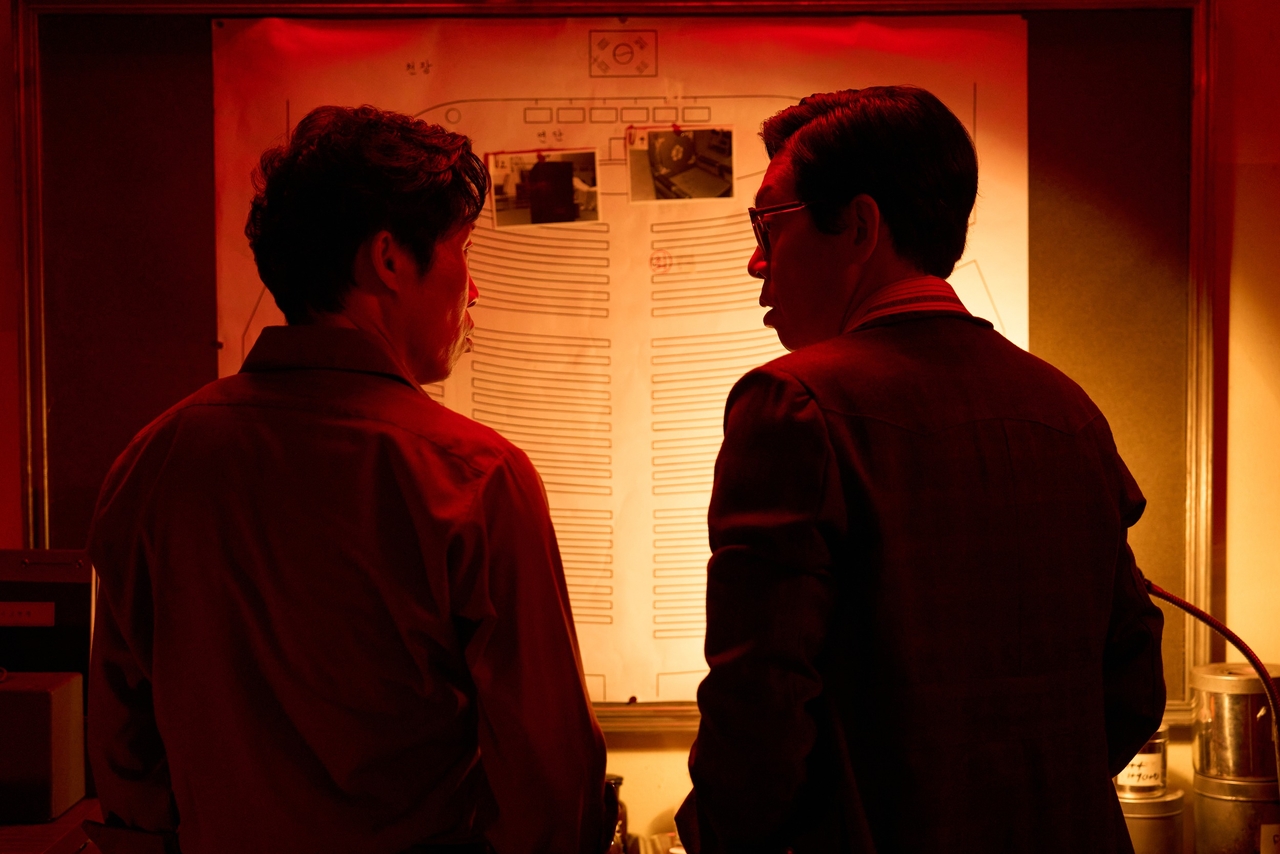
"The Assassin(s)" is a chase thriller that follows those pursuing the truth behind the shooting that took place during that year's Liberation Day ceremony. Using the still-unresolved questions of that day — questions that have lingered for half a century — as its spark, the film fills in the missing pieces with cinematic imagination.
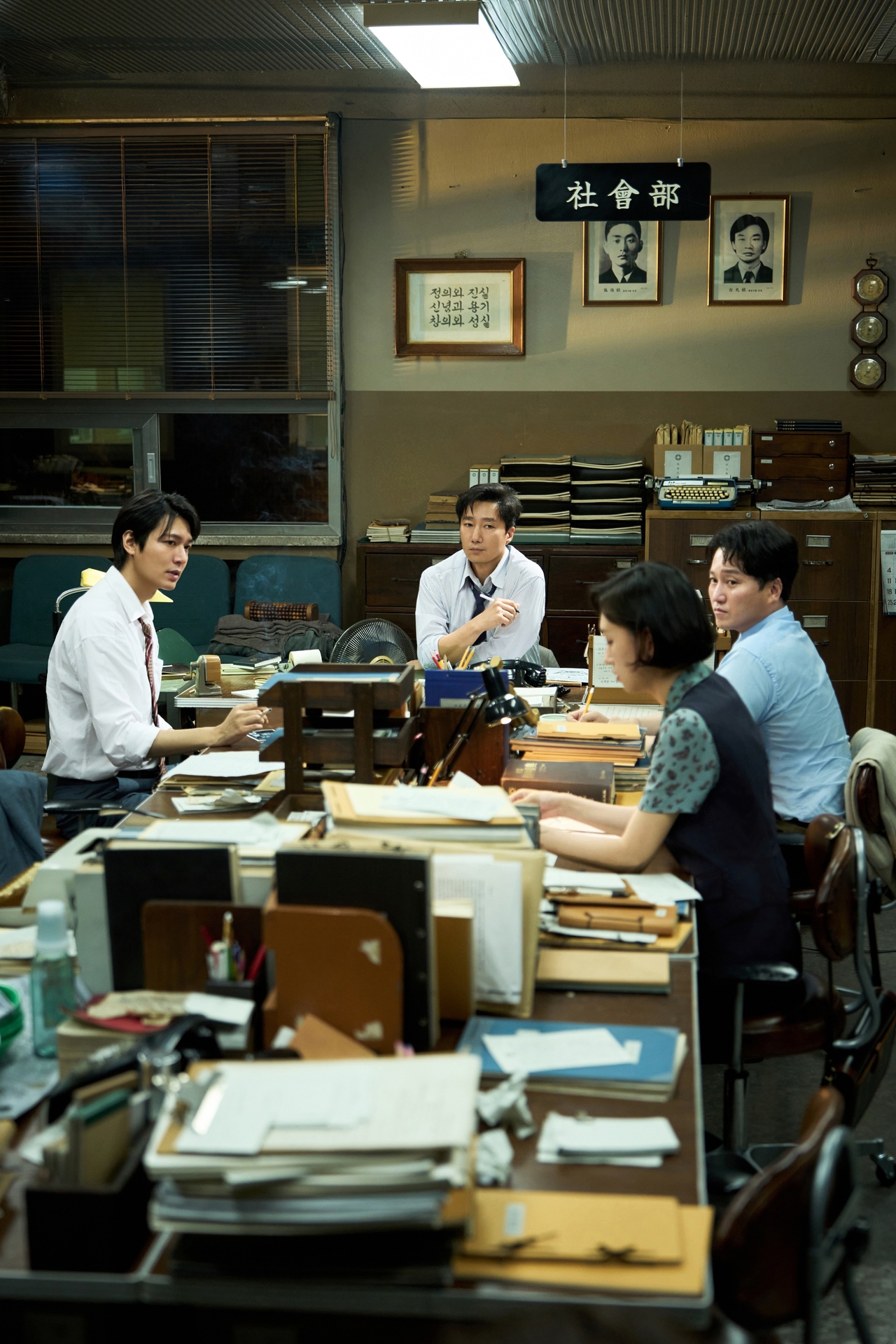
The film weaves together roughly four sets of interests: a man who pulled the trigger on the head of state; a government that did not hesitate to trample its own citizens in the name of patriotism; police officers who moved on the government's orders; and a press that relentlessly pursued facts and truth in the face of censorship. Among them, the film follows the choices and actions of Cheolgu (Yoo Hae-jin), a police inspector from Jungbu Police Station who was at the scene; Jaehwan (Park Hae-il), a veteran city desk editor at Dongsung Ilbo; and Youngil (Lee Min-ho), the newspaper's youngest reporter who dives into the story alongside Jaehwan — drawing closer to a truth that someone may have deliberately buried.
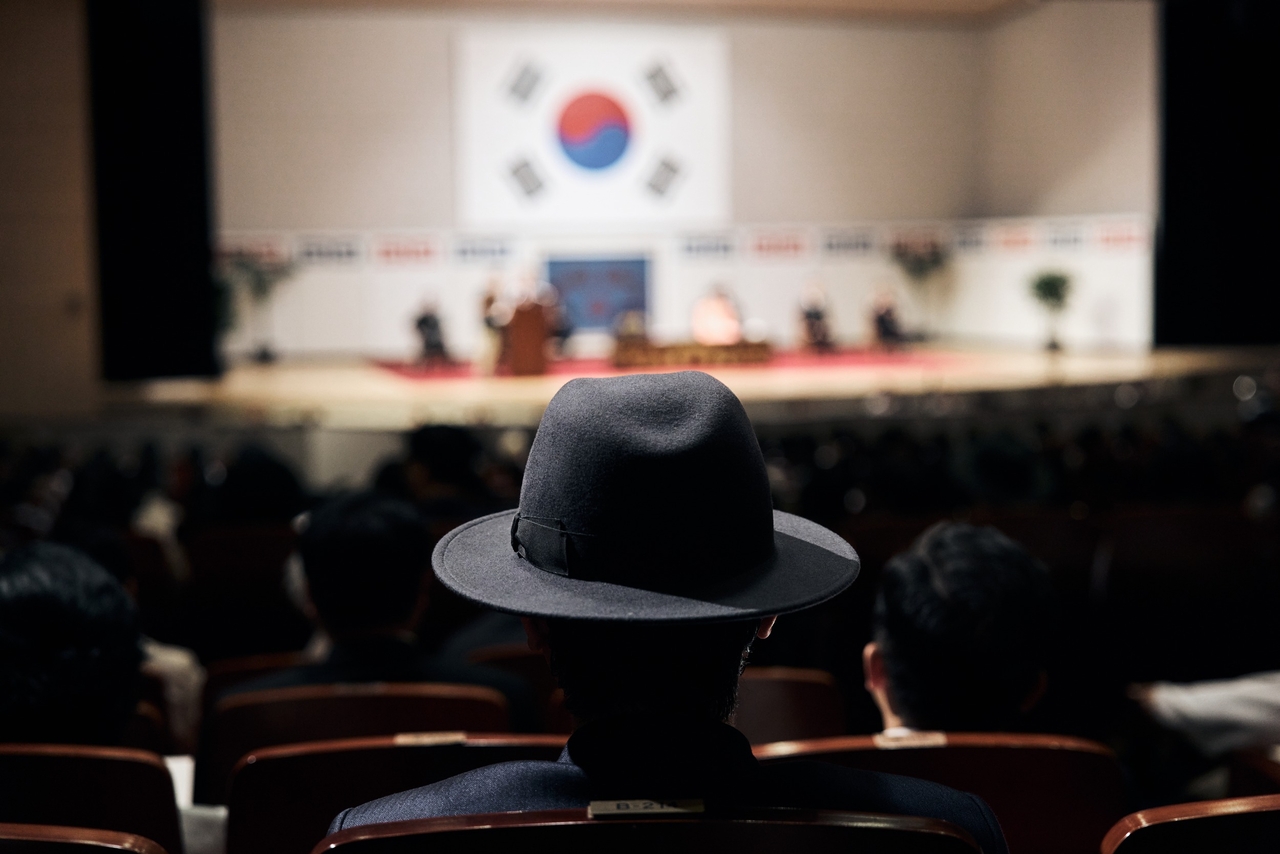
The story of "The Assassin(s)" begins with six sharp gunshots that suddenly ring out inside the National Theater just as the ceremony gets underway. A man pulls a gun from inside his coat, rushes toward the podium and fires repeatedly, and the first lady, seated beside the podium, slumps in her chair. The scene descends into chaos, and the assailant is subdued on the spot. Cheolgu, the police officer in charge of security for the event, and Youngil, the reporter covering it, both witness the incident with their own eyes, unable to believe what they are seeing. Cheolgu had tried to stop the man from entering without a pass, but the head of the presidential security detail (Uhm Tae-woong) let him in anyway. Cheolgu is then stunned to learn that the man was none other than the gunman.
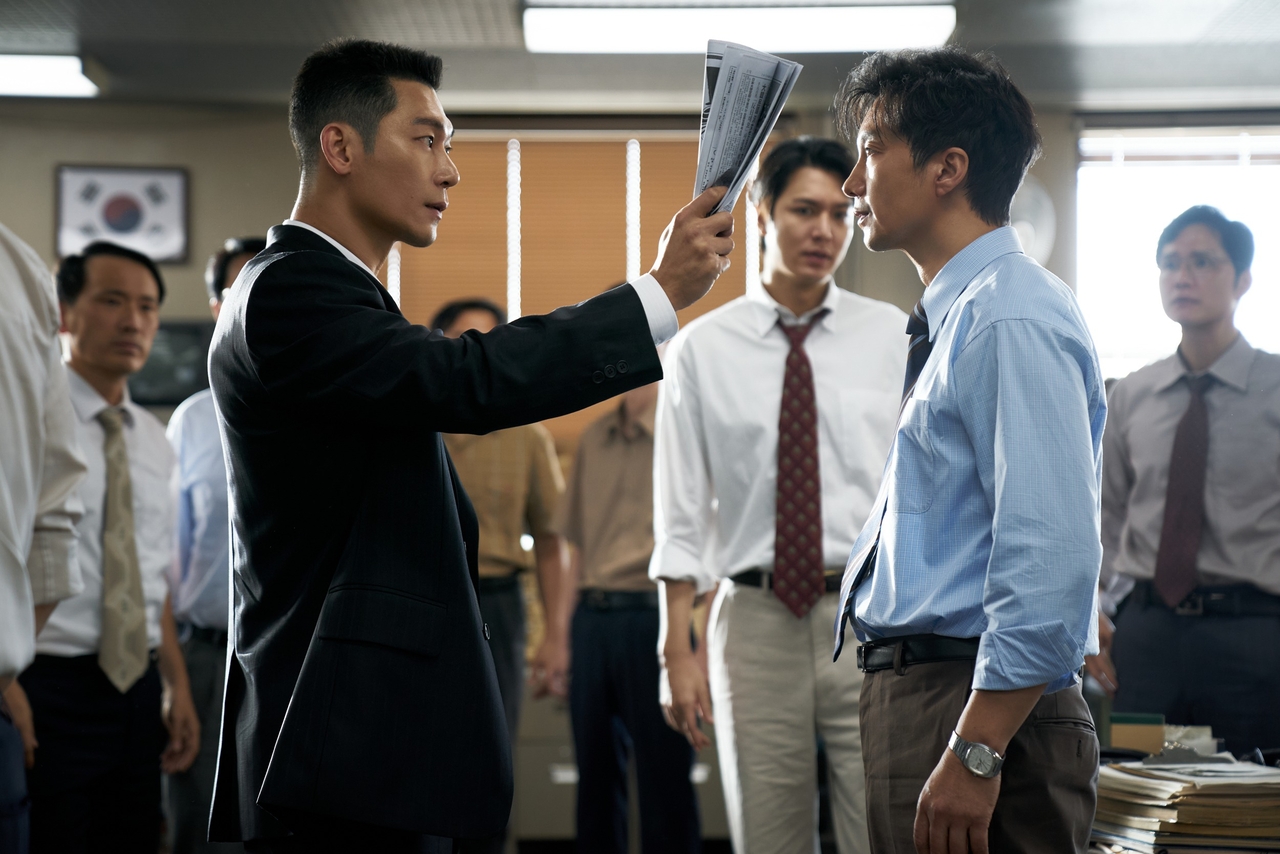
That day, Jaehwan, the city desk editor who was as usual locked in a battle of nerves with the censors, learns of the shocking incident through a live television broadcast. Youngil tells him that the first lady has been shot, and that a high school student sitting in the audience was also shot and taken away. Under Jaehwan's direction, all of Dongsung Ilbo's reporters are mobilized to cover the shooting, and in the meantime, both the first lady and the student die.
Within hours, the authorities announce that the gunman is Mun Se-gwang, a Korean-Japanese man affiliated with Chongryon, a pro-Pyongyang organization of ethnic Koreans in Japan. Jaehwan senses something is off in the briefing's suspiciously well-prepared delivery and the air of concealment surrounding it. Cheolgu, angered that all the blame for the security lapse is being pinned squarely on him and his colleagues, digs deeper into the case. He eventually discovers that although six gunshots rang out at the scene, only four bullets were ever found, and that the gunman had been accompanied by another man before the shooting. Cheolgu shares what he has uncovered with Jaehwan.
The baffling circumstances and evidence ultimately point to a single conclusion: the shooting was not the work of a pro-North Korean sympathizer acting alone. So who was the man with Mun Se-gwang? Did Mun really plan and carry out the attack by himself? And who exactly is the force persistently obstructing those chasing the truth?
One clue gives rise to another question, and each new question pulls the characters further toward the center of the case. "The Assassin(s)" adds the rhythm of a period drama to its mystery-chase framework, sustaining the tension all the way to the end. A string of suspicious circumstances — the head of presidential security letting the gunman into the venue, the authorities announcing his identity before he even speaks, forensic investigators being barred from the scene — pushes the audience into a labyrinth from which there seems to be no easy escape. As the story makes clear that nothing is quite as it appears, viewers find themselves walking, alongside the characters, deeper and deeper into the heart of the mystery.
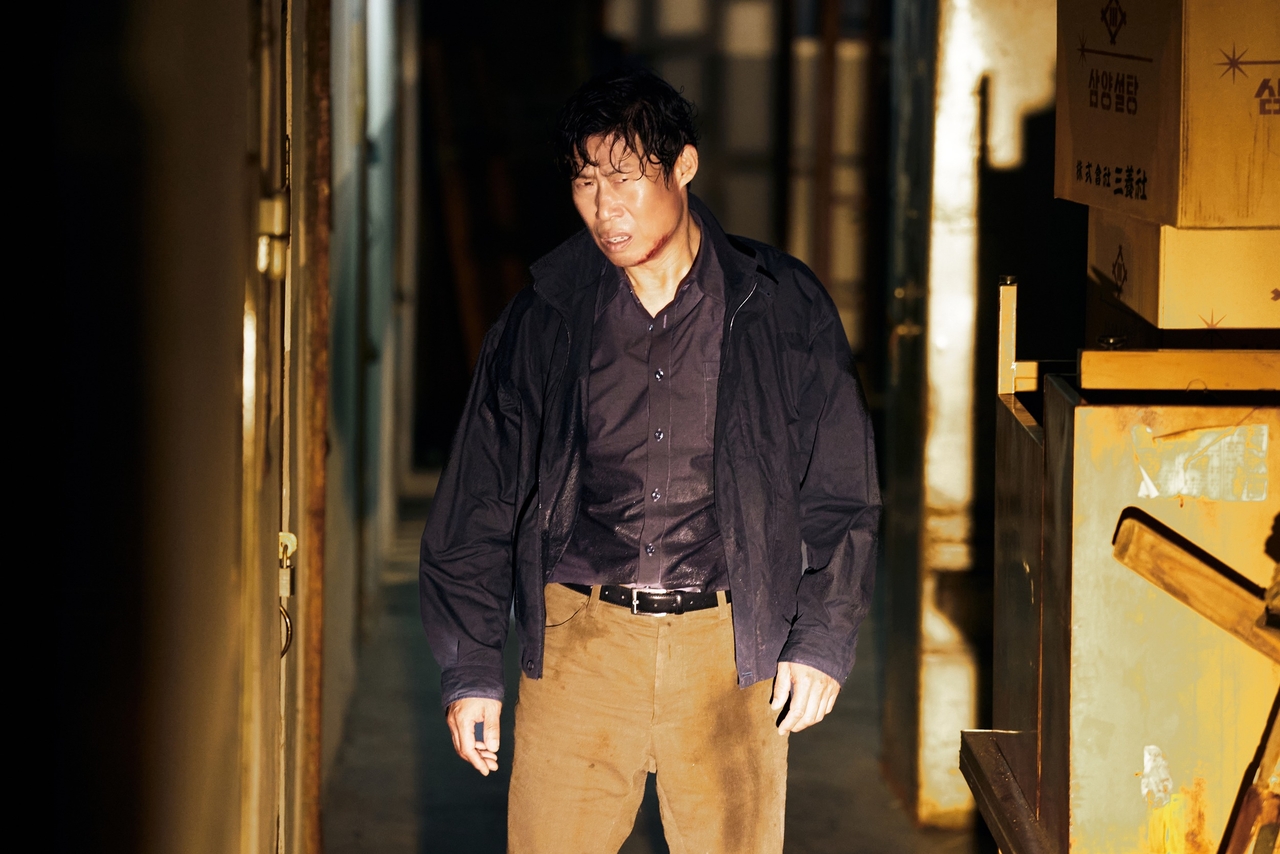
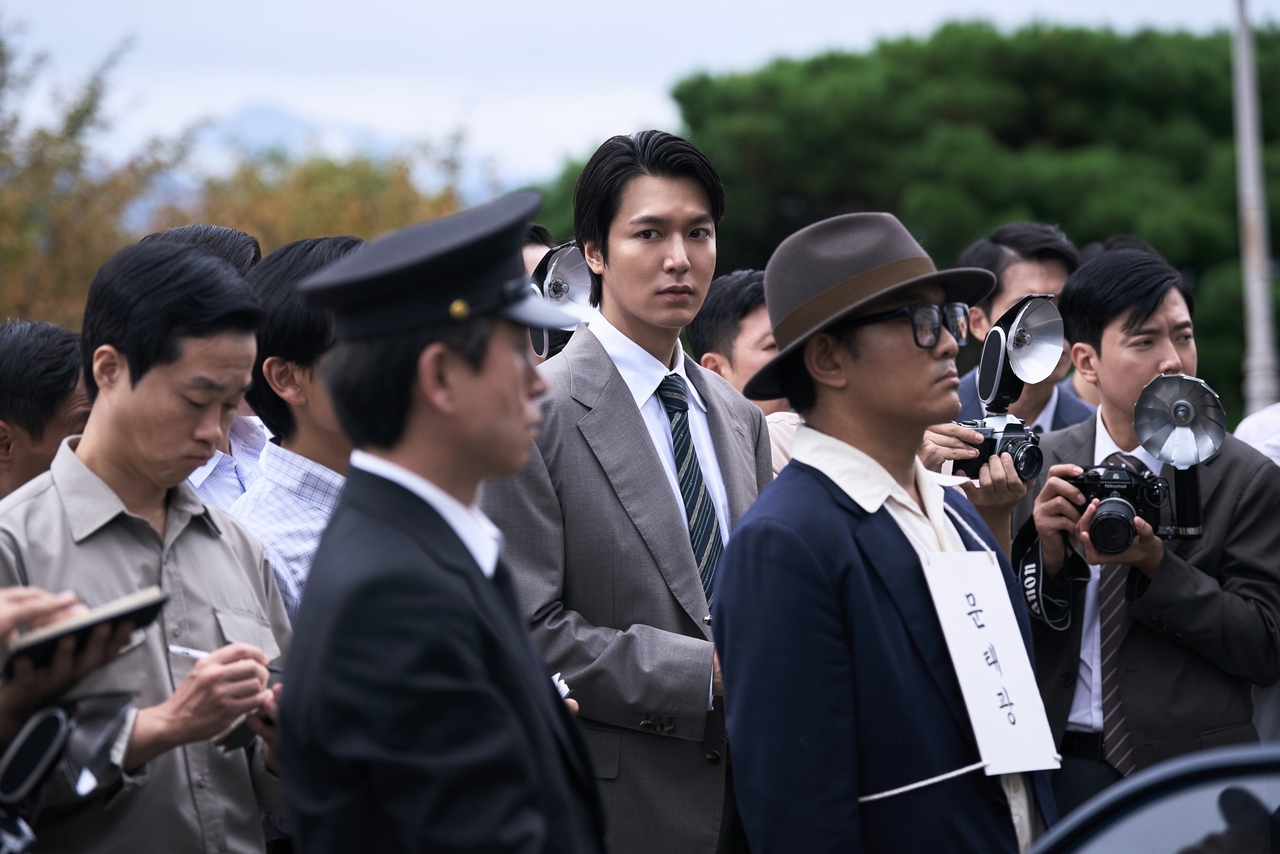
The portrayal of an era in which state violence was dressed up as patriotism forms the backbone of the film's narrative. From the turbulent color and atmosphere of the 1970s to the newsroom where censorship was routine, every frame conveys the oppression and tension of the period without a word of dialogue. It was a time when an offhand joke could get someone branded a communist and dragged off to Namsan. It was an era when tyranny was justified under the name of the Yushin system, and the country held its breath under the blade of emergency decrees. The film's mise-en-scene, evocative of press photography, signals that it is not simply romanticizing that era through nostalgia. It reads less like a summoning of memory and more like testimony to a time when unchecked power bore down on this land.
While "The Assassin(s)" digs into an unresolved mystery at its core, it also renders, in detail, the faces of those who refused to bow during that ruthless era. Within it lies the unvarnished truth of a time that was colder and hotter than ever before, even as the nation raced up an unprecedented ladder of growth. Voices that were shaped and silenced by the state under slogans of patriotism and love for the people, and the struggle of those who nonetheless refused to yield, run through the entire film.
Cheolgu, who had lived believing that working for the state was patriotism, begins for the first time to doubt the very thing he had been loyal to, after the state he tried to protect saddles him with the blame for the case. Jaehwan, Youngil and the other Dongsung Ilbo reporters keep running into the wall of censorship and outside pressure the further they dig, yet they never give up their resistance in pursuit of honest journalism. The film reminds us that the era when the basic rights of freedom and truth vanished feels like a distant past only because there were those who ceaselessly resisted to protect them.
Even so, the film never lets go of the "assassins," plural, until the very end. Much of the credit for making that plural possible belongs to the director's casting choices. Lead-caliber actors — including Jung Woo-sung, Uhm Tae-woong, Park Jung-min and Yoo Yeon-seok, as well as Shim Eun-kyung, Oh Dal-su, Park Sung-hoon, Bae Seong-woo, Oh Jung-se and Shin Hyun-been — all signed on for brief appearances.
Each actor's individual gravitas ensures that their presence lingers over the truth of the story, even in the briefest of appearances. Every time one of them appears on screen, the possibility that the character could be one of the accomplices refuses to leave the viewer's mind. In the end, the film puts nearly every face on screen under potential suspicion, keeping the audience from fully trusting anyone as it chases the case to its conclusion. That said, the risk that these familiar faces, appearing without warning, could disrupt immersion cannot be entirely ruled out.
The performances of the leads — Park Hae-il, Yoo Hae-jin and Lee Min-ho chief among them — hardly need explaining. In particular, the desperation and resolve that Park Hae-il, returning to the screen after four years, brings to Jaehwan leave a lingering impression. The political and diplomatic interests of the era are woven tightly into the film's cinematic imagination, but that does not make the film feel purely heavy. The brisk pace typical of a chase thriller, along with the quick back-and-forth banter between the cast, lightens that weight just enough.
Walking out of the theater, a question that refuses to fade lingers in the mind: could there still be an "s" out there that we have failed to notice? With its compelling subject matter, a cast audiences can trust, and the weight befitting a period drama, all combined in just the right measure, "The Assassin(s)" seems more than qualified to fill theaters this chuseok season on the strength of that one question alone. The film opens Sept. 23 and is rated 12 and up.
balme@heraldcorp.com