US-Iran attacks on vessels fuel fears of prolonged Middle East supply disruption
Crude shipments through Strait of Hormuz plunge from prewar levels, Goldman warns of $120 risk
Is $100 oil back? Fears of renewed inflation grow
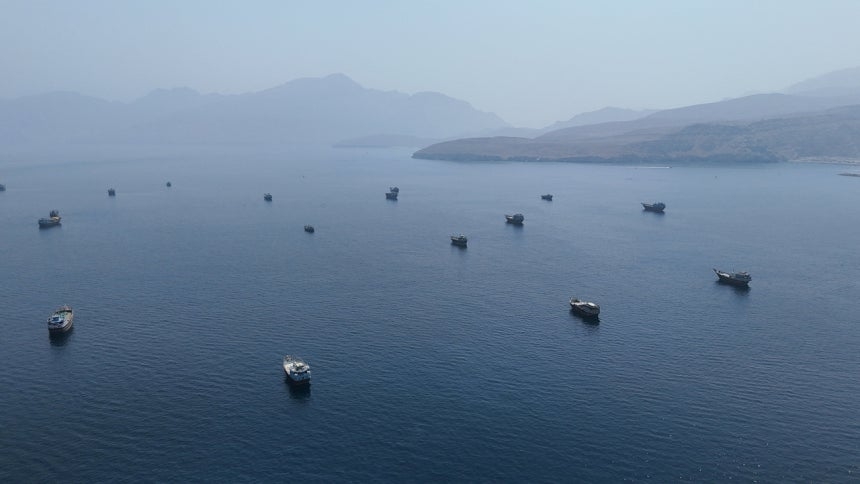
International oil prices jumped more than 3 percent as the armed conflict between the United States and Iran intensified once again. Brent crude, the global benchmark, broke above $100 a barrel, reaching its highest level in about four months. Escalating attacks around the Strait of Hormuz — a critical chokepoint for global crude shipments — are driving fears that Middle East supply disruptions could persist.
Brent crude for November delivery closed at $101.21 a barrel on the ICE Futures Europe exchange in London on Wednesday (local time), up $3.29, or 3.36 percent, from the previous session. Prices climbed as high as $101.58 during trading. The closing price was the highest since May 22.
West Texas Intermediate crude for October delivery also rose on the New York Mercantile Exchange, closing at $96.05 a barrel, up $3.02, or 3.25 percent. Both Brent and WTI hit their highest levels since May 22.
Markets are particularly focused on Brent's return above $100, a level widely viewed as a psychological resistance point. Since late May, oil prices had largely traded below $100 amid expectations that the US-Iran conflict would not escalate significantly. But direct attacks on tankers and vessels by both sides in recent days have shifted market perceptions of Middle East crude supply.
The US Central Command (CENTCOM) said it destroyed five Iranian oil tankers in response to an attack on a US warship by Iran's Islamic Revolutionary Guard Corps. Iran, in turn, claimed it struck a US base in Jordan with ballistic missiles and attacked 10 vessels in the Strait of Hormuz area.
The Islamic Revolutionary Guard Corps went further, warning that it would expand its maritime control zone beyond the Strait of Hormuz. The expanded zone would extend to areas near the port city of Chabahar in southeastern Iran, as well as parts of the Gulf of Oman and the Arabian Sea.
Crude shipments through the Strait of Hormuz had already been sharply reduced even before the recent surge in attacks on vessels. Before the war, roughly one-fifth of the world's oil and gas supply passed through the strait, making it a vital energy corridor.
According to Reuters, oil shipments through the Strait of Hormuz had recovered to between 8 million and 9 million barrels a day late last month, just before fighting flared up again. Since then, shipments have fallen back below 2 million barrels a day. On Wednesday, only six raw-material carriers passed through the strait, roughly half the recent 10-day average of about 12.
There are signs oil prices could climb further. Dan Struyven, co-head of global commodities research at Goldman Sachs, recently warned that oil prices could climb as high as $120 a barrel. He said the risk would materialize if attacks on vessels in the Middle East continue to spread. Conversely, he said, if regional crude exports return to normal levels, prices could fall back to around $80.
There are also concerns that oil's return above $100 could reignite inflationary pressure across the global economy. If rising crude prices feed through to gasoline, diesel and other petroleum products, they could spread into broader transport and production costs. That, in turn, could weigh on central banks' monetary policy decisions.
"Brent's break above $100 is a psychologically important milestone for the market," said Lukman Otunuga, head of market research at FXTM. "The bigger worry is what this means for inflation."
sjy@heraldcorp.com