
Dim sum, panda bond issuance tops 1 trillion yuan, eclipsing last year's annual record
US-China 10-year yield gap tops 3 percentage points as foreign firms, governments boost borrowing
Chinese insurers, banks add investment demand, diversifying funding currencies rather than replacing the dollar
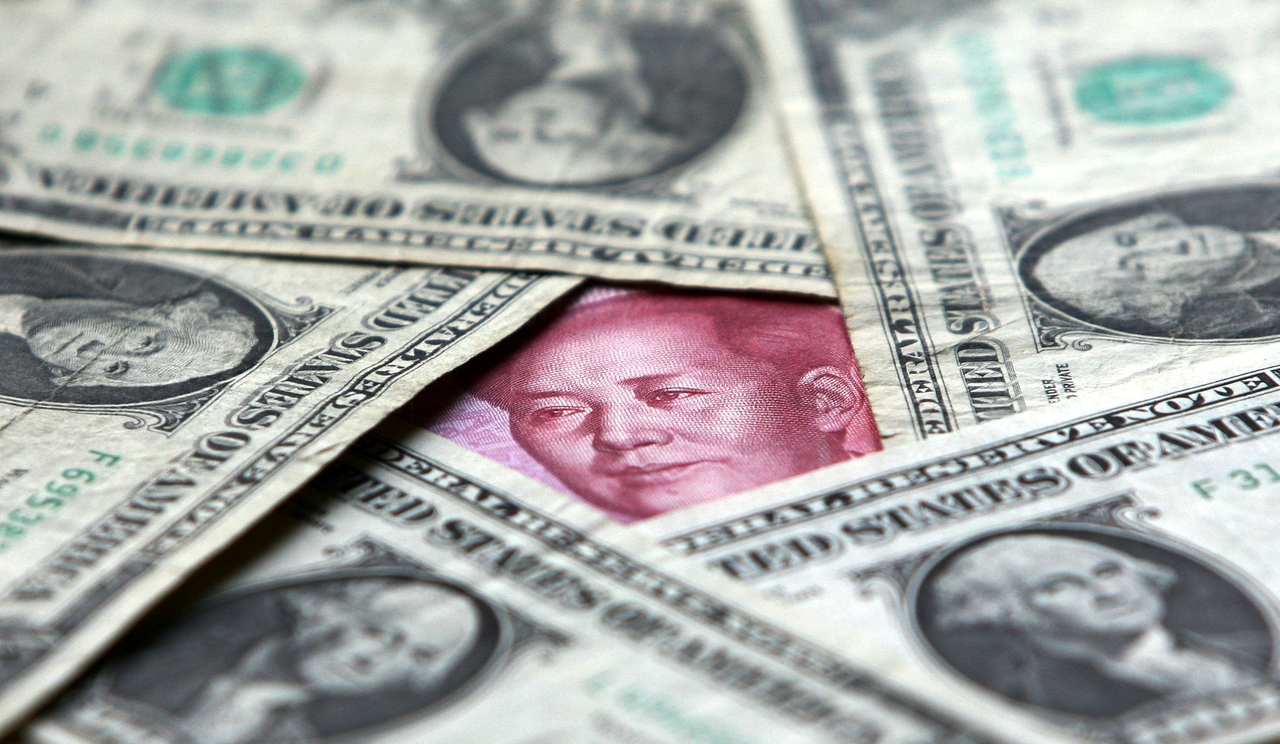
Global companies and governments are increasingly borrowing in yuan instead of dollars, driving issuance of yuan-denominated bonds to a record high. The surge reflects both demand to cut borrowing costs by tapping China's lower interest rates than those in the United States, and Beijing's push to internationalize the yuan. However, the growth of the yuan bond market does not necessarily signal a weakening of dollar dominance. Analysts say it instead points to the yuan's rising appeal as a low-cost funding currency.
Issuance of dim sum bonds and panda bonds has topped 1 trillion yuan ($149 billion) so far this year, the Financial Times reported Tuesday (local time). That already exceeds last year's full-year total, setting a new record. Dim sum bonds are yuan-denominated bonds issued outside mainland China, while panda bonds are yuan-denominated bonds issued in mainland China by foreign companies or governments.
By market, dim sum bond issuance this year reached 786.3 billion yuan, surpassing last year's annual record. Panda bond issuance also hit a record 231.6 billion yuan for a single year. Combined, the two markets have issued about 1.02 trillion yuan.
The biggest driver behind the surge is the interest rate gap between the United States and China. China's 10-year government bond yield stands at 1.68 percent, 3.10 percentage points below the 4.78 percent yield on US 10-year Treasurys. As the gap between the two countries' rates nears its widest level in history, interest in relatively cheap yuan borrowing has grown. However, actual borrowing costs vary depending on an issuer's credit rating, maturity and the cost of hedging currency risk.
Foreign financial institutions have been lining up to issue yuan bonds. Swiss investment bank UBS entered the panda bond market for the first time in late August, raising 2 billion yuan through a five-year bond with a coupon rate of 1.78 percent. Goldman Sachs issued 61.5 billion yuan in dim sum bonds this year. Foreign banks often convert the yuan they raise into major currencies to fund their global operations.
Foreign governments have also been stepping up participation. Indonesia, Slovenia, Pakistan and Kazakhstan have all raised funds in the panda bond market over the past year. KazMunayGas, Kazakhstan's state-owned oil and gas company, issued 3.5 billion yuan in dim sum bonds in August.
Chinese companies, too, have been actively using dim sum bonds to fund overseas operations. About two-thirds of this year's dim sum bond issuance came from Chinese companies and institutions. Tencent and others issued long-dated dim sum bonds this year with maturities of 10 and 30 years. This shows the yuan bond market's growth does not rely solely on foreign firms substituting yuan for dollar borrowing.
Ample liquidity within China is also underpinning the expansion. As Chinese government bond yields fall and loan demand weakens, banks and insurers are seeking investments that offer relatively higher returns. In July, new bank lending in China fell by 340 billion yuan, the largest monthly decline since related data began being compiled.
Chinese authorities expanded the quota for mainland investors to invest in the Hong Kong bond market through the Bond Connect channel over the summer. Bankers say the move has helped boost issuance of longer-dated dim sum bonds. Sisi Sun, Citi's head of Greater China debt capital markets, said the quota expansion "was a very positive signal for the market," adding that opening up investment channels for mainland insurers has supported issuance of longer-term bonds.
Beijing's push to internationalize the yuan is also tied to the market's growth. China has pursued policies to expand the yuan's use in trade settlement and financial transactions in order to reduce its reliance on the US dollar and the dollar-centered financial system. With low interest rates already boosting the economic appeal of yuan bonds, policy support has added further momentum.
Still, the rapid growth of the yuan bond market does not mean the dollar's international standing is about to be shaken. Panda bonds account for only about 0.25 percent of China's overall bond market, and the yuan's use as a global reserve asset remains limited. Large multinational companies remain cautious about borrowing in yuan, citing relatively small issuance sizes and difficulty securing large institutional investors in mainland China.
Samuel Fischer, Deutsche Bank's head of China onshore debt capital markets, said large companies are looking to see whether $1 billion bond issuances are feasible, adding that the market is approaching that level. In practice, large US cloud companies have been increasing their overseas bond borrowing but have barely participated in yuan bond issuance this year.
Experts say the yuan is more likely to become established as a low-interest funding currency — similar to the Japanese yen in the past — than to replace the dollar outright. "Low interest rates make a currency attractive for funding purposes," said Hui Shan, Goldman Sachs' chief China economist, adding that a similar pattern played out with the yen in the past.
sjy@heraldcorp.com




